Crafting the Perfect Ending: How to Write a Conclusion Paragraph That Resonates

A conclusion paragraph is not merely a signpost signaling the end of your work—it is the final brushstroke on a masterpiece, the last argument in a debate, or the emotional climax of a narrative. Whether you're drafting a research paper, a business proposal, or a compelling blog post, the way you how to write a conclusion paragraph can determine whether your reader remembers your key points or dismisses them as fleeting. The best conclusions do more than summarize; they synthesize, they provoke, and they linger.
Yet, for many writers, the conclusion feels like an afterthought—a rushed attempt to tie loose ends without adding value. This hesitation stems from a misunderstanding: the conclusion is not an epilogue but an extension of your argument. It is where you distill your entire piece into its most potent essence, reinforcing your credibility while leaving the reader with a sense of resolution. The challenge lies in balancing brevity with depth, ensuring your final words are both satisfying and memorable.
Mastering how to write a conclusion paragraph requires more than a checklist of steps; it demands an understanding of psychology, structure, and purpose. A well-crafted conclusion can transform a forgettable piece into one that sparks discussion, prompts action, or simply stays with the reader long after they’ve finished. This guide explores the art and science behind it, from historical techniques to modern innovations, ensuring you leave a lasting impact every time.
The Complete Overview of How to Write a Conclusion Paragraph
The conclusion paragraph is the culmination of your writing journey, where every preceding sentence converges to create a cohesive whole. Unlike the introduction, which sets the stage, the conclusion must echo the introduction while advancing the discussion. It is not a place for new information but a strategic recap that reinforces your thesis, answers lingering questions, and leaves the reader with a sense of closure. The most effective conclusions are those that feel inevitable—like the natural endpoint of a well-structured argument.
However, the process of how to write a conclusion paragraph is often misunderstood. Many writers default to a simple restatement of their thesis or a generic "in conclusion" phrase, which fails to engage the reader. Instead, the conclusion should serve as a final call to action, a thought-provoking reflection, or a bold reaffirmation of your stance. The key lies in understanding the different roles a conclusion can play—whether it’s summarizing, predicting, or challenging—and selecting the approach that best fits your purpose.
Historical Background and Evolution
The concept of a structured conclusion has evolved alongside writing itself, rooted in classical rhetoric and refined through centuries of literary tradition. Ancient Greek and Roman orators, such as Aristotle and Cicero, emphasized the importance of a strong closing statement in persuasive speech, recognizing that the final words often left the deepest impression. Cicero’s De Oratore even devoted sections to the art of peroration—the equivalent of a modern-day conclusion—stressing that it should not only summarize but also inspire emotion and action.
Table of Contents
- The Complete Overview of How to Write a Conclusion Paragraph
- Historical Background and Evolution
- Core Mechanisms: How It Works
- Key Benefits and Crucial Impact
- Major Advantages
- Comparative Analysis
- Future Trends and Innovations
- Conclusion
- Comprehensive FAQs
- Q: How long should a conclusion paragraph be?
- Q: Can I introduce new information in the conclusion?
- Q: What if I don’t have a strong thesis? How do I write a conclusion?
- Q: Should I always use "In conclusion" or similar phrases?
- Q: How do I make my conclusion more memorable?
- Q: What’s the difference between a conclusion and a summary?
In academic writing, the conclusion gained prominence during the Enlightenment, as scholars sought to present arguments with logical rigor. The rise of the five-paragraph essay in the 20th century further standardized the conclusion as a distinct section, though its purpose remained flexible. Today, the conclusion in professional, academic, and creative writing serves multiple functions: it can reinforce credibility, invite further thought, or even subvert expectations. Understanding this historical context helps modern writers appreciate that how to write a conclusion paragraph is both an art and a disciplined practice.
Core Mechanisms: How It Works
The mechanics of writing a conclusion paragraph revolve around three core principles: structure, tone, and purpose. Structurally, a conclusion should mirror the introduction in some way—perhaps by revisiting the opening question, restating the thesis in a new light, or answering the "so what?" that the reader may still be pondering. Tonally, the conclusion should match the overall mood of the piece, whether it’s authoritative, reflective, or urgent. Purposefully, it must align with the goal of the writing: persuading, informing, or entertaining.
One common mistake is treating the conclusion as an afterthought, leading to weak transitions or repetitive phrasing. Instead, think of it as the final act of a play—where every element must contribute to a satisfying resolution. Techniques like the "rule of three" (ending with a trio of powerful statements) or the "call to action" (directing the reader toward further engagement) can elevate a conclusion from mundane to memorable. The best conclusions make the reader think, "Ah, now I see why this matters."
Key Benefits and Crucial Impact
A well-written conclusion is more than a formality—it is a strategic tool that enhances the overall effectiveness of your writing. It reinforces your authority, ensures your message is retained, and can even influence the reader’s perception of your competence. Studies in cognitive psychology suggest that people remember the first and last things they encounter, making the conclusion a critical component of retention. Additionally, in professional settings, a strong conclusion can leave a lasting impression on clients, supervisors, or readers, increasing the likelihood of engagement or action.
Beyond memory, the conclusion shapes the emotional and intellectual takeaway of your work. A persuasive conclusion can sway undecided readers, while a reflective one can foster deeper understanding. In creative writing, it can evoke nostalgia, anticipation, or even unease—depending on the desired effect. The impact of how to write a conclusion paragraph extends beyond the page, influencing real-world decisions, academic grades, and public opinion.
"The conclusion is the soul of the essay—it is where the writer’s voice is heard loudest, and where the reader’s memory is shaped most deeply." —Joseph M. Williams, Style: Lessons in Clarity and Grace
Major Advantages
- Reinforces Credibility: A polished conclusion demonstrates mastery of your subject, leaving the reader with confidence in your expertise.
- Enhances Retention: By summarizing key points and tying them to broader implications, you increase the likelihood that your message will stick.
- Drives Action: Whether through a call to reflection, a question for the reader, or a direct prompt, a strong conclusion can inspire further engagement.
- Creates Emotional Resonance: The right tone—whether inspirational, thought-provoking, or even humorous—can leave a lasting emotional impact.
- Strengthens Structure: A well-crafted conclusion ties together loose ends, making your entire piece feel cohesive and intentional.
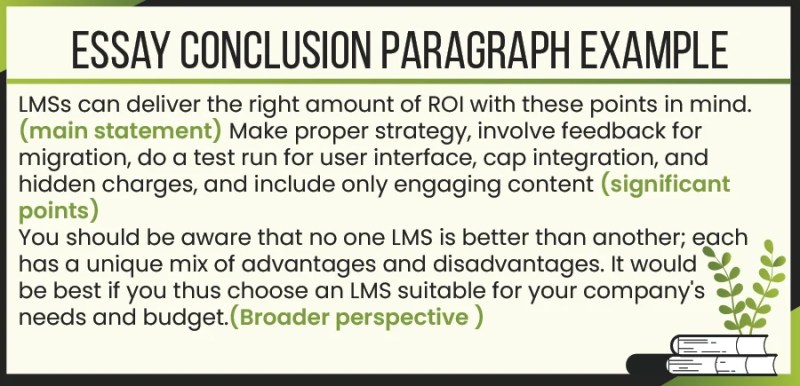
Comparative Analysis
| Academic Papers | Business Proposals |
|---|---|
| A conclusion that restates the thesis, summarizes findings, and suggests implications for future research. | A conclusion that highlights key benefits, reinforces ROI, and includes a clear next-step call to action. |
| Focuses on intellectual contribution and scholarly gaps. | Focuses on practical outcomes and stakeholder value. |
| Tone: Formal, objective, and analytical. | Tone: Persuasive, confident, and forward-looking. |
| Example: "This study contributes to the field by demonstrating X, while also identifying Y as an area for further exploration." | Example: "By implementing this strategy, we project a 20% increase in efficiency, positioning your company as a leader in innovation." |
Future Trends and Innovations
The way we approach how to write a conclusion paragraph is evolving alongside digital communication. With the rise of micro-content (e.g., social media posts, email newsletters), conclusions are becoming more concise yet more impactful. Techniques like the "hook-and-hold" method—where the conclusion leaves the reader with a question or a striking image—are gaining traction in online writing. Additionally, AI-assisted tools are helping writers refine conclusions for clarity and engagement, though the human touch remains essential for authenticity.
In the future, conclusions may also incorporate interactive elements, such as embedded polls or discussion prompts, to deepen reader engagement. As writing becomes increasingly multimedia, the conclusion’s role may expand to include visual or auditory cues that reinforce the message. However, one thing remains constant: the need for a conclusion that feels intentional, not forced. The best endings will always balance structure with spontaneity, leaving room for both logic and emotion.

Conclusion
Writing a conclusion paragraph is not about wrapping things up neatly—it’s about making your final words count. Whether you’re crafting an academic argument, a persuasive business case, or a narrative that captivates, the conclusion is your last chance to leave an impression. By understanding its historical roots, structural mechanics, and strategic advantages, you can transform a routine ending into a powerful statement. The key is to approach it with the same care you’d give to the introduction, recognizing that both are essential bookends to a compelling piece.
As you refine your skills in how to write a conclusion paragraph, remember that the best conclusions are those that feel inevitable. They don’t just summarize—they synthesize, provoke, and resonate. So the next time you sit down to write, ask yourself: What do I want the reader to remember? The answer will guide you to a conclusion that truly matters.
Comprehensive FAQs
Q: How long should a conclusion paragraph be?
A conclusion paragraph typically ranges from 5 to 10% of the total word count. For a 1,000-word essay, this might be 50–100 words, while a shorter piece (e.g., a blog post) could end with just 3–5 sentences. The length should reflect the complexity of your argument—not the space you have left.
Q: Can I introduce new information in the conclusion?
No. The conclusion should not present new evidence or arguments. Its purpose is to synthesize what you’ve already discussed, not introduce fresh ideas. Doing so can undermine your credibility and confuse the reader.
Q: What if I don’t have a strong thesis? How do I write a conclusion?
If your thesis is weak, your conclusion will struggle to reinforce it. Start by revising your thesis to ensure it’s clear and arguable. A strong conclusion should feel like a natural extension of a well-defined position. If you’re stuck, ask: What’s the most important takeaway from my work?
Q: Should I always use "In conclusion" or similar phrases?
While phrases like "In conclusion" or "Finally" are acceptable, they can feel formulaic. Instead, opt for smoother transitions like "Ultimately," "To summarize," or simply restate your thesis in a new way. Variety keeps your writing engaging.
Q: How do I make my conclusion more memorable?
Use one of these techniques:
- End with a provocative question.
- Include a vivid analogy or metaphor.
- Quote a relevant expert or historical figure.
- Offer a bold prediction or call to action.
- Leave the reader with a striking image or idea.
Q: What’s the difference between a conclusion and a summary?
A summary recaps facts, while a conclusion interprets them. A strong conclusion answers why your points matter, not just what they are. For example, instead of saying, "I discussed three causes of climate change," you might say, "Understanding these causes is the first step toward meaningful policy change."
Leave a Comment
Comments are moderated before appearing. The data you submit is processed according to the Privacy Policy of Medicine.