Tag
evolutionary biology
-

The Hidden Meaning Behind Why Cats Bring You Dead Animals
The act of gifting a carcass isn’t random. It’s a deliberate behavior with layers of meaning, spanning millennia of feline evolution. Domestic cats ( Felis...
-

The Science Behind Why Are Cats Terrified of Cucumbers: A Feline Mystery Explained
The cucumber’s deceptive resemblance to a serpent is often cited as the primary culprit, but the explanation is far more nuanced. Cats lack the cognitive...
-

The Monster Among Giants: Unraveling What’s the Biggest Dinosaur Ever Found
What’s the biggest dinosaur isn’t just a matter of length or height—it’s a puzzle of biomechanics, climate adaptation, and evolutionary arms races. These...
-

The Hidden Riches of the Rose Family Rosaceae: Nature’s Most Diverse Plant Legacy
What makes the rose family Rosaceae truly remarkable is its duality: a group that bridges the mundane and the extraordinary. The strawberry’s vibrant fruit...
-

The Mystery of Evolution: Why Don’t Humans Have Tails?
The question why don’t humans have tails cuts to the heart of what it means to be human. Unlike other mammals, our species evolved to prioritize dexterity...
-

Hardy-Weinberg Practice Problems: Mastering Genetic Equilibrium with Real-World Applications
The Hardy-Weinberg principle stands as a cornerstone of population genetics, offering a mathematical framework to predict genetic equilibrium under ideal...
-
The Joyous Science of Our Laughing Planet
The concept of Earth as a laughing planet isn’t just poetic; it’s a framework for understanding human resilience. Consider the absurdity of medieval jesters...
-
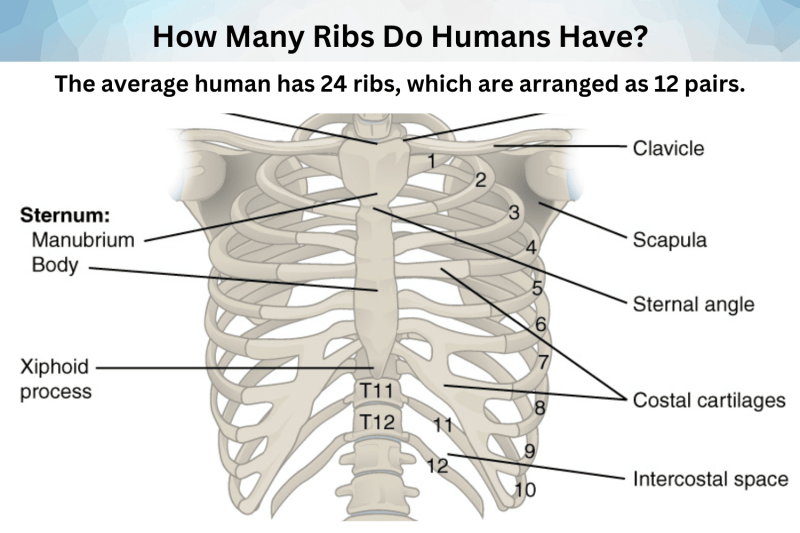
The Surprising Truth: How Many Ribs Do a Male Have?
At first glance, the question "how many ribs do a male have" seems like a basic biology quiz answer. Yet, delving deeper reveals a fascinating interplay...
-

What’s an Omega? The Hidden Role Shaping Modern Power Dynamics
At its core, the omega archetype represents the third pillar in a triad of dominance hierarchies—traditionally framed alongside alphas (leaders) and betas...
-

The Hidden Architecture: How Many Bones Are in the Foot and Why It Matters
What separates the human foot from other primates’ is its arched, spring-like design—a structural innovation that allows us to run, jump, and balance with...
-

What Are Analogous Structures? The Hidden Blueprint of Nature’s Repeated Genius
When a biologist first examines the wing of a bat and the flipper of a dolphin, the initial assumption might be that these structures share a common...
-

The Science Behind Why Do Nipples Get Hard When Cold
This response isn’t arbitrary; it’s a direct consequence of the body’s fight against hypothermia, where every millimeter of skin becomes a battleground for...
-

The Hidden Timeline: When Was the Rise of Complex Multicellularity with Specialized Tissues?
What makes this moment in Earth’s history even more intriguing is how little it resembles the popular narrative of evolution. The Cambrian explosion, with its...
-

Why Is DNA Replication Important? The Hidden Blueprint Behind Life’s Continuity
The stakes couldn’t be higher. A single misstep in replication—whether a skipped base pair or a failed repair—can trigger cascading consequences. Organisms...
-

The Ancient Debate: What Came First Chicken Egg?
At its core, the chicken egg conundrum is a microcosm of a larger evolutionary puzzle: how do new species emerge? The question assumes a linear progression—egg...
-

The Science Behind Why Do Lightning Bugs Light Up: Nature’s Bioluminescent Mystery
The night sky over a summer meadow transforms when tiny flashes of light dart between blades of grass—lightning bugs, or fireflies, performing their dazzling...
-

The Science Behind Why Does Diarrhea Smell So Bad—and What It Reveals About Your Gut
The human body is a masterpiece of biological efficiency—until it isn’t. Few experiences are as universally disruptive as acute diarrhea, but its most...
-

The Hidden Limits: What Is Not a Feature of Natural Selection
The confusion stems from a fundamental tension: natural selection is often described in terms of what it achieves —survival, reproduction, complexity—rather...
-

The Science Behind Why Are Viruses Not Considered Alive
The debate isn’t just academic. Understanding why viruses aren’t classified as living has profound implications for medicine, biotechnology, and even our...
-

The Hidden Power of STRs: What Are They and Why They Matter
The term what are STRs might sound technical, but their story is universal. Every person carries thousands of these repeating DNA motifs, inherited like silent...
