The Surprising Truth: How Many Ribs Do a Male Have?
The human rib cage is often overlooked in casual conversation, yet its structure holds clues to our evolutionary past and functional design. Most people assume the answer to "how many ribs do a male have" is a straightforward number—but the reality is more nuanced. While textbooks typically cite a standard count, anatomical variations, medical conditions, and even gender-specific differences complicate the picture. What if the ribs you’ve been taught about don’t fully align with what science observes in living humans?
At first glance, the question "how many ribs do a male have" seems like a basic biology quiz answer. Yet, delving deeper reveals a fascinating interplay between genetics, development, and individual variability. From the rib cage’s role in protecting vital organs to its evolutionary adaptations, the answer isn’t just about counting bones—it’s about understanding how the human body balances structure and flexibility. Misconceptions persist even among healthcare professionals, where outdated teachings or oversimplifications can lead to confusion.
The rib cage isn’t just a static framework; it’s a dynamic system that influences respiration, posture, and even pain perception. For males, the average count aligns with general anatomy, but exceptions—ranging from congenital anomalies to trauma—demand a closer look. This exploration will dissect the science, debunk myths, and highlight why "how many ribs do a male have" is a question worth answering with precision.
The Complete Overview of Ribs in Male Anatomy
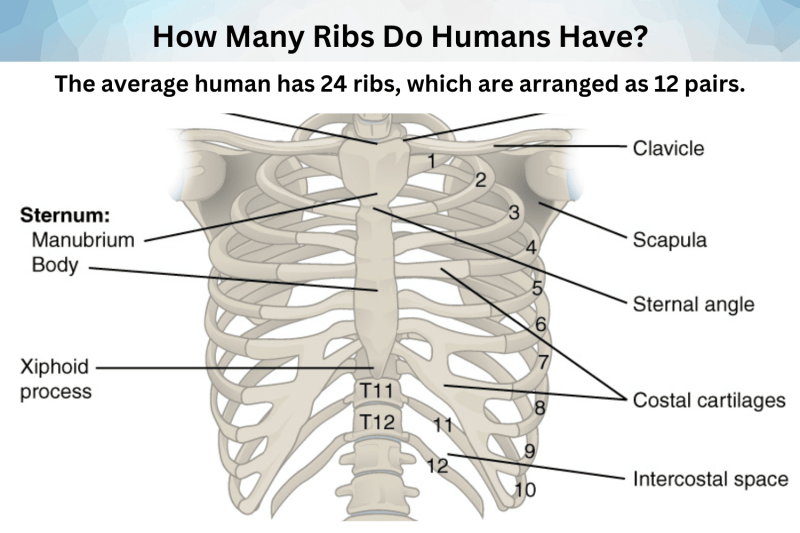
The human rib cage is a marvel of biological engineering, designed to shield the thoracic cavity while allowing for movement. For males, the standard anatomical answer to "how many ribs do a male have" is 24 ribs total, arranged in 12 pairs. These ribs articulate with the thoracic vertebrae and sternum, forming a protective cage around the heart, lungs, and major blood vessels. However, this number is a general guideline—anatomical variations, such as fused or missing ribs, can alter the count in individuals.What’s often overlooked is that the rib cage isn’t uniform across genders. While the average male and female both possess 24 ribs, subtle differences in rib structure—such as broader rib angles in males—reflect evolutionary adaptations tied to upper-body strength and respiratory capacity. These variations aren’t just academic; they influence medical diagnostics, surgical planning, and even forensic analysis. Understanding the nuances behind "how many ribs do a male have" requires examining both the typical structure and the exceptions that challenge it.
Historical Background and Evolution
The study of ribs dates back to ancient anatomical texts, where early scholars like Galen and Vesalius documented human skeletal structures. However, it wasn’t until the 19th century that modern anatomy began to distinguish between typical and atypical rib counts. Fossil evidence suggests that early hominids had fewer ribs, with some species like Australopithecus possessing as few as 10 pairs. This reduction in rib number over time correlates with the evolution of an upright posture, which required a more flexible thoracic cage to accommodate lung expansion during bipedalism.In modern humans, the rib cage’s design reflects a compromise between protection and mobility. The first seven pairs of ribs (true ribs) attach directly to the sternum via costal cartilages, while the next three pairs (false ribs) connect indirectly. The final two pairs (floating ribs) lack sternal attachment, allowing for greater abdominal movement. For males, the broader rib cage and thicker sternum provide structural advantages, but these features are not absolute—individual variability means that "how many ribs do a male have" can differ even within the same population.
Core Mechanisms: How It Works
The rib cage’s function extends beyond protection; it’s integral to the mechanics of breathing. During inhalation, the external intercostal muscles contract, lifting the ribs and expanding the thoracic cavity. This motion creates a vacuum that pulls air into the lungs—a process where rib mobility is critical. For males, the rib cage’s robust structure supports higher lung volumes, which aligns with greater oxygen demands during physical exertion.Table of Contents
- The Complete Overview of Ribs in Male Anatomy
- Historical Background and Evolution
- Core Mechanisms: How It Works
- Key Benefits and Crucial Impact
- Major Advantages
- Comparative Analysis
- Future Trends and Innovations
- Conclusion
- Comprehensive FAQs
- Q: Do males and females have the same number of ribs?
- Q: Can a person have more or fewer than 24 ribs?
- Q: Why do some people say humans have 25 ribs?
Anatomical variations can disrupt this balance. For instance, a condition like pectus excavatum (funnel chest) alters rib positioning, potentially reducing lung capacity. Conversely, pectus carinatum (pigeon chest) can increase the anteroposterior diameter of the rib cage. These deviations remind us that while the average male has 24 ribs, the answer to "how many ribs do a male have" isn’t always a fixed number—it’s a spectrum influenced by genetics, injury, and disease.
Key Benefits and Crucial Impact
The rib cage’s design is a testament to evolutionary efficiency, balancing protection with functionality. For males, a well-structured rib cage supports not only respiratory health but also upper-body strength, which has been advantageous in human history for tasks ranging from hunting to warfare. The ribs also serve as attachment points for muscles like the pectorals and serratus anterior, playing a role in posture and movement.Beyond physical function, the rib cage’s anatomy has practical implications in medicine. Radiologists and surgeons rely on precise knowledge of rib counts to interpret imaging studies and plan procedures. For example, a patient with an extra rib (cervical rib) or missing ribs due to trauma may require tailored treatment. This underscores why the question "how many ribs do a male have" isn’t just theoretical—it has real-world consequences in healthcare.
"Anatomy is the foundation of medicine. What we assume to be universal truths—like the number of ribs—often hide a spectrum of possibilities that can change a diagnosis entirely." — Dr. Eleanor Carter, Forensic Anthropologist
Major Advantages
- Protective Shielding: The rib cage encases the heart and lungs, reducing the risk of life-threatening injuries from blunt trauma.
- Respiratory Efficiency: The rib cage’s mobility allows for optimal lung expansion, crucial for oxygen exchange and endurance.
- Muscle Attachment: Ribs provide leverage for upper-body muscles, enhancing strength and stability in movements like pushing or pulling.
- Structural Support: The sternum and rib connections stabilize the thoracic spine, preventing excessive flexion or rotation.
- Diagnostic Clarity: Knowledge of rib anatomy helps clinicians detect abnormalities, such as fractures or congenital defects, early.

Comparative Analysis
While the average male has 24 ribs, variations exist across species and even within humans. Below is a comparison of rib counts in different contexts:| Category | Rib Count (Average) |
|---|---|
| Standard Human Male | 24 ribs (12 pairs) |
| Human Females | 24 ribs (12 pairs) – structurally narrower |
| Congenital Variations (e.g., Cervical Rib) | Up to 25 ribs (extra pair in neck region) |
| Trauma or Surgical Removal | Fewer than 24 (e.g., 22 ribs post-lobectomy) |
Future Trends and Innovations
Advances in medical imaging, such as 3D CT scans, are refining our understanding of rib anatomy. Researchers are now mapping individual variations in rib structure, which could lead to personalized medical treatments. For instance, AI-driven diagnostics may soon predict rib-related conditions by analyzing subtle deviations from the standard 24-rib model.Additionally, regenerative medicine holds promise for repairing rib fractures or congenital defects. Stem cell therapies could one day restore functional rib cages in patients with severe trauma or genetic disorders. As our knowledge of "how many ribs do a male have" evolves, so too will our ability to address anomalies that once seemed insurmountable.

Conclusion
The answer to "how many ribs do a male have" is rarely as simple as 24. While this is the textbook standard, real-world anatomy is far more complex, shaped by genetics, injury, and individual differences. Recognizing this variability is crucial for medical professionals, athletes, and anyone curious about the human body’s intricacies.Beyond the numbers, the rib cage’s design tells a story of adaptation—one that reflects our evolutionary history and ongoing physiological needs. As science progresses, so will our ability to leverage this knowledge for better health outcomes. The next time someone asks "how many ribs do a male have," the response should be more than a number—it should be a conversation about the extraordinary flexibility of human anatomy.
Comprehensive FAQs
Q: Do males and females have the same number of ribs?
A: Yes, both males and females typically have 24 ribs (12 pairs). However, structural differences—such as broader rib angles in males—reflect evolutionary adaptations tied to upper-body strength and respiratory capacity.
Q: Can a person have more or fewer than 24 ribs?
A: Absolutely. Congenital conditions like cervical ribs (an extra pair in the neck) can result in 25 ribs, while trauma or surgical procedures may reduce the count. Variations are more common than most realize.
Q: Why do some people say humans have 25 ribs?
A: This myth stems from the biblical story of Adam’s rib count, where an extra rib was sometimes interpreted as a 25th. Anatomically, humans have 24 ribs unless a variation exists.
Q: How do rib variations affect health?
A: Extra ribs (e.g., cervical ribs) can compress nerves, causing pain or numbness. Missing ribs may weaken thoracic protection. Always consult a healthcare provider if anomalies are suspected.
Q: Can exercise or weightlifting change rib structure?
A: While ribs themselves don’t grow or shrink with exercise, the muscles and ligaments around them can strengthen or adapt. Conditions like pectus excavatum may worsen with poor posture but aren’t directly caused by fitness routines.
Leave a Comment
Comments are moderated before appearing. The data you submit is processed according to the Privacy Policy of Medicine.