The Hidden Truth Behind How Many Ribs Do People Have
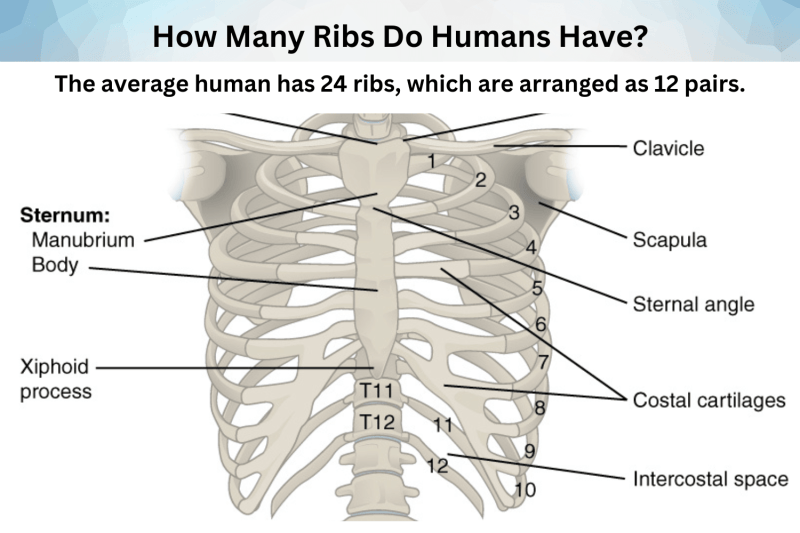
The human rib cage is a marvel of biological engineering—an intricate lattice of bones that shields vital organs while allowing for the rhythmic expansion and contraction of the lungs. Yet, despite its fundamental role in our survival, the question of how many ribs do people have remains one of the most persistently misunderstood aspects of human anatomy. Textbooks and anatomy classes often simplify the answer, but the reality is far more nuanced. Ribs don’t exist in a uniform count across all individuals; their number, structure, and even function can vary due to genetics, developmental anomalies, and evolutionary quirks. What we consider "normal" is merely a statistical average, masking a spectrum of natural variations that challenge conventional wisdom.
The confusion stems from a mix of historical misconceptions and anatomical oversimplifications. For centuries, the rib cage was studied through the lens of dissection reports and early medical illustrations, which often depicted a standardized 12-pair model. This number became ingrained in popular culture, reinforced by religious texts, art, and even children’s educational materials. Yet, medical science has long known that the answer to "how many ribs do people have" isn’t as black-and-white as it seems. Some individuals are born with fewer, others with more, and a small percentage exhibit asymmetrical or fused ribs—a testament to the body’s remarkable adaptability. Even the distinction between "true," "false," and "floating" ribs is more fluid than most realize.
What makes this question compelling isn’t just the anatomical intrigue but the way it intersects with broader themes of human diversity and medical curiosity. Whether you’re a student of biology, a healthcare professional, or simply someone fascinated by the quirks of the human body, understanding the true complexity behind how many ribs do people have reveals deeper insights into our physical evolution, diagnostic practices, and even forensic science. The rib cage isn’t just a static structure; it’s a dynamic system that reflects our individuality—and its story is far richer than the textbook answer suggests.
The Complete Overview of How Many Ribs Do People Have
The standard answer to "how many ribs do people have" is 24—12 pairs of long, curved bones that form a protective cage around the thoracic cavity. This number is derived from the typical anatomical configuration observed in most adults, where seven pairs of ribs (known as "true ribs") attach directly to the sternum via costal cartilages, three pairs ("false ribs") connect indirectly through shared cartilage, and the final two pairs ("floating ribs") terminate freely in the abdominal musculature. However, this description applies to only about 90% of the population. The remaining 10% exhibit variations that can include missing ribs, extra ribs, or ribs that fuse abnormally—a phenomenon known as rib anomalies. These deviations are rarely harmful but underscore the body’s capacity for structural flexibility.The perception of rib count as an absolute truth persists partly because medical education prioritizes the "norm" for practical purposes. Surgeons, radiologists, and anatomists rely on this baseline when teaching, diagnosing, or performing procedures. Yet, in clinical practice, encountering patients with atypical rib counts isn’t uncommon. For instance, a condition called cervical ribs—where an extra pair of ribs emerges from the seventh cervical vertebra—occurs in roughly 1% of the population. Conversely, lumbar ribs, which extend into the lower back, or fused ribs (where two ribs merge into one) can also appear. These variations don’t just challenge the question of "how many ribs do people have"; they force a reevaluation of what constitutes "normal" anatomy.
Historical Background and Evolution
The origins of the rib count myth trace back to ancient anatomical studies, where scholars like Galen (2nd century CE) and later Renaissance anatomists like Vesalius dissected cadavers to map the human body. Their illustrations often depicted a symmetrical, 12-pair rib cage, reinforcing the idea of uniformity. However, early medical texts also documented exceptions. For example, the Edwin Smith Papyrus (c. 1600 BCE), one of the oldest surviving surgical texts, mentions irregularities in the rib structure, though these were rarely explored beyond clinical necessity. The Bible’s description of Adam’s rib in Genesis 2:21—often cited as the source of the "one rib" myth—actually refers to a single bone (likely a clavicle or part of the sternum) rather than a rib, highlighting how cultural narratives have further obscured anatomical accuracy.Evolutionary biology offers a more dynamic perspective on how many ribs do people have. Our rib cages share ancestral traits with other mammals, but human ribs have adapted to support bipedalism and the expansion of the thoracic cavity. Fossil evidence suggests that early hominids, like Australopithecus, had rib structures similar to modern humans, but the exact count varied. Some paleoanthropologists speculate that rib anomalies in early humans may have been more common due to environmental pressures or genetic diversity. Today, these variations persist as remnants of our evolutionary history, with no single "correct" answer to the rib count question—only a spectrum of possibilities shaped by millions of years of biological experimentation.
Core Mechanisms: How It Works
The rib cage’s primary function is protection, but its mechanics also facilitate respiration, posture, and even childbirth. Each rib is connected to the vertebral column via joints called costovertebral articulations, allowing limited movement during breathing. The intercostal muscles between the ribs contract and relax to expand and compress the thoracic cavity, creating the pressure differential that drives airflow. This system is so efficient that even minor deviations—such as an extra rib—can sometimes impinge on nerves or blood vessels, leading to conditions like thoracic outlet syndrome. Conversely, missing ribs may not cause noticeable symptoms unless they affect organ positioning or muscle attachment.Table of Contents
- The Complete Overview of How Many Ribs Do People Have
- Historical Background and Evolution
- Core Mechanisms: How It Works
- Key Benefits and Crucial Impact
- Major Advantages
- Comparative Analysis
- Future Trends and Innovations
- Conclusion
- Comprehensive FAQs
- Q: Can a person be born with fewer than 12 pairs of ribs?
- Q: What causes extra ribs (e.g., cervical ribs)?
- Q: Do rib anomalies affect breathing or posture?
- Q: How do doctors detect rib anomalies?
- Q: Are there cultural or historical references to rib variations?
- Q: Can rib count change over a person’s lifetime?
- Q: Are there animals with rib counts similar to humans?
- Q: How might rib anomalies be relevant in forensic science?
The development of ribs begins in the embryonic stage, where sclerotome cells migrate to form the vertebral column and ribs. Genetic factors, such as mutations in the HOX gene family, can disrupt this process, leading to rib anomalies. Environmental influences during pregnancy, like nutritional deficiencies or exposure to teratogens, may also play a role. Understanding these mechanisms is critical for medical professionals when interpreting imaging studies (e.g., X-rays or CT scans), where an atypical rib count could indicate an underlying syndrome, such as Klippel-Feil syndrome or spondylocostal dysostosis. Thus, the question of "how many ribs do people have" isn’t just anatomical—it’s a window into developmental biology and clinical diagnostics.
Key Benefits and Crucial Impact
The rib cage’s role extends beyond protection; it’s a cornerstone of human physiology, influencing everything from lung capacity to spinal alignment. A well-structured rib cage supports efficient respiration, which is vital for endurance, speech, and even emotional regulation (given the diaphragm’s connection to the vagus nerve). Athletes, musicians, and singers often prioritize rib mobility for performance, while physical therapists address rib dysfunction in patients with chronic pain or postural issues. Even in forensic anthropology, rib count can help estimate age, sex, or identify trauma in skeletal remains. The practical implications of understanding how many ribs do people have are vast, from improving surgical outcomes to refining fitness training.The cultural and symbolic weight of ribs is equally significant. In many traditions, ribs represent protection, resilience, and even the boundaries between life and death. The phrase "bare ribs" in slang refers to vulnerability, while artistic depictions of rib cages—from Michelangelo’s Creation of Adam to modern medical illustrations—reinforce the idea of the human form as both fragile and fortified. Yet, the anatomical reality is far more fluid. Recognizing that rib count varies challenges rigid interpretations of "normalcy," encouraging a more inclusive view of human diversity.
"The human body is the most variable of all vertebrates, and the rib cage is no exception. What we call 'normal' is often just the most common—never the only possibility." — Dr. Jane Orient, Anatomist and Medical Historian
Major Advantages
- Diagnostic Clarity: Awareness of rib anomalies helps clinicians avoid misdiagnoses. For example, an extra cervical rib might be mistaken for a tumor or vascular issue if not recognized.
- Surgical Precision: Surgeons planning thoracic procedures (e.g., lung transplants or cardiac surgery) must account for atypical rib structures to prevent complications.
- Forensic Identification: Rib count and morphology can assist in identifying human remains, especially when other skeletal features are ambiguous.
- Evolutionary Insights: Studying rib variations across populations reveals adaptive pressures, such as dietary changes or climate influences on thoracic development.
- Personalized Medicine: Genetic testing for rib anomalies (e.g., linked to conditions like Ehlers-Danlos syndrome) can lead to tailored treatment plans.

Comparative Analysis
| Feature | Typical Human Rib Cage (12 Pairs) | Variations (e.g., Cervical/Lumbar Ribs) |
|---|---|---|
| Anatomical Structure | 7 true ribs, 3 false ribs, 2 floating ribs | Additional ribs (e.g., cervical rib from C7) or fused ribs (e.g., lumbar ribs) |
| Prevalence | ~90% of population | ~10% (with cervical ribs being the most common) |
| Clinical Significance | Baseline for diagnostic imaging | May cause nerve compression, vascular issues, or developmental syndromes |
| Evolutionary Role | Optimized for bipedalism and lung expansion | Possible remnants of ancestral adaptations or genetic mutations |
Future Trends and Innovations
Advances in medical imaging—such as 3D CT scans and MRI—are making it easier to detect rib anomalies early, potentially reducing misdiagnoses. Researchers are also exploring how rib variations correlate with other genetic conditions, paving the way for predictive medicine. In the realm of bioengineering, synthetic rib structures are being developed for patients with severe trauma or congenital defects, using materials like titanium or biodegradable polymers. Meanwhile, evolutionary biologists are using rib morphology to trace human migration patterns, as regional variations may reflect adaptive pressures from different environments.As our understanding of genetic diversity grows, the question of "how many ribs do people have" may become less about defining a norm and more about celebrating the spectrum of human anatomy. Personalized medicine could soon incorporate rib count as a biomarker for broader health assessments, while public awareness campaigns might demystify these variations to reduce stigma. The future of rib research lies at the intersection of technology, genetics, and cultural acceptance—proving that even the most fundamental aspects of our bodies are far more complex than they appear.

Conclusion
The answer to "how many ribs do people have" is rarely as straightforward as 24. It’s a question that bridges anatomy, evolution, and individuality, revealing how deeply interconnected our physical traits are. What was once considered a fixed biological constant is now understood as a spectrum, shaped by genetics, development, and the quirks of natural selection. This shift isn’t just academic; it has practical implications for medicine, forensics, and our perception of human diversity. The next time you encounter this question, remember: the rib cage isn’t just a cage—it’s a canvas of variation, a testament to the body’s resilience, and a reminder that even the most basic questions about ourselves often hold the most surprising answers.For those who study the human form, the rib count serves as a microcosm of broader truths: that "normal" is a spectrum, that science thrives on curiosity, and that the body’s mysteries are far from exhausted. Whether you’re a medical student, a fitness enthusiast, or simply someone intrigued by the intricacies of life, the story of human ribs is a compelling reminder that even the most familiar structures are worth re-examining—with wonder and precision.
Comprehensive FAQs
Q: Can a person be born with fewer than 12 pairs of ribs?
A: Yes. While 12 pairs is the most common configuration, some individuals are born with 11 pairs (hyporibby) or even fewer due to genetic mutations or developmental anomalies. These variations are usually benign but may require medical evaluation if they affect organ function.
Q: What causes extra ribs (e.g., cervical ribs)?
A: Extra ribs typically result from genetic factors, such as mutations in the HOX genes that regulate vertebral development. Environmental influences during pregnancy (e.g., exposure to certain medications or infections) may also play a role. Cervical ribs, for example, occur when an additional rib forms from the seventh cervical vertebra.
Q: Do rib anomalies affect breathing or posture?
A: Most rib anomalies are asymptomatic, but some—like cervical ribs—can compress nerves or blood vessels, leading to pain, numbness, or reduced mobility. Postural issues may arise if ribs are fused or asymmetrical, though physical therapy can often mitigate these effects.
Q: How do doctors detect rib anomalies?
A: Rib anomalies are typically identified through imaging studies, including X-rays, CT scans, or MRIs. During physical exams, doctors may notice asymmetrical rib structures or report pain in the thoracic region, prompting further diagnostic workup.
Q: Are there cultural or historical references to rib variations?
A: Yes. Ancient texts, such as the Edwin Smith Papyrus, mention irregular rib structures, though these were often overlooked in favor of standardized anatomical descriptions. In modern culture, rib anomalies appear in medical literature and art, symbolizing both the body’s fragility and its capacity for adaptation.
Q: Can rib count change over a person’s lifetime?
A: Generally, no. Rib count is determined at birth and remains stable unless trauma (e.g., fractures or surgical removal) alters the structure. However, ribs can become more fragile with age, increasing the risk of fractures or degenerative changes.
Q: Are there animals with rib counts similar to humans?
A: Most mammals have rib counts proportional to their body size, but the number varies widely. For example, cats have 13 pairs, dogs typically have 13–15, and elephants can have up to 21 pairs. These differences reflect evolutionary adaptations to size, locomotion, and organ protection.
Q: How might rib anomalies be relevant in forensic science?
A: Rib count and morphology can aid in identifying skeletal remains, especially when other features (like teeth or long bones) are missing or degraded. Anomalies can also help estimate age, sex, or even population ancestry in archaeological or legal contexts.
Leave a Comment
Comments are moderated before appearing. The data you submit is processed according to the Privacy Policy of Medicine.