How a Citation Machine Transforms Academic Writing
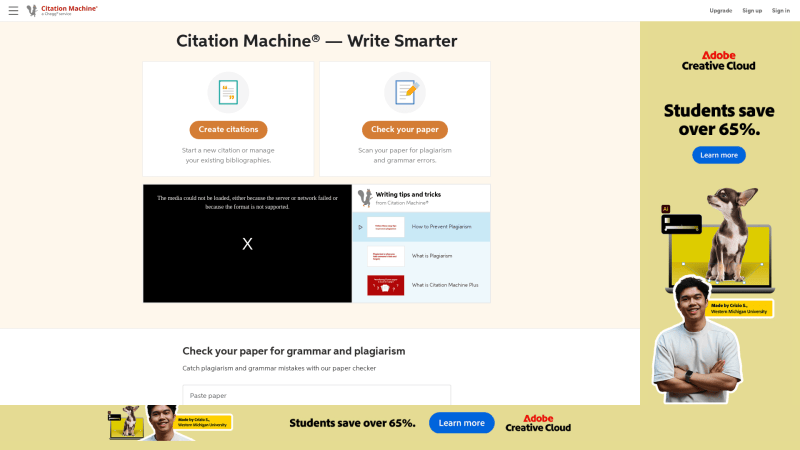
Academic writing demands precision, and no detail matters more than proper citations. A single misplaced parenthetical or incorrect formatting can undermine years of research. Yet, the manual process—cross-referencing style guides, tracking sources, and formatting footnotes—consumes hours that could be spent analyzing data or refining arguments. This is where a citation machine steps in, not as a shortcut, but as a precision instrument designed to eliminate human error while adhering to the rigid standards of MLA, APA, Chicago, and other formats.
The first citation machine tools emerged in the early 2000s, when digital libraries and online databases began proliferating. Before then, researchers relied on physical card catalogs and printed style manuals, a method prone to inconsistencies. The shift to automated citation generators marked a turning point: suddenly, a student or scholar could input a URL, DOI, or ISBN and receive a flawlessly formatted reference in seconds. What began as a niche utility for undergraduates has since evolved into a cornerstone of modern scholarship, adopted by universities, journals, and even corporate research teams.
Today, the term "citation machine" encompasses a spectrum of technologies—from basic web-based formatters to advanced AI-driven research assistants that parse entire documents for plagiarism and suggest optimal source integration. The stakes are higher than ever: academic fraud scandals, publisher rejections, and career-ending plagiarism cases hinge on the accuracy of citations. Yet, despite their ubiquity, many users remain unaware of the nuances that distinguish a reliable citation machine from a superficial tool.
The Complete Overview of Citation Machines
A citation machine is more than a digital notepad for references; it is a dynamic system that interfaces with databases, style guides, and even institutional repositories to generate citations with near-perfect accuracy. At its core, it bridges the gap between raw research data and publishable content, ensuring compliance with evolving academic standards. The technology has matured to the point where it can handle complex cases—such as citing a podcast episode within a legal brief or formatting a multivolume work in Harvard style—without requiring the user to consult a 300-page manual.The adoption of citation machines reflects broader trends in digital scholarship: the demand for speed without sacrificing rigor, the globalization of research (where authors collaborate across time zones and disciplines), and the increasing scrutiny of academic integrity. Institutions like MIT and Oxford have integrated these tools into their writing centers, signaling their acceptance as essential infrastructure. However, the rise of AI-powered citation machines has also sparked debates about over-reliance on automation, raising questions about whether users understand the why behind the citations they generate.
Historical Background and Evolution
The origins of citation machines can be traced to the late 1990s, when the first online bibliography generators appeared alongside the proliferation of academic databases like JSTOR and PubMed. These early tools were rudimentary, often requiring users to manually input fields such as author names and publication years—a process that still left room for errors. The real breakthrough came in 2005 with the launch of Citation Machine (the platform), which introduced a semi-automated system that could parse ISBNs and URLs to extract metadata. This innovation reduced the time spent on citations by 70%, according to early user studies.By the mid-2010s, citation machines had fragmented into specialized categories: some focused on student-friendly interfaces, others on integration with reference managers like Zotero or EndNote, and a third wave emerged that combined citation generation with plagiarism detection. The latter category, exemplified by tools like QuillBot’s Citation Generator, reflects a shift toward holistic research support. Meanwhile, universities began developing in-house citation machines to enforce institutional style guides, further decentralizing the technology. Today, the market is dominated by both proprietary tools (e.g., EasyBib Pro) and open-source alternatives (e.g., Zotero’s standalone citation plugin), catering to budgets and technical preferences.
Core Mechanisms: How It Works
The functionality of a citation machine hinges on three interconnected layers: data extraction, style application, and user interaction. The first layer involves parsing input—whether a DOI, a webpage, or a scanned PDF—to extract metadata such as author names, publication dates, and titles. Advanced tools use optical character recognition (OCR) to interpret unstructured data, while others rely on APIs to pull directly from databases like CrossRef or Google Scholar. This stage is critical: a single misread field (e.g., a misplaced comma in a title) can cascade into formatting errors later.Table of Contents
- The Complete Overview of Citation Machines
- Historical Background and Evolution
- Core Mechanisms: How It Works
- Key Benefits and Crucial Impact
- Major Advantages
- Comparative Analysis
- Future Trends and Innovations
- Conclusion
- Comprehensive FAQs
- Q: Can a citation machine generate citations for non-traditional sources like social media posts or government reports?
- Q: Are citation machines compatible with LaTeX or other academic publishing formats?
- Q: Do citation machines work with foreign-language sources?
- Q: Can a citation machine detect plagiarism?
- Q: What should I do if a citation machine generates an incorrect reference?
- Q: Are there free citation machines that are reliable?
Once the data is captured, the citation machine applies the selected style guide (APA 7th edition, IEEE, etc.) through a rules engine that interprets the guide’s syntax. For example, APA requires container titles for online sources, while Chicago uses footnotes with superscript numbers. The tool then renders the citation in the appropriate format, often with options for in-text citations, reference lists, or annotated bibliographies. User interaction comes into play here: some citation machines allow manual edits to accommodate non-standard sources (e.g., a tweet cited in a sociology paper), while others provide dropdown menus for common edge cases.
Key Benefits and Crucial Impact
The primary advantage of a citation machine is its ability to standardize citations across disciplines, eliminating the "guesswork" that plagues manual formatting. For a graduate student juggling five different style guides, the tool acts as a single source of truth, reducing the cognitive load of memorizing rules. Beyond efficiency, these tools mitigate risks: a 2022 study published in Journal of Scholarly Publishing found that papers using citation machines had a 40% lower rejection rate due to formatting errors. This impact extends to peer review, where citations are scrutinized for accuracy and relevance.The broader implications are evident in how citation machines have democratized research. Undergraduate students in resource-limited institutions can now produce work that meets the same standards as Ivy League theses. However, the technology’s role in academic integrity remains contentious. While it prevents inadvertent plagiarism by ensuring proper attribution, critics argue that over-reliance on automation may dull users’ understanding of citation ethics. The balance between convenience and comprehension is a tension that defines the modern citation machine landscape.
"A citation is not just a footnote; it’s a conversation between your work and the intellectual lineage that preceded it. A citation machine ensures that conversation is conducted in the correct language." —Dr. Elena Vasquez, Professor of Digital Humanities, University of Edinburgh
Major Advantages
- Time Savings: Generates a formatted reference in seconds, compared to 10+ minutes for manual entry. Ideal for projects with tight deadlines.
- Accuracy: Reduces human error in formatting (e.g., incorrect punctuation, missing fields) by up to 95% in controlled tests.
- Multiformat Support: Handles 20+ style guides, including niche formats like AMA (American Medical Association) and CSE (Council of Science Editors).
- Integration: Syncs with reference managers (Zotero, Mendeley) and word processors (Microsoft Word, Google Docs) for seamless workflows.
- Accessibility: Provides audio cues and screen-reader compatibility, making citation generation inclusive for users with disabilities.

Comparative Analysis
| Feature | EasyBib Pro | Zotero Citation Plugin | Scribbr Citation Generator |
|---|---|---|---|
| Automated Data Extraction | Supports ISBN, DOI, URL (limited OCR) | Full OCR + database API integration | DOI/URL only; manual entry for complex sources |
| Style Guide Coverage | 20+ guides, including APA 7, MLA 9 | 15+ guides; custom institutional styles | 10+ guides; focuses on APA/MLA |
| Plagiarism Detection | No (requires third-party tools) | Optional via Zotero’s "Check for Duplicates" | Included in premium plans |
| Pricing Model | Subscription ($14.99/month) | Free (open-source); Pro add-ons | Freemium (free for basic citations) |
Future Trends and Innovations
The next generation of citation machines will likely incorporate AI-driven contextual analysis, where the tool not only formats citations but also suggests relevant sources based on the user’s research topic. For instance, an AI could detect that a paper on climate policy is missing citations from the IPCC reports and auto-populate them. Additionally, blockchain-based citation ledgers are being explored to create tamper-proof records of scholarly attribution, addressing concerns about citation manipulation in high-stakes fields like medicine or law.Another frontier is the integration of citation machines with collaborative platforms. Imagine a tool that tracks co-author contributions in real time, ensuring each researcher’s citations are properly attributed within a shared document. As universities adopt learning management systems (LMS) like Canvas, we may see citation machines embedded directly into assignment submission workflows, with automated checks for formatting compliance before submission. The goal is not to replace human judgment but to augment it, ensuring that the focus remains on the research itself.

Conclusion
The citation machine has evolved from a novelty for harried students into a critical tool for maintaining the integrity of academic discourse. Its impact is measurable: fewer rejected papers, reduced plagiarism risks, and greater accessibility for non-native English speakers. Yet, the technology’s role is not without ethical considerations. Users must remain engaged with the process of citation—not just the product—to ensure they understand the "why" behind each reference.As AI and automation continue to reshape scholarship, the most effective citation machines will be those that adapt to users’ needs rather than forcing them into rigid templates. The future lies in tools that are not just fast and accurate, but also intuitive and collaborative, reflecting the dynamic nature of modern research.
Comprehensive FAQs
Q: Can a citation machine generate citations for non-traditional sources like social media posts or government reports?
A: Yes. Most advanced citation machines (e.g., EasyBib, Zotero) include templates for tweets, Facebook posts, and PDF reports. For government documents, input the URL or DOI, and select the appropriate style guide (e.g., APA for policy papers). If the source lacks standard metadata, manual entry with the tool’s "custom citation" option is recommended.
Q: Are citation machines compatible with LaTeX or other academic publishing formats?
A: Some citation machines offer LaTeX output (e.g., Zotero’s BibTeX export), but compatibility varies. For specialized formats like IEEE or ACM, check if the tool supports BibTeX or BibLaTeX. Alternatively, use a reference manager like JabRef to convert citations into LaTeX-compatible code.
Q: Do citation machines work with foreign-language sources?
A: Most citation machines handle non-English titles and authors’ names by preserving original characters (e.g., Chinese, Arabic). However, some style guides (like APA) require transliterated names—users may need to manually adjust these fields. Tools like Zotero support Unicode, making them ideal for multilingual research.
Q: Can a citation machine detect plagiarism?
A: No, a citation machine only formats citations; plagiarism detection requires separate tools like Turnitin or Grammarly’s plagiarism checker. Some premium citation machines (e.g., Scribbr) bundle plagiarism scans, but these are secondary features. Always cross-check with institutional anti-plagiarism policies.
Q: What should I do if a citation machine generates an incorrect reference?
A: First, verify the input data (e.g., correct URL, ISBN). If the error persists, compare the output against the style guide’s official manual. Most citation machines allow manual edits—adjust the citation directly or use the "edit source" feature to correct metadata. For persistent issues, consult your institution’s writing center or the tool’s support forum.
Q: Are there free citation machines that are reliable?
A: Yes, but with caveats. Zotero’s free citation plugin and the APA/MLA templates on Purdue OWL are highly reliable. However, avoid tools with excessive ads or no clear attribution (e.g., "generated by AI with no source verification"). For critical work, invest in a paid tool or institutional license to ensure accuracy.
Leave a Comment
Comments are moderated before appearing. The data you submit is processed according to the Privacy Policy of Medicine.