How the Citation Machine Revolutionized Academic Integrity
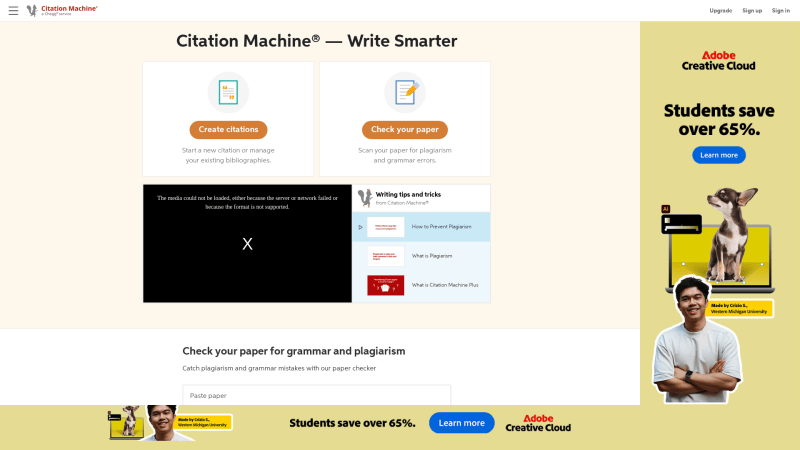
The citation machine isn’t just another utility in the academic toolkit—it’s a silent architect of credibility. From undergraduates wrestling with footnotes to seasoned researchers compiling bibliographies, its presence is ubiquitous, yet its inner workings remain misunderstood. This tool, often dismissed as a mere formatting assistant, has quietly redefined how knowledge is attributed, shared, and validated across disciplines. Its ability to parse complex citation styles—APA, MLA, Chicago—with precision has made it indispensable, yet its origins and future trajectory are rarely examined beyond surface-level discussions.
What separates a citation machine from a static reference guide? The answer lies in its adaptability. Unlike rigid manuals, these systems evolve alongside academic conventions, absorbing updates to formatting rules, publisher preferences, and even emerging citation standards. They bridge the gap between human intent and mechanical execution, ensuring that a scholar’s years of work aren’t undermined by a misplaced comma in a bibliography. But this functionality comes with trade-offs: efficiency at the cost of deeper understanding, or the risk of over-reliance on automation.
The debate over citation machines extends beyond technicalities—it touches on ethics. When a tool can generate flawless citations in seconds, does it foster laziness or liberate time for substantive analysis? The tension between convenience and competence is a paradox that defines its role in modern scholarship. To navigate this landscape, one must first grasp not just what a citation machine does, but how it does it—and why its influence is expanding far beyond the classroom.
The Complete Overview of Citation Machines
A citation machine is a digital system designed to automate the creation of bibliographic entries, in-text citations, and reference lists according to predefined academic styles. At its core, it functions as a translator between raw research data—journal articles, books, websites—and standardized citation formats. The term itself is a misnomer in some contexts; while "machine" implies a rigid, mechanical process, modern citation tools often incorporate AI-driven suggestions, style cross-referencing, and even plagiarism detection integrations. This duality—part tool, part collaborator—defines its modern iteration.
The evolution of citation machines reflects broader shifts in academic publishing. Early versions were static databases requiring manual input, prone to errors and limited to a handful of styles. Today’s citation machines, however, leverage APIs, cloud synchronization, and machine learning to dynamically fetch metadata from publishers, DOIs, and institutional repositories. This transition hasn’t just improved accuracy; it has democratized access to proper citation practices, reducing disparities between well-funded institutions and those with limited resources.
Historical Background and Evolution
The concept of automated citation assistance traces back to the 1980s, when early bibliographic software like EndNote and Reference Manager emerged. These tools were primarily used in academic libraries, requiring users to manually input citation details—a process that, while systematic, was still labor-intensive. The turn of the millennium introduced web-based citation machines, such as Citation Machine (founded in 2010), which simplified the process by allowing users to paste URLs or input metadata directly into a form. This shift marked the beginning of the tool’s mainstream adoption, particularly among students.
Table of Contents
- The Complete Overview of Citation Machines
- Historical Background and Evolution
- Core Mechanisms: How It Works
- Key Benefits and Crucial Impact
- Major Advantages
- Comparative Analysis
- Future Trends and Innovations
- Conclusion
- Comprehensive FAQs
- Q: Are citation machines accurate for all types of sources?
- Q: Can citation machines detect plagiarism?
- Q: Do citation machines work with non-English sources?
- Q: Are there free vs. paid citation machines—what’s the difference?
- Q: How do citation machines handle multiple authors or editors?
- Q: Can citation machines generate citations for unpublished work (e.g., theses, conference papers)?
- Q: What happens if a citation machine misinterprets a source?
- Q: Are citation machines compliant with open-access mandates?
- Q: Can citation machines be used for non-academic writing (e.g., business reports, legal documents)?
- Q: How do citation machines handle retracted or corrected sources?
By the 2010s, citation machines began incorporating advanced features: style detection, export to word processors, and even integration with cloud storage platforms. The rise of open-access repositories and preprint servers further expanded their capabilities, as machines could now scrape metadata from sources like arXiv or PubMed Central. Today, some citation machines offer real-time collaboration, allowing multiple researchers to contribute to a shared bibliography—a feature that aligns with the collaborative nature of modern scholarship. The tool’s trajectory underscores a broader trend: the blurring line between human and machine in intellectual work.
Core Mechanisms: How It Works
The functionality of a citation machine hinges on three key components: data ingestion, style application, and output generation. When a user inputs a source—whether via ISBN, DOI, or URL—the machine’s backend queries databases to retrieve metadata (author names, publication dates, titles). This data is then cross-referenced with the selected citation style’s rules (e.g., APA’s requirement for hanging indents or MLA’s emphasis on page numbers). The system’s algorithms parse these rules dynamically, adjusting for nuances like journal abbreviations or translated titles.
Under the hood, modern citation machines employ a combination of structured data parsing and heuristic logic. For example, if a user inputs a website without a clear author, the machine may flag it as "Anonymous" while still generating a citation using the site’s title and URL. Some advanced systems use natural language processing to interpret ambiguous inputs, such as a book chapter’s citation within a multi-author edited volume. The result is a citation that adheres to style guidelines while preserving the original source’s integrity. This balance between rigidity and flexibility is what sets high-end citation machines apart from basic generators.
Key Benefits and Crucial Impact
The adoption of citation machines has reshaped academic workflows, offering time savings that can reach hours per project for researchers. For students, the reduction in citation-related stress is palpable; no longer must they memorize arcane formatting rules or spend nights cross-referencing style manuals. Institutions, too, benefit from standardized citations across dissertations and publications, enhancing the credibility of their output. Yet the impact extends beyond efficiency—it touches on the ethical dimensions of scholarship, where proper attribution is non-negotiable.
Critics argue that over-reliance on citation machines can erode critical thinking, particularly if users treat citations as a black box rather than a learned skill. However, proponents counter that these tools serve as pedagogical aids, allowing learners to focus on research while gradually internalizing citation norms. The debate highlights a broader question: Can technology augment human judgment, or does it replace it? The answer lies in how citation machines are integrated into academic culture—not as a substitute for understanding, but as a scaffold for mastery.
"A citation is not just a footnote; it’s a contract between the present and the past, a promise that ideas are properly credited and contexts preserved."
— Dr. Elena Vasquez, Professor of Digital Humanities, University of Toronto
Major Advantages
- Time Efficiency: Generates citations in seconds, reducing manual errors and saving hours in large-scale projects (e.g., dissertations, literature reviews).
- Style Versatility: Supports hundreds of citation styles, from niche academic formats (e.g., IEEE) to industry-specific standards (e.g., AMA for medical writing).
- Accessibility: Removes barriers for non-native English speakers or those unfamiliar with citation conventions, ensuring global inclusivity.
- Plagiarism Mitigation: Many citation machines integrate with plagiarism checkers, flagging potential issues before submission.
- Collaboration Features: Cloud-based tools enable real-time sharing and editing of bibliographies among research teams.

Comparative Analysis
| Feature | Traditional Citation Machine (e.g., Citation Machine) | Advanced Citation Tool (e.g., Zotero + Better BibTeX) |
|---|---|---|
| Data Input Methods | Manual entry, URL paste, ISBN/DOI lookup | Automated import from databases, browser extensions, API integrations |
| Style Customization | Predefined styles; limited user modifications | Custom style creation, version control for team projects |
| Plagiarism Tools | Basic integration (e.g., Turnitin) | Built-in similarity detection with exportable reports |
| Collaboration | Basic shareable links | Full-fledged group libraries with permission levels |
Future Trends and Innovations
The next generation of citation machines will likely incorporate AI-driven predictive citation suggestions, where the system anticipates a user’s needs based on their research focus. For instance, a machine learning model could analyze a paper’s references and suggest additional sources that align with the author’s citation patterns. Blockchain technology may also play a role, creating immutable citation records to combat citation manipulation or "predatory publishing." Additionally, voice-activated citation generation could emerge, catering to researchers in fields like medicine or engineering where hands-free documentation is critical.
On the ethical front, future citation machines may embed bias detection, flagging citations that disproportionately favor certain institutions or regions. This could address long-standing concerns about citation cartels or geographic imbalances in academic influence. Another innovation could be "dynamic citations," where references update automatically as sources are revised or retracted—a feature that would be invaluable in fast-moving fields like genomics or climate science. The challenge will be balancing these advancements with the need for transparency, ensuring users understand the limitations of automated citation processes.

Conclusion
The citation machine has evolved from a niche utility to a cornerstone of modern research, reflecting broader trends in digital scholarship. Its ability to standardize citations across languages, disciplines, and platforms has democratized academic rigor, but it also raises questions about the role of human judgment in citation practices. As these tools become more sophisticated, the onus falls on users to wield them responsibly—treating them as assistants, not replacements, for critical thinking.
For institutions, the integration of citation machines into curricula and workflows will be key to preparing the next generation of scholars. For individual researchers, the tool’s value lies not in passive use, but in active engagement: understanding its mechanisms, testing its outputs, and leveraging it to elevate the quality of their work. In an era where information is abundant but trust is scarce, the citation machine remains a vital link between ideas and integrity.
Comprehensive FAQs
Q: Are citation machines accurate for all types of sources?
A: Most citation machines handle common sources (books, journal articles, websites) with high accuracy, but accuracy drops for niche formats like government documents, patents, or multimedia (e.g., podcasts). Always cross-check with style guides for edge cases.
Q: Can citation machines detect plagiarism?
A: Some advanced citation machines integrate with plagiarism checkers (e.g., Turnitin, QuillBot), but they cannot replace dedicated plagiarism tools. They primarily ensure proper citation formatting rather than content similarity analysis.
Q: Do citation machines work with non-English sources?
A: Yes, many support multilingual sources, but accuracy depends on the machine’s database coverage. For non-Latin scripts (e.g., Chinese, Arabic), ensure the tool uses Unicode-compatible fonts and style rules.
Q: Are there free vs. paid citation machines—what’s the difference?
A: Free tools (e.g., Citation Machine) offer basic functionality but may limit exports or style options. Paid versions (e.g., EndNote, Zotero Premium) include advanced features like offline access, collaboration tools, and priority customer support.
Q: How do citation machines handle multiple authors or editors?
A: Most machines automatically format names by citation style (e.g., "Lastname, A. A., Lastname, B. B., & Lastname, C. C." for APA). For edited volumes, they distinguish between editors and contributors, though users should verify for complex cases (e.g., corporate authors).
Q: Can citation machines generate citations for unpublished work (e.g., theses, conference papers)?
A: Yes, but users must manually input details like "Unpublished master’s thesis" or "Paper presented at [Conference Name]." Some machines (e.g., Zotero) allow custom templates for such sources.
Q: What happens if a citation machine misinterprets a source?
A: Errors often occur with ambiguous inputs (e.g., missing authors, unclear publication dates). Users should edit the generated citation manually or consult the style guide. Advanced tools offer "suggested fixes" based on common errors.
Q: Are citation machines compliant with open-access mandates?
A: Most modern machines support open-access sources (e.g., DOIs from arXiv, PubMed). However, users must ensure compliance with specific funder requirements (e.g., NIH’s public access policy) by verifying the tool’s metadata coverage.
Q: Can citation machines be used for non-academic writing (e.g., business reports, legal documents)?
A: While primarily designed for academic styles, some machines (e.g., EasyBib) offer business (APA-like) or legal (Bluebook) formats. For specialized fields, consult style manuals or use custom templates.
Q: How do citation machines handle retracted or corrected sources?
A: Most machines rely on static metadata and may not flag retractions. Users should manually check sources (e.g., via PubMed, Retraction Watch) and append notes like "[Retracted; see Correction in Journal X]." Some advanced tools integrate with alert systems for retractions.
Leave a Comment
Comments are moderated before appearing. The data you submit is processed according to the Privacy Policy of Medicine.