Willem Dafoe Poses: The Actor’s Uncanny Physicality Explored

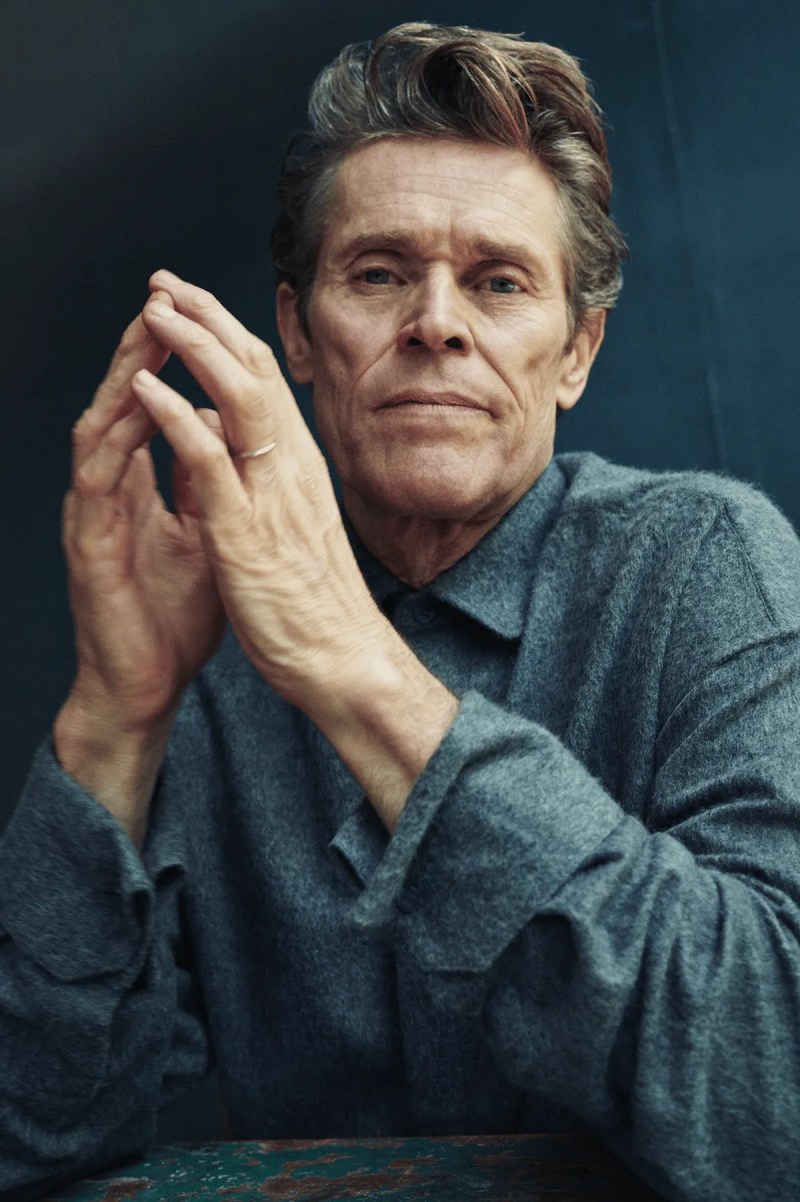
Willem Dafoe doesn’t just act—he becomes. His poses are legendary: the hunched, feral intensity of Spider-Man, the skeletal fragility of The Lighthouse, the eerie stillness of Platoon. These aren’t mere stances; they’re alchemical shifts, where the actor’s physicality merges with the character’s essence. Critics and filmmakers alike have dissected his ability to inhabit roles through posture alone, a skill that elevates him beyond traditional performance.
What makes Dafoe’s poses so hypnotic? It’s the marriage of vulnerability and menace. His body language doesn’t just support a role—it defines it. Whether he’s crouched like a predator in Antichrist or frozen in a grotesque tableau in The Witch, his physicality feels like a living Rorschach test, inviting audiences to project their own fears and fascinations onto his frame. This isn’t acting; it’s a form of possession.
The fascination with Willem Dafoe poses isn’t new, but its cultural resonance has only deepened. From fan recreations on TikTok to scholarly analyses of his "Dafoe-ism" (a term coined by performance theorists), his ability to manipulate space and gravity through sheer will has cemented his status as a physical acting pioneer. But how did he perfect this craft? And what do his poses reveal about the intersection of psychology, cinema, and the human body?
The Complete Overview of Willem Dafoe Poses
Willem Dafoe’s poses are a study in controlled chaos. Unlike actors who rely on facial expressions or vocal modulation, Dafoe’s power lies in his ability to distort the human form—stretching it, compressing it, or rendering it almost inhuman. His physicality isn’t just a tool; it’s a language. In The Lighthouse, his emaciated, twitching frame becomes a living nightmare, while in Spider-Man, his hunched, spider-like crouch transforms Peter Parker into a creature of the night. These aren’t just poses; they’re performances of the self, where the actor’s body becomes a canvas for the character’s psyche.The genius of Dafoe’s approach is its subtlety. He doesn’t overact; he underacts, letting the audience fill in the gaps with their own projections. His poses often feel like they’ve been lifted from a surrealist painting—unnatural yet undeniably real. This tension between the grotesque and the relatable is what makes his work so compelling. Whether he’s the twitching, half-mad lighthouse keeper or the feral, snarling King of the Jungle in The Jungle Book (2016), Dafoe’s physicality forces the audience to confront the monstrous within the human.
Historical Background and Evolution
Dafoe’s relationship with Willem Dafoe poses began in the late 1980s, when he first collaborated with director Paul Schrader on Light of Day (1989). Schrader, a student of method acting, pushed Dafoe to explore physical extremes—twitches, spasms, and contortions that blurred the line between performance and reality. This collaboration marked the birth of Dafoe’s signature style: a fusion of European physical theater and American method acting, where the body becomes the primary vehicle for emotional expression.The turning point came with Platoon (1986), where his portrayal of a traumatized soldier, Chris Taylor, relied heavily on physical tension—clenched jaws, rigid postures, and a body language that screamed suppressed rage. But it was The Lighthouse (2019) that solidified his reputation as a master of the pose. Director Robert Eggers demanded that Dafoe’s character, Ephraim Winslow, exist in a state of perpetual physical and psychological unraveling. The result? A performance where every twitch, every hunched shoulder, and every frozen stance felt like a direct channel into madness. Dafoe didn’t just act the role; he became the role’s physical manifestation.
Core Mechanisms: How It Works
Dafoe’s poses operate on two levels: the visible and the invisible. Visibly, he uses extreme physicality—contorting his face, slouching his shoulders, or locking his joints in ways that feel almost mechanical. But the real magic lies in the invisible: the psychological weight he loads into each stance. In Antichrist (2009), his rigid, almost robotic movements as the husband reflect his internal collapse, while in Spider-Man, his crouched, spider-like posture isn’t just mimicry—it’s a physical manifestation of Peter Parker’s duality.Table of Contents
- The Complete Overview of Willem Dafoe Poses
- Historical Background and Evolution
- Core Mechanisms: How It Works
- Key Benefits and Crucial Impact
- Major Advantages
- Comparative Analysis
- Future Trends and Innovations
- Conclusion
- Comprehensive FAQs
- Q: What is the most iconic Willem Dafoe pose?
- Q: How does Dafoe prepare physically for his roles?
- Q: Are Dafoe’s poses inspired by any specific acting tradition?
- Q: Can anyone learn to perform like Dafoe?
- Q: How has Dafoe’s physicality influenced modern cinema?
- Q: What’s the psychological effect of Dafoe’s poses?
- Q: Will AI ever replicate Dafoe’s physical acting?
The key to Dafoe’s technique is controlled release. He doesn’t just hold a pose; he breathes into it, letting the tension ebb and flow like a living thing. This creates a sense of unpredictability—one moment he’s a statue, the next he’s a whirlwind of motion. It’s a technique he honed through years of studying physical theater, particularly the work of Jacques Lecoq, who believed that the body could be trained to express emotions beyond words. Dafoe takes this philosophy further, using his poses to erase the actor and replace him with the character.
Key Benefits and Crucial Impact
The impact of Willem Dafoe poses extends beyond cinema. They’ve redefined what it means to perform physically, influencing a generation of actors who now see the body as a primary tool of storytelling. Directors increasingly cast Dafoe not just for his acting chops but for his ability to become a role through posture alone. His work has also sparked conversations in psychology and performance studies about how physicality shapes perception—how a hunched back can convey defeat, or a rigid stance can evoke menace without a word being spoken.Dafoe’s poses have also become a cultural phenomenon. Fans recreate his stances in memes, cosplay, and even fitness challenges, proving that his physicality transcends the screen. This democratization of his artistry has made him a cultural icon, not just an actor. His ability to turn the human body into a vessel for the uncanny has redefined what audiences expect from performance.
"Willem Dafoe doesn’t act—he is. His poses aren’t performances; they’re exorcisms." — Robert Eggers, Director of The Lighthouse
Major Advantages
- Emotional Depth Without Dialogue: Dafoe’s poses convey entire narratives—grief, rage, madness—without a single line. This makes his work universally accessible, as body language is a language all its own.
- Psychological Immersion: His physical transformations force audiences to feel the character’s state rather than just observe it. A twitch, a slouch, or a frozen stance can evoke empathy or horror instantly.
- Versatility Across Genres: Whether in horror (Antichrist), fantasy (The Lighthouse), or superhero films (Spider-Man), his poses adapt seamlessly, proving their power as a universal acting tool.
- Influence on Modern Acting: Actors like Joaquin Phoenix and Christian Bale cite Dafoe as an inspiration for their own physical performances, cementing his legacy as a pioneer.
- Cultural Virality: His poses have become iconic in internet culture, from TikTok recreations to fan art, proving that physical acting can be both high art and mass entertainment.

Comparative Analysis
| Willem Dafoe’s Poses | Traditional Method Acting |
|---|---|
| Relies heavily on physical distortion and extreme body language. | Focuses on emotional recall and internalization of the character. |
| Often feels surreal or uncanny, pushing the boundaries of realism. | Strives for psychological realism, grounding the performance in believability. |
| Influenced by physical theater (e.g., Jacques Lecoq) and surrealism. | Rooted in Stanislavski’s system and psychological realism. |
| Works best in genre films (horror, fantasy, sci-fi) where physicality can be exaggerated. | Adaptable to all genres but often excels in dramatic or character-driven roles. |
Future Trends and Innovations
The future of Willem Dafoe poses lies in their digital evolution. As virtual production and motion capture become standard, actors like Dafoe—who already push the limits of physical performance—will likely lead the charge in blending real and digital physicality. Imagine a Spider-Man where Dafoe’s hunched, spider-like stance is enhanced with CGI, making the transformation even more visceral. Similarly, AI-driven performance analysis could help actors refine their poses in real time, taking Dafoe’s intuitive approach to new heights.Beyond cinema, Dafoe’s influence may extend into interactive media. Video games, VR experiences, and even AI-generated performances could adopt his technique, where body language becomes the primary mode of storytelling. The key question is whether audiences will still respond to physical acting in a world dominated by digital avatars. Dafoe’s legacy suggests they will—but only if the physicality remains human.
Conclusion
Willem Dafoe’s poses are more than acting—they’re a philosophy. They challenge the audience to look beyond words and see the raw, unfiltered essence of a character. His ability to turn the human body into a vessel for the uncanny has made him a legend, not just an actor. As film and performance continue to evolve, Dafoe’s influence will only grow, proving that the most powerful performances don’t just speak—they move.His work reminds us that acting isn’t about mimicking life; it’s about redefining it. And in a world where digital avatars and AI-generated performances dominate, Dafoe’s physicality stands as a testament to the enduring power of the human body.
Comprehensive FAQs
Q: What is the most iconic Willem Dafoe pose?
A: Many consider his hunched, spider-like stance in Spider-Man (2002) the most iconic. However, his frozen, twitching tableau in The Lighthouse (2019) is equally legendary for its psychological intensity.
Q: How does Dafoe prepare physically for his roles?
A: Dafoe combines method acting with physical theater techniques. He often works with movement coaches, studies real-life references (e.g., observing people with physical disabilities for The Lighthouse), and practices extreme postures until they feel natural.
Q: Are Dafoe’s poses inspired by any specific acting tradition?
A: Yes. He cites Jacques Lecoq’s physical theater as a major influence, particularly the idea that the body can express emotions beyond words. He also draws from European mime and American method acting.
Q: Can anyone learn to perform like Dafoe?
A: While Dafoe’s talent is innate, his techniques can be learned. Actors can study physical theater, practice extreme postures, and work with movement coaches to develop their own version of "Dafoe-ism."
Q: How has Dafoe’s physicality influenced modern cinema?
A: His work has inspired a wave of actors (Joaquin Phoenix, Christian Bale) to prioritize physical transformation. Directors now seek performers who can become their roles through posture, not just dialogue.
Q: What’s the psychological effect of Dafoe’s poses?
A: His poses create a sense of unease or fascination by exploiting the uncanny valley—the space between human and inhuman. This forces audiences to confront discomfort, making his performances memorable.
Q: Will AI ever replicate Dafoe’s physical acting?
A: AI can mimic his movements, but true replication requires the human element—psychological depth and spontaneity. Dafoe’s poses thrive on imperfection, which AI currently struggles to capture.
Leave a Comment
Comments are moderated before appearing. The data you submit is processed according to the Privacy Policy of Medicine.