The Hidden Truth Behind What Is Oregon’s Time Zone

Oregon’s relationship with time is deceptively simple. At first glance, the answer to what is Oregon’s time zone seems straightforward: Pacific Time (PT). Yet beneath this surface lies a web of historical quirks, geographical exceptions, and modern debates that challenge assumptions. The state’s adherence to PT isn’t just a matter of clocks—it’s a reflection of its isolationist past, its proximity to the Pacific Ocean, and even its cultural identity. While most residents sync their schedules to PT year-round, the nuances—like the absence of daylight saving time in certain areas—reveal how time zones are more than just timekeeping tools; they’re living systems shaped by human behavior and policy.
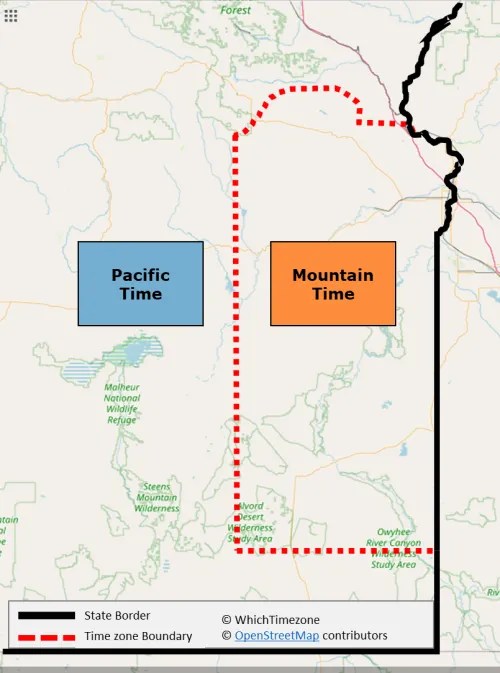
The confusion often arises from Oregon’s borders. Unlike states that straddle multiple time zones, Oregon remains entirely within PT, yet its eastern regions occasionally flirt with Mountain Time (MT) due to proximity. This proximity isn’t just theoretical; it’s a historical echo. In the early 20th century, parts of eastern Oregon considered adopting MT to align with Idaho and Nevada, but resistance from railroads and businesses kept the state firmly in PT. Today, the question of what Oregon’s time zone really means extends beyond the clock: it touches on everything from agricultural schedules to tech industry coordination with California.
What makes Oregon’s time zone particularly fascinating is its uniformity—despite the state’s vast geography. From the rugged coastline of Cannon Beach to the high desert of Bend, every corner operates on the same PT schedule. But this uniformity masks deeper questions: Why doesn’t Oregon observe daylight saving time universally? How do its borders influence trade and travel? And what might change as global timekeeping evolves? The answers lie in a blend of historical inertia, practical necessity, and the quiet rebellions of local communities.
The Complete Overview of Oregon’s Time Zone
Oregon’s time zone is Pacific Time (PT), observed year-round across the entire state. Unlike many U.S. regions, Oregon doesn’t participate in daylight saving time (DST) for its entire territory—though this is a matter of local choice rather than state mandate. The state’s adherence to PT is rooted in its geographical isolation from the eastern time zones and its historical alignment with West Coast economic and social rhythms. While most of Oregon follows PT consistently, the lack of a unified DST policy creates a patchwork of timekeeping practices, particularly in rural areas where residents opt to stay on standard time year-round.The question what is Oregon’s time zone often sparks debates about consistency. For instance, while Portland and Eugene adhere to DST (changing clocks in March and November), some counties in eastern Oregon—like Malheur and Harney—permanently observe standard time. This exception stems from a 2019 law allowing counties to opt out of DST, reflecting a broader trend of communities rejecting the practice for agricultural or personal preference reasons. The result? Oregon’s time zone isn’t a monolith but a dynamic system where local autonomy intersects with state-wide uniformity.
Historical Background and Evolution
The origins of Oregon’s time zone trace back to the 1880s, when railroads and telegraph companies standardized time across the U.S. Before this, each town set its own time based on local solar noon—a chaotic system that hindered commerce. Oregon, like the rest of the West Coast, adopted Pacific Time in 1893, aligning with California and Washington. The decision was pragmatic: railroads needed synchronized schedules, and PT minimized confusion for goods and passengers moving between ports like San Francisco and Seattle.The evolution of what Oregon’s time zone represents took a dramatic turn in the 20th century. During World War II, the U.S. government imposed year-round DST (called "War Time") to conserve energy. Oregon, like the rest of the nation, complied—but the policy ended in 1945. The modern DST debate began in the 1960s with the Uniform Time Act, which standardized DST rules. Oregon initially followed the new regulations, but resistance grew in rural areas where farmers and ranchers preferred stable, non-changing schedules. By the 1980s, eastern Oregon counties quietly ignored DST, a practice that gained legal recognition in 2019 when the state legislature passed Senate Bill 561, codifying the right of counties to opt out.
Core Mechanisms: How It Works
Oregon’s time zone operates on two primary layers: the state’s official PT designation and the local exceptions to DST. The National Institute of Standards and Technology (NIST) defines PT as UTC-8 (standard time) and UTC-7 during DST. However, Oregon’s implementation is fluid. Counties that opt out of DST—such as Malheur, Lake, and Union—remain on UTC-8 year-round, while the rest of the state follows the federal DST schedule (second Sunday in March to first Sunday in November).Table of Contents
- The Complete Overview of Oregon’s Time Zone
- Historical Background and Evolution
- Core Mechanisms: How It Works
- Key Benefits and Crucial Impact
- Major Advantages
- Comparative Analysis
- Future Trends and Innovations
- Conclusion
- Comprehensive FAQs
- Q: Does Oregon observe daylight saving time?
- Q: Why don’t some parts of Oregon follow DST?
- Q: How does Oregon’s time zone affect travel? A: Oregon’s uniform Pacific Time (PT) simplifies travel within the state and to neighboring Washington and California. However, travelers to Idaho (Mountain Time) or Nevada (PT but with DST) must account for time differences, especially in eastern Oregon where local times may vary. Q: Could Oregon switch to a different time zone?
- Q: What would happen if the U.S. abolished daylight saving time?
- Q: Are there any health or safety concerns related to Oregon’s time zone?
- Q: How does Oregon’s time zone compare to other states?
- Q: Can businesses in Oregon adjust their hours based on local time zones?
The mechanics of what Oregon’s time zone entails involve more than just clocks. GPS systems, financial markets, and digital infrastructure rely on precise timekeeping. Oregon’s uniform PT zone simplifies coordination with California and Washington, but the DST exceptions create edge cases. For example, a business in La Grande (non-DST) might schedule a call with a colleague in Pendleton (DST) and find themselves three hours apart during summer months—a scenario that underscores the importance of local awareness.
Key Benefits and Crucial Impact
Oregon’s time zone system offers both practical advantages and unintended consequences. The uniformity of PT across most of the state streamlines logistics, from shipping to public transportation. Businesses in Portland and Salem operate on the same schedule as their counterparts in Vancouver or Seattle, reducing coordination friction. Additionally, the state’s alignment with California’s time zone facilitates trade, as the two economies are deeply intertwined. For residents, the consistency of PT means fewer disruptions in daily life compared to states that straddle multiple time zones.Yet the impact of Oregon’s time zone extends beyond economics. The state’s DST exceptions reflect a broader cultural divide between urban and rural lifestyles. Urban centers like Portland prioritize energy efficiency and convenience, while rural counties value agricultural traditions. This tension highlights how what Oregon’s time zone truly means is as much about identity as it is about timekeeping. The lack of a unified DST policy also raises questions about energy conservation—some studies suggest DST saves energy, while others argue the benefits are negligible or even reversed in certain climates.
"Time zones are not just about the clock; they’re about how we live, work, and interact. Oregon’s system is a microcosm of that—where policy meets personal preference."
— Dr. Elizabeth Kolbert, Geographer and Timekeeping Historian
Major Advantages
- Economic Alignment: PT uniformity with California and Washington simplifies cross-border business operations, reducing scheduling conflicts.
- Tourism Coordination: Oregon’s time zone consistency with major West Coast destinations (e.g., San Francisco, Vancouver) enhances travel planning for visitors.
- Local Autonomy: The 2019 law allowing counties to opt out of DST empowers rural communities to tailor timekeeping to their needs.
- Energy Debates: The DST exceptions provide a real-world laboratory for studying the energy impacts of time changes, with rural areas often citing agricultural benefits.
- Technological Simplicity: Fewer time zone transitions within Oregon reduce errors in digital systems, from GPS to financial transactions.
Comparative Analysis
| Oregon (PT) | Neighboring States |
|---|---|
| Uniform PT across most of the state; eastern counties opt out of DST. | Washington: PT year-round (no DST). California: PT with DST. Idaho: MT with DST. |
| UTC-8 (standard), UTC-7 (DST in most areas). | UTC-8 (standard), UTC-7 (DST in CA/ID); WA remains UTC-8 year-round. |
| Historical railroad alignment; rural DST exemptions reflect agricultural priorities. | WA’s year-round PT stems from energy conservation efforts. CA’s DST follows federal rules. |
| Potential future shifts: Debates on permanent DST or standard time. | WA and CA may push for federal DST reform; ID remains MT-aligned. |
Future Trends and Innovations
The future of what Oregon’s time zone entails may hinge on two competing forces: federal policy changes and local resistance. As the U.S. Congress considers abolishing DST entirely (a proposal that gained traction in 2022), Oregon could face pressure to standardize its timekeeping. However, the state’s rural counties are unlikely to surrender their autonomy easily. If Congress passes a law ending DST, Oregon would likely remain on PT year-round—but the eastern counties might continue to observe standard time as a matter of tradition.Innovations in timekeeping, such as atomic clocks and GPS synchronization, could also reshape Oregon’s relationship with time. While these technologies reduce reliance on manual time changes, they don’t address the cultural significance of DST. Some experts predict a rise in "flexible time zones," where regions adjust based on sunlight hours rather than political boundaries. For Oregon, this could mean a future where rural areas permanently stay on standard time while urban centers experiment with extended daylight hours.

Conclusion
Oregon’s time zone is more than a geographical fact—it’s a living document of the state’s history, economy, and cultural identity. The answer to what is Oregon’s time zone isn’t just Pacific Time; it’s a system that balances uniformity with local freedom, tradition with modernity. As debates over DST and federal time policy continue, Oregon’s approach offers a case study in how time zones evolve not just by decree, but by the will of the people who live within them.For residents, understanding Oregon’s time zone means recognizing that time isn’t just a measurement—it’s a choice. Whether it’s a farmer in Malheur County sticking to standard time or a tech worker in Portland adjusting to DST, the state’s relationship with time reflects its diversity. As the world moves toward greater timekeeping standardization, Oregon’s exceptions remind us that some things—like the rhythm of rural life—are worth preserving, even if the rest of the world moves on.
Comprehensive FAQs
Q: Does Oregon observe daylight saving time?
A: Most of Oregon follows daylight saving time (DST), changing clocks in March and November. However, certain eastern counties—like Malheur, Lake, and Union—permanently observe standard time year-round due to a 2019 state law allowing local opt-outs.
Q: Why don’t some parts of Oregon follow DST?
A: Rural counties in eastern Oregon opted out of DST primarily for agricultural reasons. Farmers and ranchers prefer stable, non-changing schedules to align with natural sunlight cycles, which are critical for livestock and crop management.
Q: How does Oregon’s time zone affect travel?
A: Oregon’s uniform Pacific Time (PT) simplifies travel within the state and to neighboring Washington and California. However, travelers to Idaho (Mountain Time) or Nevada (PT but with DST) must account for time differences, especially in eastern Oregon where local times may vary.
Q: Could Oregon switch to a different time zone?
A: While Oregon is entirely within the Pacific Time zone, historical debates have occasionally surfaced about eastern regions adopting Mountain Time (MT). However, such a change would face significant resistance from businesses, railroads, and the state’s alignment with West Coast economies.
Q: What would happen if the U.S. abolished daylight saving time?
A: If Congress permanently adopted standard time nationwide, Oregon would remain on PT year-round. However, eastern counties might continue observing standard time as a matter of local preference, creating a hybrid system where some areas stay on UTC-8 while others align with the new federal standard.
Q: Are there any health or safety concerns related to Oregon’s time zone?
A: Studies suggest that abrupt time changes (like DST transitions) can disrupt sleep patterns and increase risks of heart attacks or accidents. Oregon’s DST opt-outs in rural areas may mitigate these effects for residents who prefer stable schedules, though urban areas still experience the usual DST-related disruptions.
Q: How does Oregon’s time zone compare to other states?
A: Unlike states that straddle multiple time zones (e.g., Michigan or Florida), Oregon remains entirely within PT. Washington also observes PT year-round, while California follows PT with DST. Idaho, to the east, uses Mountain Time (MT), creating a sharp contrast with Oregon’s western borders.
Q: Can businesses in Oregon adjust their hours based on local time zones?
A: Yes, businesses in DST-exempt counties (e.g., La Grande) may operate on standard time year-round, while those in DST-observing areas (e.g., Portland) adjust their schedules. This can lead to coordination challenges, particularly for companies with offices in both regions.
Leave a Comment
Comments are moderated before appearing. The data you submit is processed according to the Privacy Policy of Medicine.