Tag
writing tips
-

How to Replace But Without Losing Nuance: Other Words for But That Elevate Your Writing
The word "but" is a linguistic workhorse—ubiquitous, efficient, and unassuming. Yet its bluntness can undermine elegance in formal writing or nuanced...
-

The Hidden Power of Words: What Is a Collective Noun and Why It Matters
The subtlety of collective nouns lies in their duality: they represent both the individual and the collective, a linguistic bridge between singularity and...
-

The Hidden Rules: How Many Pages Is a Chapter in Books (And Why It Matters)
The first time you open a manuscript, the question isn’t just about words—it’s about pacing. A chapter that sprawls across 50 pages risks losing momentum; one...
-

The Art and Precision of Addressing an Envelope
The evolution of addressing an envelope reflects broader shifts in society—from the elaborate scripts of 19th-century epistolary culture to the streamlined...
-

The Confusing Truth: How to Spell Desert Without the Embarrassment
What makes this particular spelling challenge unique is the lack of visual or contextual cues in standard writing. Unlike words with distinct spellings (e.g...
-

The Hidden Rules of Comma Before And in Grammar
What makes this rule so slippery? Unlike other punctuation marks, the comma before and isn’t governed by a single, rigid standard. Style guides—from Chicago...
-
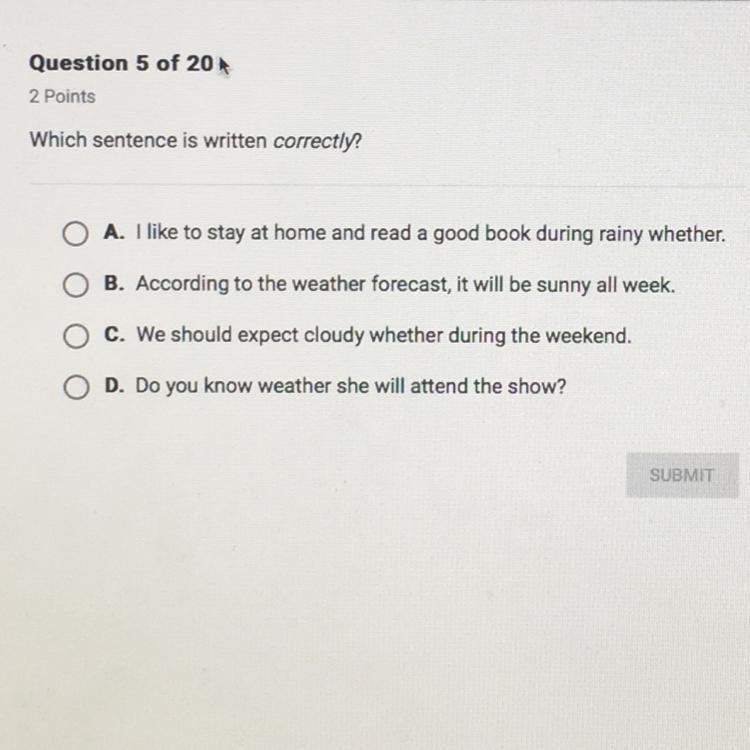
Which sentence is written correctly? The Grammar Battlefield Explained
Most writers assume they can spot errors instinctively, only to realize too late that their "gut feeling" about which sentence is written correctly was wrong...
-

When to Use Than or Then: The Nuances That Define Precision in Writing
At its core, the confusion arises because both words sound identical, yet their functions diverge entirely. Than serves as a comparative conjunction, linking...
-

The Hidden Spectrum: Mastering Synonyms of Good in Language and Culture
Yet, the challenge lies in the spectrum itself. "Good" is deceptively simple, but its synonyms of good span from the mundane ("adequate") to the transcendent...
-

The Great Debate: How Do You Spell Cancelled and Why It Matters
At its core, the issue hinges on a single letter: the -ed suffix. British English clings to the double -l , while American English simplifies it to a single -l...
-

The Subjunctive’s Hidden Power: When to Use Subjunctive Like a Pro
Yet most writers stumble here. The subjunctive’s decline in casual speech has left even educated professionals second-guessing its purpose. Misuse isn’t just...
-

The Exact Length of a 500-Word Essay: What You Need to Know
Then there’s the practical side: how do you actually measure 500 words? Is it 500 words in Times New Roman 12pt, or Arial 11pt? Does including a title or...
-

The Hidden Meaning Behind What Does Etc Mean – A Linguistic Deep Dive
What makes etc. fascinating is its dual nature: it’s both a time-saver and a conversation killer. In formal writing, it’s a precision instrument, allowing...
-

On the Other Hand Meaning: The Hidden Power of Contrast in Thought and Speech
What makes this phrase so potent is its duality. On one side, it’s a grammatical tool, a conjunction that signals a shift in perspective. On the other, it’s a...
-

The Hidden Rules Behind How Do You Spell Clothes
What makes clothes even more intriguing is its plural form. Unlike child (children) or goose (geese), which follow irregular pluralization patterns, clothes...
-

What’s Another Word for Slowly? The Art of Precision in Language
Consider the difference between "gradually" and "languidly." The former suggests a measured progression, while the latter conjures a sense of lazy, almost...
-

The Hidden Power of Punctuation: What Is a Semi Colon and Why It Matters
Consider the semicolon’s role in literature: it is the punctuation of the introspective, the deliberate. Think of Virginia Woolf’s stream-of-consciousness...
-

100+ Good Adjectives Describing a Person: The Art of Precision in Language
Language evolves, yet some good adjectives describing a person endure because they capture universal truths. "Charismatic" has existed since the 17th century...
-

How to Use Reiterate Like a Pro: Mastering Repetition with Precision
Language is a precision tool, and some words carry more weight than they appear. "Reiterate" is one such term—often misused, yet indispensable when clarity...
-

Why Irregular Verbs Defy Rules—and How They Shape Language
The frustration they provoke is legendary. Learners of English often fixate on memorizing these anomalies, while native speakers wield them instinctively...