Tag
English grammar
-

The Secret Behind How to Spell Rhythm—Why Everyone Gets It Wrong
What makes rhythm so notoriously difficult isn’t the spelling itself—it’s the collision of two forces: the visual simplicity of three syllables and the...
-

The Hidden Rules of How to Spell Tomorrow You Never Knew Existed
The confusion isn’t just about memorization. It’s about why the word behaves the way it does. Take the silent w : in today , it’s pronounced, but in tomorrow...
-

The Hidden World of Words Ending in J: Linguistic Secrets and Surprising Facts
Most native speakers assume the letter j is a silent placeholder in words like sage or page , but when it appears at the end, it demands attention. Words like...
-

The Elusive Puzzle: Words That Rhyme with Orange and Why They Matter
The English language is a labyrinth of sounds and meanings, where words often defy the expectations of rhyme and rhythm. Few linguistic puzzles have stumped...
-
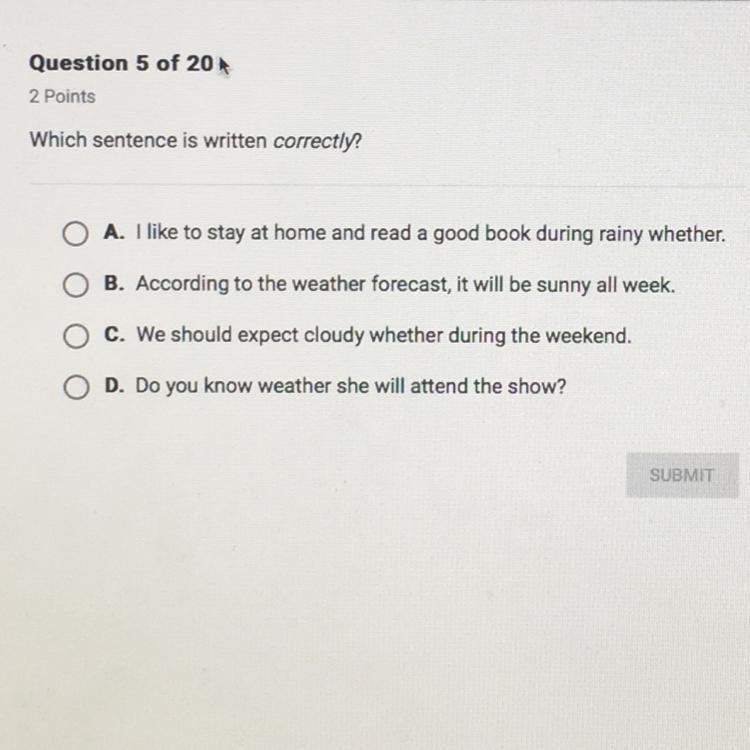
Which sentence is written correctly? The Grammar Battlefield Explained
Most writers assume they can spot errors instinctively, only to realize too late that their "gut feeling" about which sentence is written correctly was wrong...
-

The Subjunctive’s Hidden Power: When to Use Subjunctive Like a Pro
Yet most writers stumble here. The subjunctive’s decline in casual speech has left even educated professionals second-guessing its purpose. Misuse isn’t just...
-

The Nuanced Art of Showed Synonym in Language and Communication
The complexity deepens when considering context. A historian might "demonstrate" a theory to reinforce credibility, while a spy film script would "reveal" a...
-

The Hidden Rules Behind How to Spell 12 – Linguistics, Math, and Cultural Nuances
The question of how to spell 12 isn’t just about letters; it’s about power dynamics. In English, numbers under ten ("one" to "nine") follow a predictable...
-

Unlocking Clarity: The Nuanced Power of On the Contrary Meaning
What separates "on the contrary" from "but" or "nevertheless" ? The former isn’t just a transition—it’s a declarative pivot, often paired with a rebuttal that...
-

The Hidden Power of Adjectives That Start With E in Language and Communication
Yet these adjectives are often overlooked in favor of more common prefixes. Adjectives that begin with "e" —from the ethereal to the exasperating—serve dual...
-

How to Spell Believe: The Hidden Rules Behind a Common Word
What’s fascinating is that believe isn’t an isolated anomaly. It’s part of a broader family of words— receive , deceive , perceive —that share the same...
-

The Hidden Complexity Behind How Many Punctuation Marks Are in English Grammar
The confusion begins with the assumption that punctuation is static. In truth, its inventory has grown organically, absorbing symbols from Latin, Greek, and...
-

Unlocking the Past: How English to Old English Transforms Language and History
Yet the leap between contemporary English and Old English isn’t merely a matter of swapping vocabulary. It’s a transformation of syntax, a reimagining of...
-

When to Use a Semicolon Instead of a Comma: The Nuances of Punctuation Precision
Consider these two sentences: "I love coffee, it’s my morning ritual; however, I can’t drink it after 2 PM." vs. "I love coffee, it’s my morning ritual...
-

How Do You Spell Holiday? The Hidden Rules Behind Celebration Names
Linguists trace the modern confusion to the 16th century, when English absorbed Latin and French influences. The term "holiday" emerged as a contraction of...
-

The Hidden Power of Words: What Is a Common Noun and Why It Shapes Everyday Language
The question what is a common noun isn’t just a grammatical exercise; it’s a gateway to understanding how language organizes reality. Consider this: when a...
-

The Hidden Meaning Behind No Pun Intended—Why It’s More Than Just a Phrase
The phrase "no pun intended" is one of those linguistic curiosities that slips into conversation so effortlessly it’s easy to overlook its deeper significance...
-

How to Use Commas Correctly: When Should You Use a Comma?
The problem lies in the gap between what punctuation should do and what it actually does in practice. Overuse turns sentences into a staccato rhythm; underuse...
-

The Hidden Rules of Grammar: What Is Subject Verb Agreement?
The confusion often stems from the assumption that subject-verb agreement is purely mechanical, a set of rigid rules to memorize. In reality, it’s a dynamic...
-

The Hidden Power of en word family in Language Mastery
Yet, its influence extends beyond mechanics. The "en word family" is a linguistic bridge, connecting past and present tenses with fluidity, allowing speakers...