How a Distribution Center Works: Your Ultimate Guide to Logistics Efficiency

A distribution center isn’t just a warehouse—it’s the nervous system of modern commerce. Here, goods don’t merely sit; they’re sorted, cross-docked, and dispatched at speeds that keep retail shelves stocked and e-commerce orders flying. Behind every "out for delivery" notification lies a meticulously orchestrated process where data, automation, and human expertise collide. The stakes? Billions in annual savings for retailers, manufacturers, and third-party logistics providers who rely on these hubs to bridge the gap between production and consumption.
Yet for all their ubiquity, distribution centers remain shrouded in mystery for many. How do they decide which products to prioritize? What happens when a hurricane shuts down a key facility? And why do some centers resemble high-tech labs while others still rely on manual labor? The answers lie in a blend of strategic location, technological integration, and operational discipline—factors that transform a simple building into a profit multiplier for global supply chains.
This guide cuts through the jargon to reveal the mechanics, benefits, and future of distribution centers. Whether you’re a logistics manager, an e-commerce entrepreneur, or simply curious about the infrastructure powering your daily purchases, understanding these operations will reshape how you perceive the flow of goods—and the companies that control it.
The Complete Overview of Distribution Centers
Distribution centers (DCs) serve as the linchpin between manufacturers and end consumers, acting as high-volume consolidation points where inventory is received, stored, and redistributed with surgical precision. Unlike traditional warehouses, which often focus on long-term storage, DCs prioritize speed and efficiency, using advanced sorting systems to route products to their next destination—whether that’s a retail store, a last-mile delivery truck, or another distribution hub. The rise of e-commerce has amplified their importance, as consumers now demand same-day and next-day delivery options that would be impossible without these strategically placed logistics nodes.
The modern distribution center is a hybrid of technology and human labor, blending automated guided vehicles (AGVs), robotics, and AI-driven inventory management with skilled workers who oversee complex workflows. Location is another critical factor: DCs are typically situated near transportation hubs—ports, airports, or major highways—to minimize transit times and reduce shipping costs. For businesses, the choice of distribution center can mean the difference between meeting demand spikes and facing stockouts or delays. In an era where supply chain resilience is non-negotiable, these centers have evolved from cost centers to revenue generators, directly impacting a company’s bottom line.
Historical Background and Evolution
The concept of centralized distribution dates back to the Industrial Revolution, when railroads and steamships enabled bulk transport of goods. Early warehouses in the 19th century were rudimentary storage facilities, but by the mid-20th century, the rise of supermarkets and mass retailing demanded more sophisticated logistics solutions. The 1960s and 1970s saw the birth of the modern distribution center, as companies like Walmart pioneered cross-docking—a technique that bypasses long-term storage by transferring goods directly from incoming to outgoing shipments. This innovation slashed handling times and cut costs, setting the standard for contemporary logistics.
Table of Contents
- The Complete Overview of Distribution Centers
- Historical Background and Evolution
- Core Mechanisms: How It Works
- Key Benefits and Crucial Impact
- Major Advantages
- Comparative Analysis
- Future Trends and Innovations
- Conclusion
- Comprehensive FAQs
- Q: What’s the difference between a distribution center and a warehouse?
- Q: How do distribution centers handle peak seasons like Black Friday?
- Q: Can small businesses benefit from using a distribution center?
- Q: What role does AI play in modern distribution centers?
- Q: How do distribution centers ensure product safety and accuracy?
- Q: Are distribution centers only for retail businesses?
Fast forward to the digital age, and distribution centers have undergone a second transformation. The 2000s brought warehouse management systems (WMS) that digitized inventory tracking, while the 2010s introduced robotics and machine learning to predict demand and optimize routes. Today, the most advanced DCs resemble smart factories, where drones scan inventory, AI algorithms forecast restocking needs, and blockchain ensures transparency across the supply chain. The COVID-19 pandemic further accelerated this evolution, exposing vulnerabilities in global supply chains and pushing companies to invest in near-shoring and multi-site distribution networks to mitigate risks.
Core Mechanisms: How It Works
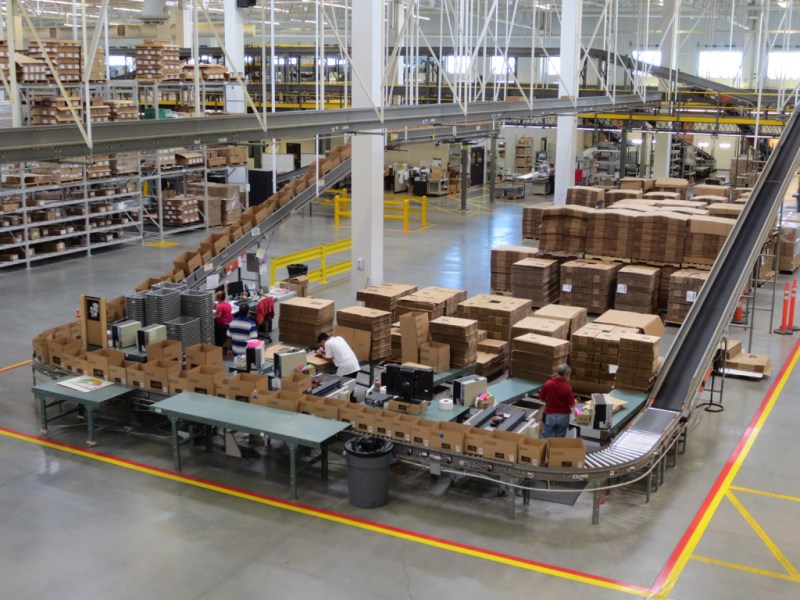
At its core, a distribution center operates on three pillars: receipt, storage, and fulfillment. When goods arrive, they’re unloaded and scanned into the WMS, which assigns them a location based on factors like size, demand, and turnover rate. High-demand items are placed near shipping docks to minimize retrieval time, while seasonal products may be stored in climate-controlled areas. The center’s layout—often designed as a "U-shape" or "L-shape"—facilitates efficient workflows, with conveyor belts and automated sorting systems directing items to their next step.
Fulfillment is where the magic happens. Orders trigger a cascade of activities: picking (selecting items from storage), packing (often with automated taping and labeling), and shipping (via pre-scheduled carrier pickups). Advanced DCs use "zone picking," where workers specialize in specific areas to reduce travel time, or "wave picking," where orders are batched by carrier to optimize truckloads. For e-commerce giants, this process happens in real time, with orders fulfilled within hours of placement. The result? A seamless bridge between production and consumption that keeps the wheels of commerce turning.
Key Benefits and Crucial Impact
Distribution centers don’t just move goods—they redefine how businesses compete. By consolidating shipments, they reduce transportation costs through economies of scale, often cutting logistics expenses by 20–30%. For retailers, this means lower prices for consumers, while manufacturers benefit from just-in-time inventory models that minimize overstocking. The agility of a well-run DC also enables companies to pivot quickly in response to market changes, whether that’s rerouting products during a natural disaster or scaling up for a holiday rush.
Beyond cost savings, distribution centers enhance customer satisfaction by enabling faster, more reliable deliveries. In an age where 60% of shoppers expect same-day delivery, these hubs are the backbone of fulfillment strategies. They also improve inventory accuracy, reducing stockouts and overstock scenarios that can cripple sales. For businesses operating in multiple regions, a network of strategically placed DCs ensures that products are always within reach of the customer—no matter where they are.
"A distribution center isn’t just a building; it’s a strategic asset that can make or break a company’s ability to scale. The best ones don’t just store goods—they anticipate demand and eliminate friction in the supply chain."
— Jane Chen, Supply Chain Director at a Fortune 500 Retailer
Major Advantages
- Cost Efficiency: Consolidating shipments reduces fuel costs, labor expenses, and transportation fees by optimizing routes and load capacities.
- Speed and Scalability: Automated systems and cross-docking enable rapid order fulfillment, allowing businesses to handle spikes in demand without hiring temporary staff.
- Inventory Optimization: Real-time tracking via WMS ensures accurate stock levels, preventing overstocking or stockouts that can lead to lost sales.
- Enhanced Customer Experience: Faster delivery times and reduced errors improve satisfaction, directly impacting brand loyalty and repeat purchases.
- Risk Mitigation: Diversified DC locations reduce exposure to disruptions like port strikes, weather events, or geopolitical issues.
Comparative Analysis
| Traditional Warehouse | Modern Distribution Center |
|---|---|
| Focuses on long-term storage with minimal handling. | Designed for rapid throughput with automated sorting and fulfillment. |
| Uses manual labor for most tasks, leading to higher labor costs. | Employs robotics, AGVs, and AI to reduce labor dependency and errors. |
| Typically located near production sites to minimize inbound costs. | Strategically placed near transportation hubs or high-demand markets. |
| Limited real-time inventory tracking, relying on periodic audits. | Integrated with IoT sensors and WMS for live inventory visibility. |
Future Trends and Innovations
The next decade will see distribution centers evolve into even more intelligent, sustainable, and customer-centric operations. Artificial intelligence will play a larger role in demand forecasting, using predictive analytics to anticipate trends before they materialize. Robotics will further automate picking and packing, with collaborative robots (cobots) working alongside human staff to handle delicate or high-volume items. Meanwhile, sustainability will drive innovations like solar-powered warehouses, electric forklifts, and packaging made from biodegradable materials to reduce carbon footprints.
Another key trend is the rise of "micro-fulfillment centers," small urban hubs designed to serve same-day delivery demands in densely populated areas. These centers, often automated and the size of a basketball court, will complement traditional DCs by reducing last-mile delivery times. Additionally, blockchain technology will enhance transparency across supply chains, allowing businesses to trace products from origin to consumer with unprecedented accuracy. As e-commerce continues to grow, the distribution center of the future won’t just move goods—it will redefine how we think about logistics entirely.

Conclusion
Distribution centers are the unsung heroes of global trade, quietly orchestrating the movement of goods that fuel economies and keep consumers supplied. Their evolution—from simple storage facilities to high-tech logistics powerhouses—reflects the broader shifts in commerce, where speed, accuracy, and adaptability are non-negotiable. For businesses, investing in the right distribution strategy can mean the difference between thriving and merely surviving in an increasingly competitive market.
As technology advances and consumer expectations rise, the role of the distribution center will only grow in importance. Those who embrace innovation—whether through automation, data-driven decision-making, or sustainable practices—will lead the charge in shaping the future of logistics. For now, the message is clear: in the world of supply chain management, the distribution center isn’t just a guide—it’s the ultimate competitive advantage.
Comprehensive FAQs
Q: What’s the difference between a distribution center and a warehouse?
A: While both store goods, distribution centers prioritize speed and throughput, using cross-docking and automation to move products quickly. Warehouses, by contrast, focus on long-term storage with less emphasis on rapid fulfillment.
Q: How do distribution centers handle peak seasons like Black Friday?
A: DCs prepare by increasing staff, activating temporary storage space, and using predictive analytics to stock high-demand items early. Some even partner with nearby warehouses to absorb overflow.
Q: Can small businesses benefit from using a distribution center?
A: Absolutely. Third-party logistics (3PL) providers offer shared distribution services, allowing small businesses to access high-tech fulfillment without the capital investment.
Q: What role does AI play in modern distribution centers?
A: AI optimizes inventory levels, predicts demand, and automates picking routes. Machine learning algorithms also adjust workflows in real time to handle unexpected spikes.
Q: How do distribution centers ensure product safety and accuracy?
A: They use barcoding, RFID tracking, and automated quality checks to verify items before shipment. Many also implement redundancy systems to prevent errors.
Q: Are distribution centers only for retail businesses?
A: No—they serve manufacturers, e-commerce brands, healthcare providers (for medical supplies), and even government agencies managing disaster relief distributions.
Leave a Comment
Comments are moderated before appearing. The data you submit is processed according to the Privacy Policy of Medicine.