How Long Does a Rice Cooker Take? The Science, Speed, and Smart Choices

The first time you press the button on a rice cooker, there’s an almost ritualistic anticipation—steam rising, the gentle hum of heat, and the promise of perfectly cooked grains. But the question lingers: how long does a rice cooker take to deliver that fluffy, golden pile of rice? The answer isn’t as simple as a one-size-fits-all number. It depends on the model, the type of rice, even the altitude where you live. What seems like a straightforward appliance hides layers of science, tradition, and modern engineering.
For home cooks, the stakes are high. Overcook rice, and you risk a mushy, gluey disaster. Undercook it, and you’re left with crunchy, half-done grains that defy the effort. The margin for error is slim, yet the rice cooker—once a niche kitchen gadget—has become a staple in households worldwide. Its rise mirrors broader shifts in how we approach cooking: efficiency, consistency, and minimal effort. But behind the sleek exteriors of today’s smart models lies a history of innovation, from bamboo steamers to microprocessors regulating temperature.
The answer to how long a rice cooker takes isn’t just about time. It’s about understanding the balance between heat, moisture, and grain structure. Whether you’re a seasoned chef or someone who treats rice as a side dish, grasping these fundamentals can transform your results. And with advancements like induction heating and AI-driven cooking modes, the future of rice cooking is rewriting the rules—again.
The Complete Overview of How Long a Rice Cooker Takes
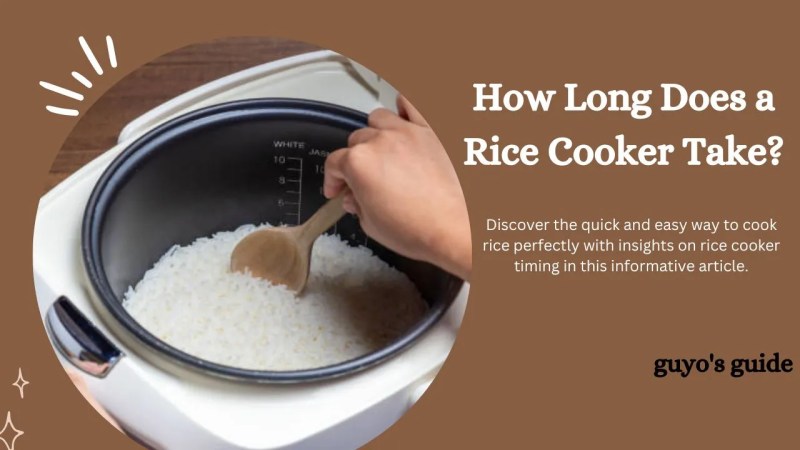
A rice cooker’s cooking time isn’t fixed; it’s a dynamic interplay of variables. At its core, the process hinges on three phases: preheating, active cooking, and resting. The first phase—preheating—can take anywhere from 30 seconds to 2 minutes, depending on the appliance’s power and design. During this stage, the heating element warms the pot and water to the optimal temperature, typically between 95°C and 100°C (203°F–212°F). This may seem trivial, but in high-altitude regions, where water boils at lower temperatures, preheating becomes critical to ensure even cooking.The active cooking phase is where most of the time is spent. For white rice, this usually ranges from 15 to 30 minutes, while brown rice or jasmine rice may require 30 to 45 minutes due to their denser structures. The key here is the rice-to-water ratio, which varies by type. A standard ratio for white rice is 1:1.25 (rice to water), but this can shift based on humidity levels or the cooker’s efficiency. Modern rice cookers automate this with pre-set buttons, but understanding the manual process ensures you’re not left guessing when the timer beeps.
Historical Background and Evolution
The concept of cooking rice with controlled steam dates back millennia, but the modern rice cooker as we know it emerged in the early 20th century. Japanese inventor Tsujiro Hayakawa patented the first electric rice cooker in 1913, a far cry from today’s smart appliances. Early models relied on simple thermostats to maintain heat, often resulting in uneven cooking or burnt rice if left unattended. By the 1950s, the appliance gained traction in Japan and spread globally, becoming a symbol of post-war convenience.The real breakthrough came with the introduction of fuzzy logic technology in the 1980s, pioneered by Japanese brands like Mitsubishi and Panasonic. This innovation allowed rice cookers to adjust heat dynamically, preventing overcooking and undercooking. Today, high-end models incorporate induction heating, Wi-Fi connectivity, and even camera-based rice detection to optimize cooking times. The evolution reflects a broader trend: appliances that don’t just cook but learn and adapt. Yet, despite these advancements, the fundamental question—how long does a rice cooker take—remains tied to the age-old physics of heat transfer.
Core Mechanisms: How It Works
Inside a rice cooker, the magic happens in three layers: the heating element, the thermostat, and the steam chamber. The heating element, typically a coiled wire or induction coil, warms the pot until the water reaches boiling point. Once boiling, the thermostat kicks in, switching between high and low heat to maintain a steady temperature. This is where the science of latent heat comes into play—the energy required to turn water into steam without raising the temperature further. The steam then permeates the rice grains, breaking down their starches and softening them evenly.Table of Contents
- The Complete Overview of How Long a Rice Cooker Takes
- Historical Background and Evolution
- Core Mechanisms: How It Works
- Key Benefits and Crucial Impact
- Major Advantages
- Comparative Analysis
- Future Trends and Innovations
- Conclusion
- Comprehensive FAQs
- Q: Why does my rice cooker take longer than the manufacturer’s estimated time?
- Q: Can I use a rice cooker for other foods besides rice?
- Q: Does pre-soaking rice reduce cooking time in a rice cooker?
- Q: Why does my rice turn out mushy even though I followed the cooker’s instructions?
- Q: Are smart rice cookers worth the higher price?
- Q: How do I clean and maintain my rice cooker to ensure it lasts longer?
- Q: What’s the fastest way to cook rice in a rice cooker?
The resting phase, often overlooked, is just as critical as the cooking time itself. After the cooker switches to its "keep warm" mode (usually 10–15 minutes), the residual steam continues to work its way through the grains. This is why rice cookers are designed to automatically shut off—they’re not just stopping the heat; they’re letting the rice finish cooking. Skipping this step is a common mistake, leading to rice that’s dry on the outside and raw in the center. Understanding this mechanism answers not just how long a rice cooker takes, but why the timing matters.
Key Benefits and Crucial Impact
Rice cookers have redefined convenience in kitchens worldwide, offering a level of consistency that manual stovetop cooking can’t match. They eliminate the guesswork of stovetop timing, reduce the risk of burning rice, and free up active cooking time—critical for busy households. For those living in humid climates or high-altitude areas, where rice cooking can be unpredictable, a rice cooker acts as a reliable ally. Its ability to maintain even heat ensures that every grain cooks uniformly, a feat nearly impossible with traditional methods.The impact extends beyond efficiency. Rice cookers have democratized cooking, making it accessible to those with limited time or culinary skills. In professional kitchens, they’re used to prepare large batches of rice for meals, while in homes, they’ve become the backbone of meal prep. The appliance’s versatility—many models can cook soups, porridge, or even steam vegetables—adds to its appeal. Yet, the most compelling argument remains its simplicity: press a button, walk away, and return to perfectly cooked rice.
"The rice cooker is the ultimate example of how technology can serve the most basic of human needs—nourishment—without complicating the process." — David Chang, Chef and Food Writer
Major Advantages
- Consistency: Eliminates human error in temperature control, ensuring rice is cooked to the same standard every time—critical for recipes requiring precise textures.
- Energy Efficiency: Uses less electricity than stovetop cooking, as it only heats the necessary amount of water and maintains optimal temperatures.
- Multifunctionality: Many modern models include settings for steaming, slow cooking, or even fermenting, expanding their utility beyond rice.
- Safety: Automated shut-off features prevent overcooking and potential fires, making them ideal for unattended use.
- Space-Saving: Compact designs fit easily into small kitchens, and their non-stick pots simplify cleanup compared to stovetop pots.

Comparative Analysis
Not all rice cookers are created equal. The time it takes to cook rice varies significantly based on the model’s technology, power, and design. Below is a comparison of four common types:| Type | Cooking Time (White Rice) | Key Features |
|---|---|
| Basic Analog | 20–30 minutes | Manual controls, no pre-set programs, relies on user input for water ratios. |
| Digital with Fuzzy Logic | 15–25 minutes | Automatically adjusts heat; includes pre-set buttons for different rice types. |
| Induction Heating | 12–20 minutes | Faster heating, more precise temperature control, energy-efficient. |
| Smart/Wi-Fi Enabled | 10–18 minutes | Connects to apps for remote control, learns user preferences, and may include camera sensors. |
Future Trends and Innovations
The next generation of rice cookers is poised to blur the line between appliance and artificial intelligence. AI-driven cooking modes are already being tested, where the device learns from your cooking habits to adjust times and temperatures automatically. Imagine a rice cooker that not only cooks your rice but also suggests pairings based on your meal preferences—integrating with smart fridges to track ingredients. Voice control and hands-free operation are also on the horizon, aligning with the rise of smart kitchens.Sustainability is another frontier. Future models may incorporate solar-powered heating elements or water recycling systems, reducing environmental impact. Meanwhile, modular designs could allow users to swap components (e.g., steamers, slow-cookers) to adapt the appliance to different culinary needs. As rice consumption grows globally—driven by dietary shifts and plant-based trends—the rice cooker’s role will evolve from a simple tool to a centralized kitchen hub.
Conclusion
The question how long does a rice cooker take is less about a fixed number and more about understanding the variables at play. Whether you’re using a 1950s-era model or a Wi-Fi-enabled smart cooker, the principles remain the same: heat, moisture, and time must align for perfect rice. The appliance’s genius lies in its ability to simplify a process that, for centuries, required careful attention. Yet, as technology advances, the rice cooker is becoming more than a tool—it’s a reflection of how far we’ve come in balancing tradition with innovation.For the home cook, the takeaway is clear: patience and precision pay off. Skipping the resting phase or ignoring the rice-to-water ratio can turn a foolproof method into a culinary misstep. But with the right model and a bit of knowledge, a rice cooker can deliver restaurant-quality results with minimal effort. As we look ahead, the future of rice cooking is bright—faster, smarter, and more connected than ever.
Comprehensive FAQs
Q: Why does my rice cooker take longer than the manufacturer’s estimated time?
A: Several factors can extend cooking time, including the altitude (higher elevations require longer cooking), humidity levels (moist air affects evaporation rates), and the type of rice (brown rice or wild rice take significantly longer than white rice). Additionally, older models or those with lower wattage may heat slower. Always adjust water ratios if needed—some rice cookers allow manual overrides.
Q: Can I use a rice cooker for other foods besides rice?
A: Absolutely. Most modern rice cookers include settings for steaming vegetables, making porridge, or slow-cooking soups. Some even have a "ferment" or "yogurt" mode. Always check the manual for specific guidelines, as certain foods (like eggs or dairy) may require special pots or lower heat settings to avoid sticking or burning.
Q: Does pre-soaking rice reduce cooking time in a rice cooker?
A: Pre-soaking (especially for brown rice or wild rice) can reduce cooking time by 5–10 minutes because it softens the grains and allows them to absorb water more efficiently. However, white rice typically doesn’t require soaking, as it cooks quickly enough. If you do soak, drain the rice thoroughly before adding it to the cooker to avoid excess water.
Q: Why does my rice turn out mushy even though I followed the cooker’s instructions?
A: Mushy rice is usually caused by overcooking or too much water. Modern rice cookers are designed to handle standard ratios, but if you live in a humid climate, you may need to reduce water slightly. Additionally, stirring the rice during cooking (if your model allows it) can disrupt the steam cycle and lead to uneven texture. Always let the rice rest in the cooker after the cycle ends.
Q: Are smart rice cookers worth the higher price?
A: If you prioritize speed, convenience, and automation, smart rice cookers are worth the investment. Features like Wi-Fi connectivity, app control, and AI learning can save time and improve results, especially for busy households. However, if you cook rice infrequently or prefer simplicity, a mid-range digital model may offer sufficient performance at a lower cost.
Q: How do I clean and maintain my rice cooker to ensure it lasts longer?
A: Most rice cookers have non-stick pots that should be cleaned with warm, soapy water and a soft sponge. Avoid abrasive scrubbers that can damage the coating. For the outer body, wipe with a damp cloth and mild detergent. Never soak the pot in water, as it can warp or degrade seals. Descale the cooker every 3–6 months using a vinegar or commercial descaling solution to prevent mineral buildup, which can affect performance.
Q: What’s the fastest way to cook rice in a rice cooker?
A: For the quickest results, use pre-cooked rice (like instant rice) or microwave-steamed rice as a base, then finish in the rice cooker on a high-heat setting for 5–10 minutes. Alternatively, induction-heating models cook rice 20–30% faster than traditional ones. If time is critical, consider parboiled rice, which cooks in as little as 10 minutes in some high-end cookers.
Leave a Comment
Comments are moderated before appearing. The data you submit is processed according to the Privacy Policy of Medicine.