Navigating Rentals: The Definitive Guide on Costs, Sizes, and Everything In Between

The rental market is a labyrinth of variables—where square footage dictates price tags, location rewrites economics, and unseen fees lurk in fine print. Whether you’re a first-time tenant weighing a studio’s charm against a two-bedroom’s practicality or an investor calculating yield potential, the decisions hinge on understanding rentals complete guide costs sizes in their raw, unfiltered form. The numbers don’t lie: a 500-square-foot loft in Brooklyn might cost twice as much as a 1,200-square-foot ranch in the suburbs, yet both could serve vastly different lifestyles. The disconnect between perception and reality is where most mistakes happen.
Take the case of the "affordable" micro-apartment marketed as a "cozy haven." What’s not advertised? The $300/month premium for a shared laundry room, the $50/month "amenities fee" that funds a gym you’ll never use, or the $1,200 security deposit that locks up your emergency fund. These are the cracks in the rental market’s facade—details that transform a seemingly straightforward transaction into a financial tightrope walk. The key to avoiding pitfalls lies in dissecting the costs and sizes of rentals beyond surface-level listings, where every inch and every clause carries weight.
Yet for all its complexity, the rental market follows predictable patterns. A one-bedroom in Manhattan adheres to a formula: proximity to transit, walkability, and historical rent trends. A three-bedroom in Austin obeys different rules—square footage matters more, but so does the HOA’s whims. The challenge isn’t just finding a place; it’s decoding the language of leases, the math behind maintenance fees, and the hidden costs that turn a "bargain" into a money pit. This guide cuts through the noise to expose the mechanics, the advantages, and the traps of renting—so you can negotiate with confidence, not guesswork.
The Complete Overview of Rentals: Costs, Sizes, and Market Dynamics
The rental market is a living organism, shaped by demographics, economic shifts, and urban planning. At its core, it’s a balancing act between supply and demand, where rentals complete guide costs sizes are dictated by scarcity, desirability, and infrastructure. A 900-square-foot apartment in San Francisco’s Mission District will never cost the same as one in Oakland, even if the layouts are identical. The difference? Location-driven inflation, commute costs, and the intangible allure of neighborhood vibrancy. These factors don’t just influence price—they redefine what "size" means. A 1,500-square-foot home in a sprawling suburb might feel cramped next to a 1,000-square-foot condo in a high-rise with a rooftop pool and concierge service.
Understanding this dynamic requires peeling back layers. The surface-level numbers—monthly rent, security deposit—are just the beginning. Beneath them lie utility allowances, pet fees, and sublet restrictions that can double the effective cost. Meanwhile, the physical dimensions of a rental (ceiling height, natural light, storage) often get overshadowed by square footage metrics. A "2-bedroom" in New York might mean 800 square feet with a galley kitchen, while the same label in Dallas could describe 1,200 square feet with a separate dining area. The market’s inconsistency forces renters to think beyond listings and into the nuances of costs and sizes that shape their daily lives.
Historical Background and Evolution
The modern rental market emerged from post-WWII urbanization, when suburban sprawl and corporate housing policies created a demand for flexible living solutions. Before then, renting was a transient arrangement—hotels, boarding houses, and short-term leases dominated. The 1950s and 60s saw the rise of apartment complexes and the first standardized lease agreements, but it wasn’t until the 1980s that rentals complete guide costs sizes became a calculable science. The Fair Housing Act and the proliferation of credit scoring gave landlords tools to assess risk, while tenants gained leverage through organized renters’ rights movements. By the 2000s, the internet democratized access to listings, but it also introduced a new problem: information overload. Today, algorithms and dynamic pricing models (like those used by Airbnb and corporate landlords) have further blurred the lines between traditional rentals and alternative housing options.
Table of Contents
- The Complete Overview of Rentals: Costs, Sizes, and Market Dynamics
- Historical Background and Evolution
- Core Mechanisms: How It Works
- Key Benefits and Crucial Impact
- Major Advantages
- Comparative Analysis
- Future Trends and Innovations
- Conclusion
- Comprehensive FAQs
- Q: How do I determine if a rental’s size is actually worth the cost?
- Q: Are there hidden costs in rentals that most tenants overlook?
- Q: How does the size of a rental affect long-term costs?
- Q: Can I negotiate rent based on the property’s size or condition?
- Q: What are the most common rental size scams, and how do I avoid them?
- Q: How do rental sizes vary by city, and why does it matter?
The evolution of rental sizes mirrors broader cultural shifts. The 1970s saw the rise of the "tiny home" movement, influenced by environmentalism and counterculture. By the 2010s, micro-apartments became a symbol of urban living—packed with efficiency but criticized for sacrificing quality of life. Meanwhile, the gig economy and remote work have expanded the definition of "home," with co-living spaces and flexible lease terms gaining traction. The historical context matters because it explains why today’s market is fragmented: what worked for a 1990s family of four (a 2,000-square-foot single-family home) may not suit a 2024 freelancer with a hybrid work schedule. The costs and sizes of rentals today are a direct result of these evolving priorities.
Core Mechanisms: How It Works
The rental market operates on two parallel tracks: the visible transaction (lease agreements, move-in dates) and the invisible calculus (maintenance costs, tenant turnover, property depreciation). Landlords and property managers use a mix of historical data, local market trends, and predictive analytics to set prices. For example, a landlord in Miami might charge 20% more for a waterfront condo in peak season, even if the square footage is identical to a non-waterfront unit. The mechanism isn’t arbitrary—it’s tied to rentals complete guide costs sizes and the perceived value of amenities. Meanwhile, tenants often overlook how their own behaviors (late payments, frequent complaints) can trigger rent hikes or lease denials. The system is designed to favor those who understand its rules.
At the granular level, the process works like this: a property’s value is first assessed based on comparable sales (comps) in the area. Then, adjustments are made for size, condition, and location. A 1,000-square-foot apartment in Chicago’s Gold Coast might rent for $4,500/month, while the same size in Wicker Park could go for $3,200—despite both being in the same city. The difference? Proximity to Lake Michigan, historic architecture, and the absence of high-rise competition. Landlords then factor in operating costs (property taxes, insurance, utilities) and target a profit margin, typically 5–10%. The result is a rent price that’s a blend of market forces, personal finance, and psychological pricing. For tenants, the challenge is negotiating within this framework—knowing when to walk away from a "fair" price and when to push for concessions.
Key Benefits and Crucial Impact
Renting offers freedom—geographic flexibility, lower upfront costs, and the ability to adapt to life changes without the burden of ownership. For young professionals, rentals provide a testing ground for urban living before committing to a mortgage. For families, they offer stability in transient careers or during divorce proceedings. Even investors leverage rentals to build portfolios without the liquidity risks of property flipping. Yet these benefits come with trade-offs. The lack of equity accumulation, the erosion of tenant protections in some markets, and the psychological toll of not having a "home" to call one’s own are real drawbacks. The rentals complete guide costs sizes must account for these intangibles, not just the bottom-line numbers.
The impact of renting extends beyond personal finance—it shapes cities. High rental costs drive displacement, fueling gentrification cycles that push long-term residents out of neighborhoods they’ve lived in for decades. Conversely, affordable rentals can revitalize declining areas by attracting young workers and small businesses. The balance between supply and demand isn’t just an economic issue; it’s a social one. Understanding the costs and sizes of rentals in this context means recognizing that every lease signed or broken has ripple effects on community stability.
"Renting isn’t just about where you live; it’s about what you sacrifice—and what you gain—in exchange." —Urban Economist Dr. Lisa Chen
Major Advantages
- Financial Flexibility: No down payment, closing costs, or property taxes. Rentals allow for liquidity, making them ideal for those with irregular incomes or high student debt.
- Location Access: High-cost cities (e.g., NYC, SF) become attainable without the commitment of ownership. A $3,500/month rental in Manhattan is far more feasible than a $1.2M purchase.
- Low Maintenance: Landlords handle repairs, HVAC, and structural issues. Tenants avoid unexpected costs like roof leaks or plumbing emergencies.
- Adaptability: Lease terms (6 months, 1 year, month-to-month) let tenants pivot for jobs, family changes, or lifestyle shifts without selling a home.
- Amenities Without Ownership Burden: High-rise living often includes gyms, pools, and concierge services that would cost tens of thousands to replicate in a standalone home.
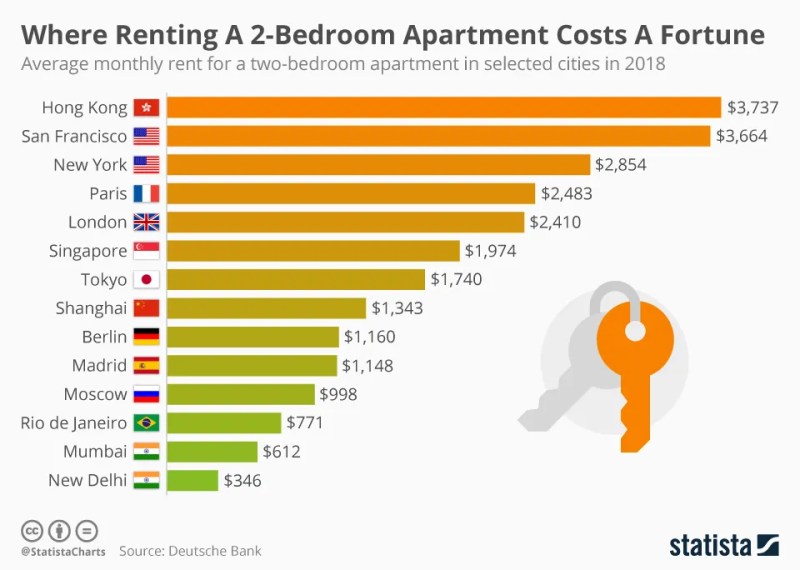
Comparative Analysis
| Factor | Traditional Rentals | Alternative Rentals (Co-Living, Airbnb, Corporate Housing) |
|---|---|---|
| Cost Structure | Fixed monthly rent + utilities (often included). Security deposit typically 1–2 months’ rent. | Variable pricing (nightly/weekly rates for Airbnb; all-inclusive fees for co-living). Deposits can exceed 3 months. |
| Size Flexibility | Standardized units (studios, 1BR, 2BR). Limited customization. | Modular spaces (e.g., co-living pods, Airbnb "private rooms"). Some allow furniture swaps or layout changes. |
| Lease Terms | 6–12 month commitments. Early termination fees common. | Short-term (daily to 3 months) or flexible (e.g., "live as long as you want" co-living). Cancellations often easier. |
| Hidden Costs | Application fees, pet fees, parking fees. HOA dues in some cases. | Cleaning fees, service charges, "experience" upsells (e.g., Airbnb "workations"). Some charge per guest. |
Future Trends and Innovations
The rental market is on the cusp of transformation, driven by technology and shifting social norms. Proptech (property technology) is automating lease signings, maintenance requests, and even rent adjustments via AI. Blockchain is being tested for transparent rental agreements, reducing fraud and disputes. Meanwhile, the rise of "co-living" communities—where shared spaces and built-in social networks replace traditional apartments—is redefining rentals complete guide costs sizes. These spaces prioritize community over square footage, offering private pods (as small as 50 square feet) with access to communal kitchens, coworking areas, and event spaces. The trade-off? Less privacy and higher per-person costs, but for digital nomads and young professionals, the flexibility outweighs the downsides.
Another disruptor is the "rent-to-own" model, which blends rental stability with a path to ownership. Companies like Divvy Homes and Arrived Homes let tenants build equity while paying rent, with a portion of payments going toward a future down payment. This hybrid approach could reshape the costs and sizes of rentals by appealing to those who want the security of ownership without the immediate financial strain. Sustainability is also becoming a differentiator—eco-friendly buildings with solar panels, water recycling, and smart thermostats are commanding premium rents as tenants prioritize green living. The future of rentals won’t just be about where you live, but how you live—and how technology and policy shape those choices.

Conclusion
The rental market is a reflection of society’s priorities: mobility over permanence, experience over ownership, and adaptability over tradition. Yet beneath the trends and innovations lies a fundamental truth: rentals complete guide costs sizes are about more than numbers. They’re about the stories people tell in their living rooms, the commutes they endure, and the compromises they make. For tenants, the key is to approach renting as a strategic decision—not just a monthly expense. Landlords, meanwhile, must balance profitability with fairness, especially as housing affordability crises deepen in major cities. The market will continue to evolve, but the principles remain: know your worth, understand the hidden costs, and never let the size of your space define the size of your life.
As you navigate the rental landscape, remember this: the best deals aren’t always the cheapest. They’re the ones that align with your values, your budget, and your long-term goals. Whether you’re eyeing a 400-square-foot micro-apartment or a 2,500-square-foot suburban home, the costs and sizes you choose will shape your next chapter. Make them count.
Comprehensive FAQs
Q: How do I determine if a rental’s size is actually worth the cost?
A: Start by comparing the unit’s square footage to local averages for similar properties. Use tools like Zillow’s "Home Value" or Redfin’s "Rent Estimate" to benchmark prices per square foot in your target neighborhood. Then, factor in "livable space" vs. "total space"—many listings include closets, storage rooms, or unfinished basements in the square footage. Ask for a floor plan and measure key areas (bedroom dimensions, kitchen workflow) to ensure the layout meets your needs. Finally, calculate the "cost per usable square foot" by dividing rent by the actual living area (excluding hallways, bathrooms under 50 sq ft, etc.). If it’s 20% higher than comparable units, reconsider.
Q: Are there hidden costs in rentals that most tenants overlook?
A: Absolutely. Beyond the obvious (rent, utilities, internet), watch for:
- Application Fees: Some landlords charge $50–$100 per applicant, even if you’re rejected.
- Pet Rent/Deposits: Can range from $25–$100/month + a $300–$1,000 deposit, even for small pets.
- Amenities Fees: "Luxury" buildings charge $50–$300/month for gyms, pools, or concierge services you may never use.
- Parking Fees: In cities, street parking may be free, but garage spots can add $100–$500/month.
- Maintenance Escrow: Some landlords require tenants to pre-pay for repairs (e.g., $200/month held in escrow).
- Sublet Restrictions: Leases often ban subletting without landlord approval, limiting your ability to rent out space if you move.
Q: How does the size of a rental affect long-term costs?
A: Size impacts costs in three key ways:
- Utility Bills: A 1,500-square-foot home in a cold climate will cost 30–50% more to heat than a 1,000-square-foot condo with efficient insulation. Use the Energy Star calculator to estimate savings.
- Maintenance and Repairs: Larger homes have more wear-and-tear points (roofs, HVAC systems, plumbing). A 2,000-square-foot house may require $1,000–$3,000/year in maintenance vs. $500–$1,500 for a 1,200-square-foot unit.
- Property Taxes (if applicable): Some rentals are owner-occupied but taxed as investment properties, increasing landlord costs—which may be passed to tenants via higher rents.
Q: Can I negotiate rent based on the property’s size or condition?
A: Yes, but timing and strategy matter. Start by:
- Researching Comparables: Use rental sites to find 3–5 similar units in the same building or complex. If yours is 10% smaller or in worse condition, ask for a 5–10% discount.
- Leveraging Market Slack: If the landlord has been trying to fill the unit for >30 days, they’re more likely to negotiate. Mention this in your offer.
- Bundling Requests: Ask for a rent reduction and a longer lease term (e.g., 18 months instead of 12) in exchange for reliability.
- Highlighting Issues: If the unit has outdated appliances, poor insulation, or a weak AC system, use these as bargaining chips. Example: "The window units cost $200/month in electricity. A new HVAC system would save both of us money."
- Being Ready to Walk: If the landlord refuses to budge, have a backup unit lined up to show you’re serious.
Q: What are the most common rental size scams, and how do I avoid them?
A: Dishonest landlords or property managers sometimes inflate square footage or misrepresent layouts. Watch for:
- Inflated Square Footage: Some listings include balconies, stairwells, or storage areas in the total. Ask for a floor plan and verify measurements with a tape measure during a tour.
- False "Open Concept" Claims: A "spacious" 1-bedroom might have a tiny kitchen separated by a flimsy half-wall. Request photos from different angles.
- Hidden Rooms: Some landlords advertise a "2-bedroom" but use one room as a closet or laundry area. Inspect closets, under stairs, and attic spaces.
- Misleading "Den" or "Study" Spaces: These are often just repurposed closets or alcoves. Ask if they have windows, outlets, or proper ventilation.
- Virtual Tours vs. Reality: 3D tours can exaggerate space. Always visit in person and measure key areas (bedroom length, kitchen counter space).
Q: How do rental sizes vary by city, and why does it matter?
A: Rental sizes reflect local housing policies, climate, and cultural norms. For example:
- New York City: Tiny apartments (400–600 sq ft) dominate due to high demand and zoning laws. "Studios" often lack separate living/sleeping areas.
- Houston: Larger units (1,200–1,800 sq ft) are common because space is cheaper, and families prioritize roominess.
- San Francisco: Micro-apartments (300–500 sq ft) are widespread, but high-end rentals often include "flex spaces" (convertible rooms for work/guest use).
- Miami: Open-concept layouts with high ceilings are standard, reflecting Mediterranean influences. "Den" spaces are rare.
- Chicago: Historic buildings feature smaller rooms with low ceilings, while newer developments offer "loft-style" high-ceiling units.
Leave a Comment
Comments are moderated before appearing. The data you submit is processed according to the Privacy Policy of Medicine.