Mastering What Is Needed for Steering Control on a PWC: Mechanics, Expertise, and Precision

Steering a personal watercraft (PWC) is not merely about turning the handlebar—it’s a symphony of mechanics, rider skill, and environmental awareness. The subtleties of what is needed for steering control on a PWC often separate a leisurely cruise from a high-speed maneuver, or worse, a dangerous mishap. Unlike traditional boats, PWCs rely on a jet propulsion system where the steering nozzle directs thrust, making precision a non-negotiable factor. Ignoring the interplay between throttle, trim, and water conditions can lead to unpredictable movements, even for seasoned riders.
The physics behind PWC steering are deceptive in their simplicity. A rider’s grip, body weight distribution, and even the angle of the nozzle relative to the hull create a dynamic feedback loop. For example, leaning too far into a turn can cause the bow to rise, altering the watercraft’s center of gravity and reducing stability. Meanwhile, the jet’s exit velocity must be balanced with the nozzle’s deflection to achieve the desired turn radius. These variables are why understanding how to achieve steering control on a PWC is a blend of theory and hands-on practice.
Yet, the nuances don’t end with mechanics. Environmental factors—such as wind, waves, and water depth—demand constant adaptation. A rider must anticipate how choppy water will affect the jet’s thrust or how shallow areas might restrict maneuverability. Even the rider’s clothing and footwear play a role; improper grip can lead to unintended throttle adjustments, while waterlogged shoes increase the risk of slipping. Mastery of steering control on a PWC thus requires a holistic approach, where every element, from the machine to the rider’s mindset, must align for optimal performance.
The Complete Overview of What Is Needed for Steering Control on a PWC
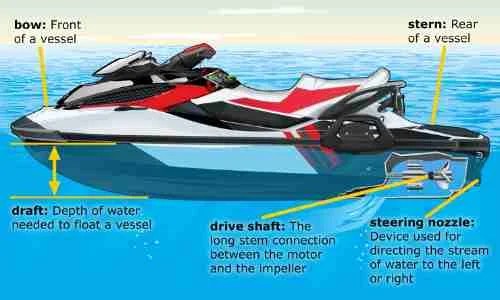
The foundation of steering control on a PWC lies in its propulsion system, which differs fundamentally from propeller-driven boats. Instead of a traditional rudder, PWCs use a steering nozzle that pivots to direct the jet of water expelled by the impeller. This nozzle’s angle determines the direction of thrust, allowing the rider to steer by adjusting it left or right. However, the effectiveness of this system hinges on three primary factors: the rider’s technique, the PWC’s mechanical condition, and external conditions. Neglecting any of these can compromise control, even on calm waters.
At its core, achieving steering control on a PWC depends on the rider’s ability to manipulate the nozzle while maintaining balance. The handlebar’s throttle and brake levers are linked to the nozzle’s movement, meaning that every turn requires coordination between these inputs. For instance, applying throttle too aggressively during a sharp turn can cause the bow to rise, reducing traction and increasing the risk of a wipeout. Conversely, gradual throttle adjustments allow the rider to maintain stability while navigating turns. Understanding these interactions is essential for anyone seeking to refine their PWC handling skills.
Historical Background and Evolution
The evolution of PWC steering control mirrors the broader advancements in marine propulsion technology. Early jet-driven boats, dating back to the 1950s, relied on rudimentary steering mechanisms where the nozzle’s deflection was manually controlled by the rider. These systems were limited in precision, often requiring significant physical effort to adjust. The breakthrough came in the 1970s with the introduction of the jet ski, which standardized the handlebar-linked nozzle system we recognize today. This innovation allowed for more intuitive control, reducing the learning curve for riders.
Table of Contents
- The Complete Overview of What Is Needed for Steering Control on a PWC
- Historical Background and Evolution
- Core Mechanics: How It Works
- Key Benefits and Crucial Impact
- Major Advantages
- Comparative Analysis
- Future Trends and Innovations
- Conclusion
- Comprehensive FAQs
- Q: Can I steer a PWC effectively without wearing a life jacket?
- Q: How does water depth affect steering control on a PWC?
- Q: What is the role of the trim adjustment in steering control?
- Q: Are there specific techniques for steering a PWC in rough water?
- Q: How often should I service the steering mechanism of my PWC?
- Q: Can I modify my PWC’s steering system for better performance?
Modern PWCs have further refined steering control through materials science and aerodynamics. Lightweight composite hulls reduce drag, while advanced nozzle designs enhance responsiveness. Additionally, electronic throttle control (ETC) systems in high-end models provide smoother acceleration and braking, further improving maneuverability. The shift toward enhanced steering control on a PWC has also been driven by safety regulations, which now mandate features like automatic shutoff switches and kill switches to prevent runaway vessels. These developments underscore how what is needed for steering control on a PWC has evolved from basic mechanics to a blend of technology and rider expertise.
Core Mechanics: How It Works
The steering mechanism of a PWC operates on a principle known as vectored thrust, where the direction of the jet’s force is altered to change the watercraft’s path. When the rider turns the handlebar, the nozzle pivots, redirecting the thrust either to the left or right. This redirection creates a turning moment, causing the PWC to pivot around its vertical axis. The angle of the nozzle relative to the hull’s centerline determines the sharpness of the turn; a steeper angle produces a tighter radius, while a shallower angle results in a broader arc.
However, the relationship between nozzle angle and turn radius is not linear. Factors such as speed, water depth, and hull design influence how the PWC responds. For example, at higher speeds, the jet’s momentum increases, making the PWC more responsive to nozzle adjustments but also more prone to oversteering if the rider overcorrects. Conversely, in shallow water, the reduced clearance can restrict the nozzle’s movement, limiting the PWC’s ability to turn sharply. This interplay highlights why mastering steering control on a PWC requires an understanding of these variables and how they interact in real-time.
Key Benefits and Crucial Impact
The ability to steer a PWC with precision is not just a skill—it’s a critical safety feature that enhances performance, reduces accidents, and extends the lifespan of the watercraft. A rider who understands what is needed for steering control on a PWC can navigate tight spaces, avoid obstacles, and respond to sudden changes in conditions with confidence. This control is particularly vital in recreational settings, where riders often operate in crowded waters or perform tricks that demand split-second adjustments. Beyond safety, effective steering control also improves fuel efficiency by minimizing unnecessary throttle use and maximizing the jet’s directional efficiency.
For professional applications, such as search and rescue or marine patrol, the impact of steering control is even more pronounced. Operators rely on the ability to make rapid, precise turns to reach targets quickly or evade hazards. In these scenarios, the difference between a well-controlled PWC and one lacking coordination can mean the difference between mission success and failure. Even in casual use, the benefits of refined steering control—such as smoother rides and reduced wear on mechanical components—make it a worthwhile pursuit for any rider.
"Steering a PWC is like dancing with a force of nature—every movement must be intentional, every adjustment calculated. The rider who understands the mechanics of control is the one who commands the water, not the other way around."
— Marine Engineering Expert, Journal of Marine Technology
Major Advantages
- Enhanced Safety: Precise steering control reduces the risk of collisions, wipeouts, and loss of control in unpredictable conditions.
- Improved Maneuverability: Riders can navigate tight spaces, such as marinas or obstacle courses, with greater ease and confidence.
- Better Performance: Optimal nozzle and throttle management maximizes speed and acceleration while minimizing fuel consumption.
- Extended Equipment Lifespan: Smooth handling reduces wear on the steering system, impeller, and hull, lowering maintenance costs.
- Versatility in Conditions: Understanding how to adjust for wind, waves, and water depth allows riders to operate safely in diverse environments.
Comparative Analysis
| Traditional Boats (Propeller-Driven) | Personal Watercraft (Jet-Driven) |
|---|---|
| Steering via rudder, linked to the helm. | Steering via nozzle deflection, controlled by handlebar. |
| Responsiveness increases with speed; low-speed maneuverability is limited. | High responsiveness at all speeds; excellent low-speed control. |
| Requires deeper water for optimal performance. | Can operate in shallower waters, though depth affects nozzle movement. |
| Mechanical complexity; more parts prone to failure. | Simpler propulsion system; fewer components to maintain. |
Future Trends and Innovations
The future of PWC steering control is poised to be shaped by advancements in automation and smart technology. Emerging trends include autopilot systems that use GPS and sensors to stabilize the watercraft, reducing rider fatigue during long journeys. Additionally, adaptive nozzle designs that adjust their angle in real-time based on water conditions could further refine maneuverability. Electric PWCs are also gaining traction, offering instant torque and smoother acceleration, which may simplify steering control by eliminating the lag associated with combustion engines.
Another promising development is the integration of augmented reality (AR) displays into PWC helmets, providing riders with real-time data on speed, direction, and surrounding obstacles. This technology could revolutionize how riders learn and execute steering control on a PWC, especially in training scenarios. As PWCs become more sophisticated, the line between human skill and machine assistance will blur, potentially leading to a new era where riders rely on both intuition and advanced systems to achieve optimal control.

Conclusion
Understanding what is needed for steering control on a PWC is a multifaceted endeavor that combines mechanical knowledge, environmental awareness, and practical experience. While the basics—such as nozzle deflection and throttle management—are fundamental, the nuances of rider technique and external conditions elevate control to an art form. For enthusiasts, this mastery enhances the thrill of riding, while for professionals, it ensures efficiency and safety. As technology continues to evolve, the tools at a rider’s disposal will expand, but the core principles of steering control will remain rooted in the interplay between human skill and machine precision.
The journey to perfecting PWC steering control is ongoing, and every rider’s experience will shape their approach. Whether through traditional practice or cutting-edge innovations, the goal remains the same: to harness the power of the jet with confidence, precision, and respect for the water’s unpredictable nature. For those willing to invest the time and attention, the rewards are not just in the control achieved but in the freedom it brings to explore the water’s endless possibilities.
Comprehensive FAQs
Q: Can I steer a PWC effectively without wearing a life jacket?
A: No. Wearing a properly fitted life jacket is mandatory for safety and control. A life jacket helps maintain buoyancy, which is critical if you fall off the PWC. Additionally, it provides a stable platform for regaining control or signaling for help, especially in rough water where steering precision is already compromised.
Q: How does water depth affect steering control on a PWC?
A: Water depth significantly impacts steering control. In shallow water, the nozzle may drag or lose effectiveness, reducing the PWC’s ability to turn sharply. Conversely, in deep water, the jet’s thrust is unobstructed, allowing for tighter turns. Riders should avoid operating in water shallower than the PWC’s recommended depth to prevent damage to the impeller or steering mechanism.
Q: What is the role of the trim adjustment in steering control?
A: Trim adjustments alter the PWC’s angle in the water, affecting both speed and steering responsiveness. A proper trim setting ensures the bow rises slightly, improving stability and reducing drag. However, excessive trim can cause the bow to rise too much, leading to instability and reduced control during turns. Riders should experiment with trim settings in different conditions to find the optimal balance for steering control.
Q: Are there specific techniques for steering a PWC in rough water?
A: Yes. In rough water, maintain a firm grip on the handlebar and reduce speed to minimize the PWC’s exposure to waves. Use gradual throttle adjustments to avoid sudden movements that can destabilize the watercraft. Additionally, leaning slightly into turns can help maintain balance, but avoid overcorrecting, as this can lead to loss of control. Practicing in controlled conditions first is advisable.
Q: How often should I service the steering mechanism of my PWC?
A: Regular maintenance is key to ensuring optimal steering control. The steering nozzle and linkage should be inspected annually for wear, corrosion, or misalignment. Lubricate moving parts as recommended by the manufacturer, and check the impeller for damage or debris buildup. Neglecting maintenance can lead to sluggish responsiveness or complete failure of the steering system, compromising safety.
Q: Can I modify my PWC’s steering system for better performance?
A: Modifications to the steering system should be approached with caution. Altering the nozzle’s geometry or the linkage can improve responsiveness but may also reduce safety or void warranties. Consult a marine technician or the manufacturer before attempting any modifications. Stock systems are designed for optimal performance and safety, and unauthorized changes can lead to unpredictable handling.
Leave a Comment
Comments are moderated before appearing. The data you submit is processed according to the Privacy Policy of Medicine.