Craigslist California’s Digital Marketplace Remains a Powerhouse—Here’s Why

Craigslist’s California listings have defied obsolescence, thriving as a digital marketplace where millions still turn for deals, rentals, and community connections. While newer platforms dominate headlines, the platform’s resilience—especially in California—stems from its unmatched simplicity, trust, and adaptability. Unlike flashy alternatives, Craigslist’s California remains a bastion of raw, unfiltered transactions, where small businesses and individuals still outmaneuver algorithm-driven competition.
The platform’s longevity isn’t accidental. It thrives on a paradox: a pre-digital-era interface that somehow feels more human than hyper-modern apps. In a state where tech giants rewrite market rules daily, Craigslist’s California listings persist as a counterbalance—a reminder that not all progress requires abandoning the functional. Its survival hinges on three pillars: cost efficiency, local relevance, and a user base that refuses to be replaced by curated feeds.
Yet, beneath its utilitarian surface lies a complex ecosystem. The digital marketplace Craigslist California remains a microcosm of the state’s economic pulse, where every listing tells a story of supply, demand, and cultural shifts. From Silicon Valley’s tech cast-offs to rural farm equipment, the platform mirrors California’s contradictions: innovation and frugality, urban density and sprawling isolation.
The Complete Overview of the Digital Marketplace Craigslist California Remains
Craigslist’s California presence is more than a relic—it’s a dynamic force shaping how the state trades, rents, and communicates. Unlike regional clones or niche alternatives, the platform’s California listings operate as a decentralized network, where trust is built through repetition rather than verification. This model has weathered waves of disruption, from Facebook Marketplace’s rise to the surge of hyper-local apps, by staying true to its core: a no-frills, text-based exchange where the community polices itself.What sets the digital marketplace Craigslist California apart is its adaptability. While other platforms pivot toward social integration or AI-driven recommendations, Craigslist’s California listings double down on raw utility. The absence of ads, the simplicity of posting, and the lack of forced user profiles create a frictionless experience—critical for a state where time and transparency are premium commodities. Even as younger demographics flock to Instagram or OfferUp, Craigslist’s California remains a lifeline for older generations, small landlords, and budget-conscious buyers who prioritize functionality over aesthetics.
Historical Background and Evolution
Craigslist’s origins trace back to 1995, when Craig Newmark, a San Francisco-based tech writer, created an email distribution list to connect theatergoers. By 1996, the list expanded into a classifieds board, eventually morphing into the digital marketplace we recognize today. California became its proving ground: a state with disparate needs—from Los Angeles’ entertainment industry hand-me-downs to the Central Valley’s agricultural surplus—demanded a platform that could scale without losing local flavor. Unlike early competitors that centralized transactions, Craigslist’s California listings thrived by decentralizing them, letting each city’s culture dictate its rhythm.The platform’s evolution in California reflects broader tech trends. In the 2000s, as eBay and Amazon gained traction, Craigslist pivoted to hyper-localism, adding city-specific sections that mirrored regional idiosyncrasies. San Francisco’s listings leaned toward tech accessories and tiny homes, while rural areas like Fresno focused on farming equipment and livestock. This adaptability ensured that even as Silicon Valley’s economy boomed, Craigslist’s California remained relevant—acting as a safety valve for those priced out of the new economy.
Core Mechanisms: How It Works
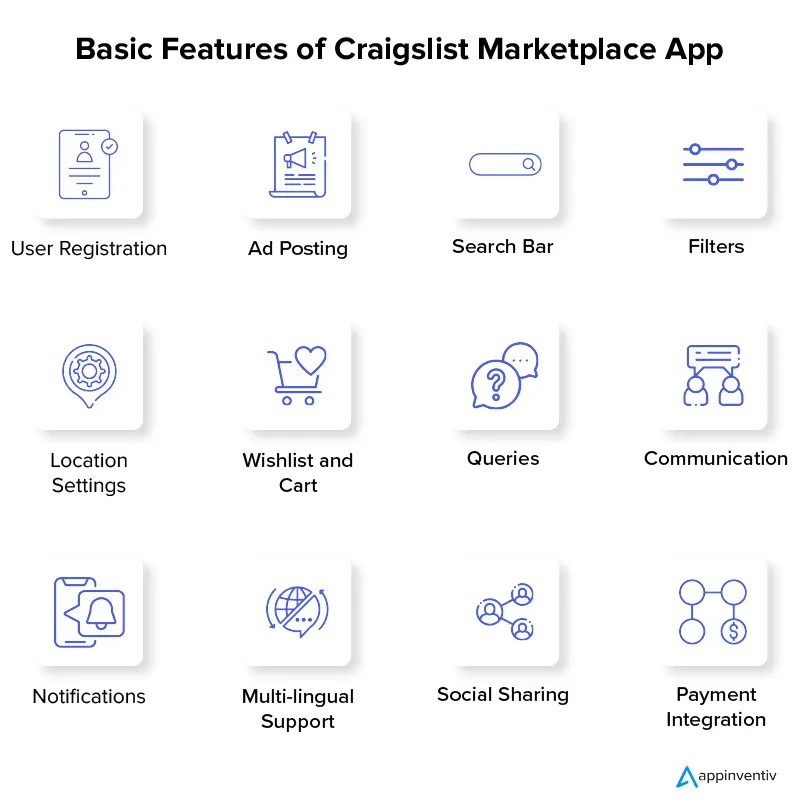
The digital marketplace Craigslist California operates on a deceptively simple model: users post text-based listings with images (if desired), and transactions occur offline or via direct communication. This minimalist approach reduces friction for sellers who lack e-commerce infrastructure and buyers wary of overhyped platforms. The lack of fees, mandatory profiles, or algorithmic curation means lower barriers to entry—critical for California’s diverse user base, from freelancers in Oakland to retirees in Palm Springs.Table of Contents
- The Complete Overview of the Digital Marketplace Craigslist California Remains
- Historical Background and Evolution
- Core Mechanisms: How It Works
- Key Benefits and Crucial Impact
- Major Advantages
- Comparative Analysis
- Future Trends and Innovations
- Conclusion
- Comprehensive FAQs
- Q: Is Craigslist California safe for high-value transactions?
- Q: Why do some California cities have more active Craigslist sections than others?
- Q: Can businesses legally use Craigslist California for sales without a permit?
- Q: How does Craigslist’s California model compare to eBay or Amazon for small sellers?
- Q: What’s the best way to avoid scams on Craigslist California?
Behind the scenes, Craigslist’s California listings rely on a mix of manual moderation and community trust. While automated filters catch obvious scams, the platform’s strength lies in its reliance on user feedback and repeat interactions. A seller’s reputation isn’t quantified by stars or reviews but by the consistency of their listings and responses. This organic trust system has kept fraud rates lower than many competitors, despite the platform’s anonymity.
Key Benefits and Crucial Impact
The digital marketplace Craigslist California remains a cornerstone of the state’s informal economy, offering a lifeline for those excluded by traditional systems. For small businesses, it’s a low-cost alternative to eBay or Shopify, while renters and landlords bypass the commissions of Zillow or Apartments.com. Even in an era of subscription services, Craigslist’s zero-fee model ensures accessibility—whether you’re selling a vintage guitar in Berkeley or a used tractor in Bakersfield.California’s reliance on Craigslist extends beyond commerce. The platform functions as a community bulletin board, where lost pets, volunteer opportunities, and local events are shared without corporate mediation. This grassroots utility has made it indispensable in times of crisis, from wildfire evacuations to pandemic-era layoffs, where people turned to its forums for solidarity.
"Craigslist isn’t just a marketplace—it’s a social contract between strangers who trust the system more than the system trusts them." — Tech journalist covering California’s digital economy
Major Advantages
- Cost Efficiency: Zero listing or transaction fees make it ideal for budget-conscious users, from freelancers to first-time sellers.
- Local Relevance: City-specific sections ensure hyper-targeted reach, unlike national platforms that dilute regional demand.
- Trust Through Volume: High traffic reduces scams by sheer numbers; bad actors are outvoted by legitimate users.
- No Forced Profiles: Anonymity appeals to privacy-conscious users, unlike social media-linked marketplaces.
- Adaptability: Categories evolve with user needs, from "Gigs" for gig workers to "For Sale" sections for niche industries like cannabis accessories.
Comparative Analysis
| Feature | Craigslist California | Facebook Marketplace |
|---|---|---|
| Fees | None | Hidden costs (e.g., payment processing) |
| User Base | Diverse age groups, local focus | Younger demographics, social-driven |
| Trust Model | Community reputation | Facebook’s algorithm + reviews |
| Advertising | None | Targeted ads integrated |
Future Trends and Innovations
The digital marketplace Craigslist California remains resilient, but its future hinges on embracing incremental changes without losing its core. One likely shift is the integration of lightweight verification (e.g., phone-based ID checks) to combat scams, while preserving anonymity for legitimate users. Additionally, AI-driven search optimizations could surface listings faster, though the platform risks alienating users if it veers toward algorithmic curation.Another trend is the rise of "Craigslist adjacent" services—apps that mimic its simplicity but add features like in-person meetup safety tools. While these may siphon off users, Craigslist’s California listings could counter by leaning into its community role, expanding forums for local activism or mutual aid. The key will be balancing innovation with the platform’s anti-corporate ethos.

Conclusion
The digital marketplace Craigslist California remains a testament to the enduring power of simplicity in an era of complexity. Its survival isn’t due to cutting-edge technology but to an unwavering commitment to serving users as they are—not as data points or ad targets. For California’s diverse populations, from urban professionals to rural families, Craigslist fills gaps that polished platforms ignore.As the state’s economy continues to evolve, Craigslist’s role may shift from dominant marketplace to essential utility. But its legacy is secure: a digital space where trust is earned through repetition, not algorithms.
Comprehensive FAQs
Q: Is Craigslist California safe for high-value transactions?
While Craigslist itself doesn’t facilitate payments, its high traffic deters many scammers. For high-value items, users typically meet in public, use cash, and verify listings via phone. However, caution is advised—always research and avoid deals that seem too good to be true.
Q: Why do some California cities have more active Craigslist sections than others?
Activity varies by local needs. Urban areas like Los Angeles or San Francisco see high demand for housing and tech-related items, while rural regions like the Central Valley focus on agriculture and machinery. Population density and economic activity directly influence listing volume.
Q: Can businesses legally use Craigslist California for sales without a permit?
California law treats Craigslist as a public forum, but businesses must comply with local regulations (e.g., sales tax collection, zoning laws). Some cities require permits for commercial activity, even on classifieds. Always check municipal rules to avoid fines.
Q: How does Craigslist’s California model compare to eBay or Amazon for small sellers?
Craigslist wins on cost and local reach, while eBay/Amazon offer wider audiences but charge fees and require shipping logistics. Craigslist is ideal for hyper-local sales (e.g., furniture, tools), whereas eBay excels in collectibles or rare items.
Q: What’s the best way to avoid scams on Craigslist California?
Never wire money or share sensitive info upfront. Meet in public, inspect items thoroughly, and use payment methods with buyer protection (e.g., Cash App with fraud alerts). Trust your instincts—if a deal feels off, it probably is.
Leave a Comment
Comments are moderated before appearing. The data you submit is processed according to the Privacy Policy of Medicine.