The Mythic Power of Wings of Fire: From Legend to Modern Legacy
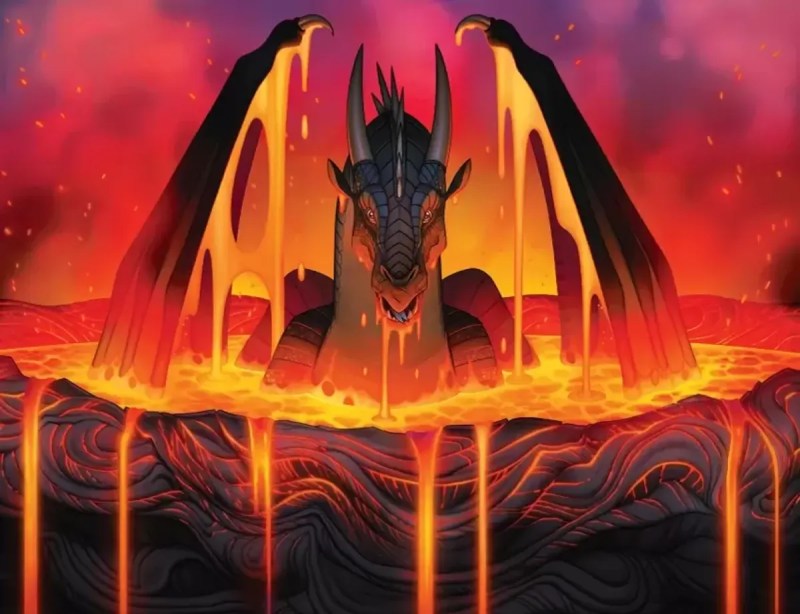
The first time wings of fire appear in recorded history, they do so not as a mere metaphor but as a divine decree. Ancient civilizations carved these blazing appendages into temple walls, not as embellishments, but as warnings—symbols of judgment, transformation, and the untamable force of creation itself. The Sumerians etched them into cylinder seals, the Greeks wove them into the myths of Prometheus, and the Aztecs revered them as the essence of Quetzalcoatl’s dual nature: both serpent and sky-bound deity. These weren’t just wings; they were manifestations, a visual language for the indomitable spirit that defies earthly constraints.
Centuries later, the motif resurfaced in the crucible of the Renaissance, where artists like Michelangelo and Botticelli repurposed it as a canvas for human ambition. The wings of fire became synonymous with rebellion—Lucifer’s fall, Icarus’ hubris, and the alchemist’s pursuit of transcendence. It was no longer confined to the divine; it had seeped into the psyche of mortals, a reminder that fire and flight were not just physical acts but existential states. The symbol’s endurance across millennia speaks to a universal truth: humanity’s obsession with breaking free, even if it means burning in the process.
Today, the phrase wings of fire has evolved beyond its mythic origins, permeating literature, technology, and even corporate branding. It now represents innovation—think of the fiery trails of rockets, the digital "wings" of AI-driven systems, or the metaphorical ascent of startups described as "soaring on the wings of fire." Yet, beneath the modern veneer, the core question remains: What does it truly mean to harness the power of fire and flight? Is it a curse, a blessing, or simply the price of progress?
The Complete Overview of Wings of Fire
The term wings of fire is a composite symbol, blending two primal forces: combustion and aerial dominance. Historically, it embodies the duality of destruction and creation—a paradox that has fascinated civilizations from Mesopotamia to the present. In its earliest iterations, the motif was tied to celestial omens, where fire in the sky (comets, meteors) was interpreted as divine intervention. The wings, often depicted as serpentine or bat-like, reinforced the idea of a being that could traverse both heaven and earth, unshackled by gravity or morality.
By the medieval period, the symbolism had fractured into two distinct but interconnected strands. The Christian tradition framed wings of fire as a punishment (e.g., the seraphim’s flaming swords) or a test (e.g., the phoenix’s cyclical rebirth). Meanwhile, pagan and occult currents embraced it as a tool of empowerment, associating it with shamanic flight, elemental magic, and the alchemical pursuit of the lapis philosophorum. This duality persists today, where the phrase can evoke either apocalyptic dread or revolutionary potential, depending on the context.
Historical Background and Evolution
The origins of wings of fire can be traced to the 3rd millennium BCE, where Sumerian and Akkadian texts describe lamassu—winged, bull-headed deities—whose fiery breath signified both protection and wrath. These figures were architectural guardians, their wings etched into palace gates to ward off chaos. Fast-forward to classical antiquity, and the Greeks mythologized the concept through Prometheus, whose theft of fire from Olympus granted humanity the wings of fire—the ability to rise above brute survival. The punishment that followed (eternal torment) underscored the cost of such ascent.
Table of Contents
- The Complete Overview of Wings of Fire
- Historical Background and Evolution
- Core Mechanisms: How It Works
- Key Benefits and Crucial Impact
- Major Advantages
- Comparative Analysis
- Future Trends and Innovations
- Conclusion
- Comprehensive FAQs
- Q: What is the oldest known depiction of wings of fire?
- Q: How does the wings of fire motif differ in Christianity vs. paganism?
- Q: Are there real-world technologies inspired by wings of fire?
- Q: Why do startups and brands use wings of fire imagery?
- Q: Can wings of fire be interpreted as a feminist symbol?
- Q: What does the future hold for wings of fire in pop culture?
In the 16th and 17th centuries, the motif underwent a secular transformation during the Scientific Revolution. Artists like Albrecht Dürer depicted winged dragons in engravings, symbolizing the scientia (knowledge) that could either enlighten or consume. Meanwhile, the phoenix, a bird with flaming wings, became a metaphor for the Renaissance itself—a civilization rising from the ashes of the Dark Ages. By the Industrial Revolution, the phrase had morphed into a metaphor for progress at any cost, as factories belched smoke like the wings of some mechanical Leviathan.
Core Mechanisms: How It Works
At its essence, the wings of fire symbol operates on three interconnected layers: physical, psychological, and metaphysical. Physically, fire and flight are governed by thermodynamics and aerodynamics—the heat of combustion lifts objects, while aerodynamic surfaces (wings) enable sustained motion. Psychologically, the symbol triggers the locus coeruleus in the brain, activating the fight-or-flight response; the combination of fire and flight evokes both danger and triumph. Metaphysically, it taps into archetypal theory (Carl Jung), where fire represents transformation and wings symbolize freedom—a duality that has driven everything from religious ecstasy to technological breakthroughs.
In modern applications, the "mechanism" of wings of fire is often metaphorical. For example, a startup "taking flight on the wings of fire" implies rapid growth fueled by innovation (the fire) and scalability (the flight). In gaming, characters like Phoenix Wright or Ignis (Final Fantasy) embody this duality—justice (flight) tempered by passion (fire). Even in space exploration, the phrase describes the plasma thrusters of ion engines, where electromagnetic fields propel spacecraft forward, mimicking the mythic ascent of ancient deities.
Key Benefits and Crucial Impact
The enduring appeal of wings of fire lies in its ability to encapsulate paradoxical power: the same force that destroys can also create. This duality has made it a cornerstone of storytelling, branding, and even military symbolism. From the flaming sword of the Archangel Michael (a weapon of divine judgment) to the fire-breathing dragons of fantasy epics (guardians of treasure), the motif reinforces the idea that true power is never one-dimensional. It requires control—a delicate balance between chaos and order.
In contemporary contexts, the impact of wings of fire is most visible in innovation ecosystems. Companies that adopt this imagery—whether in logos, slogans, or internal culture—signal a commitment to disruptive thinking. The fire represents creative destruction (Schumpeter’s theory), while the wings symbolize scalability and global reach. Even in personal development, the phrase is used to describe individuals who burn bridges to achieve greatness, a concept popularized by figures like Elon Musk ("First Principles Thinking") and Oprah Winfrey ("Fire and Flight" as metaphors for resilience).
"The phoenix must burn to ascend, but the ascent is not the point—the transformation is. That is the true wing of fire."
— Joseph Campbell, The Hero with a Thousand Faces
Major Advantages
- Symbolic Versatility: The wings of fire can represent rebellion (Prometheus), protection (seraphim), or rebirth (phoenix), making it adaptable to any narrative or brand identity.
- Emotional Resonance: The combination of fire (passion, destruction) and flight (freedom, ambition) triggers a primitive emotional response, enhancing memorability in marketing and media.
- Technological Parallels: Modern interpretations—like plasma propulsion or AI-driven automation—align the mythic symbol with real-world innovation, bridging ancient lore and futurism.
- Cultural Universality: Unlike niche symbols, wings of fire appear across mythologies, religions, and pop culture, ensuring broad recognition without alienating specific audiences.
- Psychological Motivation: The phrase subconsciously reinforces goal-setting by framing challenges as necessary fuel for growth, a tactic used in corporate training and self-help literature.

Comparative Analysis
| Aspect | Wings of Fire | Alternative Symbols |
|---|---|---|
| Primary Meaning | Duality of destruction/creation, transcendence | Phoenix: Rebirth only Eagle: Freedom/power Dragon: Chaos or wisdom |
| Historical Roots | Mesopotamia → Greece → Global (3000 BCE–present) | Phoenix: Ancient Egypt/Greece Eagle: Roman/Spartan militarism Dragon: East Asian cosmology |
| Modern Applications | Tech startups, military insignia, personal branding | Phoenix: Rebranding, recovery narratives Eagle: Patriotic/authoritarian imagery Dragon: Fantasy IP, corporate logos |
| Psychological Effect | High arousal (fear + aspiration) | Phoenix: Hopeful but passive Eagle: Dominant but static Dragon: Ambiguous (threat or ally) |
Future Trends and Innovations
The next evolution of wings of fire will likely be shaped by neural and quantum advancements. As brain-computer interfaces (like Neuralink) enable digital flight—metaphorically or literally—the symbol could take on a new dimension: the wings of fire as a metaphor for cognitive liberation. Imagine a future where "firing up" one’s mind (via nootropics or AI augmentation) allows for mental transcendence, echoing the ancient promise of shamanic flight. Similarly, quantum computing may redefine "fire" as entangled particles, where the act of burning data (deletion) paradoxically enables new flight paths in computational space.
In art and entertainment, expect wings of fire to merge with virtual reality and holography. Games like Cyberpunk 2077 have already experimented with neon-lit, fire-winged avatars, but future iterations may allow players to literally feel the heat of their digital wings through haptic feedback. Meanwhile, NFTs and blockchain could turn the symbol into a tradeable asset, where ownership of a "wing of fire" NFT grants access to exclusive AR experiences—blurring the line between myth and commerce. The challenge will be preserving the symbol’s sacred essence while adapting it to a world where fire is code and flight is algorithmic.

Conclusion
The wings of fire are more than a metaphor; they are a living paradox, a symbol that has survived because it refuses to be pinned down. It is the serpent’s coil and the eagle’s ascent, the phoenix’s flame and the rocket’s trail. Its power lies in its ambiguity—it can be a warning or a promise, depending on who wields it. As societies grapple with climate change, AI ethics, and existential risk, the symbol’s duality feels more relevant than ever. Will we use the wings of fire to conquer or create? The answer may lie in our ability to control the flame without letting it consume us.
One thing is certain: the wings of fire will continue to soar, adapting to new myths, new technologies, and new generations of dreamers. The question is not whether we will ride them, but what we will build on the other side of the burn.
Comprehensive FAQs
Q: What is the oldest known depiction of wings of fire?
A: The earliest known depiction appears in Sumerian cylinder seals from ~2500 BCE, featuring winged deities with fiery auras. These were used in rituals to invoke protection and divine intervention.
Q: How does the wings of fire motif differ in Christianity vs. paganism?
A: In Christianity, wings of fire often symbolize divine judgment (e.g., seraphim, angels of wrath) or purification (e.g., the burning bush). In paganism, they represent empowerment—tools for shamanic flight, elemental magic, or alchemical transformation.
Q: Are there real-world technologies inspired by wings of fire?
A: Yes. Plasma thrusters (used in spacecraft like NASA’s X-37B) mimic the flame-winged ascent of mythic creatures. Additionally, fire-breathing drones (used in military exercises) and thermobaric propulsion in aviation draw from the same symbolic language.
Q: Why do startups and brands use wings of fire imagery?
A: The symbol conveys rapid growth (flight) fueled by disruptive innovation (fire). Companies like SpaceX (with its flame-engined rockets) and Red Bull (using fire-winged logos) leverage the duality to signal ambition and intensity.
Q: Can wings of fire be interpreted as a feminist symbol?
A: Absolutely. In modern feminist mythology, figures like Medusa (whose gaze turns men to stone) or Hecate (goddess of magic and crossroads) are reinterpreted as winged, fire-wielding symbols of autonomy and power. The phoenix, too, has been reclaimed as a metaphor for resilience in the face of oppression.
Q: What does the future hold for wings of fire in pop culture?
A: Expect VR/AR experiences where users physically feel the heat of digital wings, AI-generated art that dynamically shifts between fire and flight, and gaming narratives where characters harness fire as a resource (e.g., melting ice barriers, powering up abilities). The symbol will likely fuse with cyberpunk aesthetics, blending ancient myth with futuristic tech.
Leave a Comment
Comments are moderated before appearing. The data you submit is processed according to the Privacy Policy of Medicine.