| Controversial Exhibits or Events |
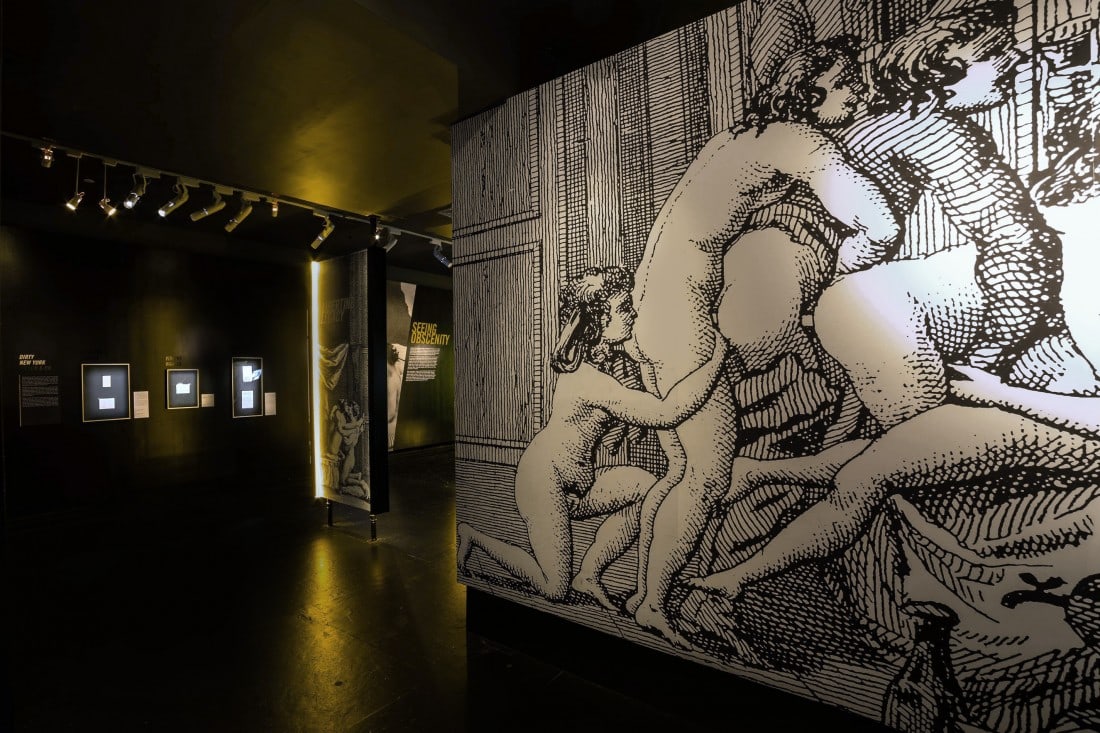
"Porn: A Cultural History" (2018): Featured rare 19th-century pornographic artifacts, sparking debates over censorship and free speech. Critics argued it "glorified exploitation," while supporters praised its historical context.
|
"The Jeffrey
Age Restrictions at the Museum of Sex: Legal Frameworks and Ethical Debates
The Museum of Sex in New York City enforces strict age restrictions, aligning with local laws and broader ethical considerations about minors’ exposure to adult-oriented content. Unlike traditional museums focused on art or history, this institution navigates a complex intersection of free speech, sexual education, and legal obligations to protect minors. Its policies reflect a deliberate balance between accessibility for adult audiences and safeguards against underage entry, setting a precedent in how adult-themed venues manage ethical and operational challenges. Understanding these restrictions requires examining their legal foundations, enforcement mechanisms, and the broader debates they spark in public discourse.
Legal Basis for Age Restrictions: Local Laws and Parental Consent Policies
The Museum of Sex’s age policy is primarily governed by New York State’s obscenity and indecency laws, which prohibit the dissemination of sexually explicit material to minors. Under New York Penal Law § 235.00 (Obscenity), venues displaying or distributing adult content must enforce age verification to avoid legal repercussions, including fines or shutdowns. The museum’s 18+ policy is further reinforced by New York City’s Administrative Code, which mandates age restrictions for establishments selling or exhibiting sexually suggestive materials.
Parental consent does not override these restrictions, as the museum operates under the assumption that minors—regardless of maturity—require legal guardianship for exposure to explicit content. Unlike some European museums (e.g., Amsterdam’s Red Light District or Berlin’s sex museums), which occasionally allow minors with parental supervision, the Museum of Sex maintains a zero-tolerance approach, citing U.S. legal precedents such as Ginsberg v. New York (1968), which upheld restrictions on sexually explicit material for minors. This stance is also influenced by FCC regulations on indecent material, which, while primarily targeting broadcasting, shape broader cultural norms about protecting minors from unfiltered adult content.
The museum’s policies are self-regulated but legally compliant, meaning they align with local authorities’ expectations without requiring direct law enforcement oversight. However, violations—such as underage entry—can lead to criminal charges under child endangerment statutes (NY Penal Law § 260.10), though such cases are rare due to proactive enforcement.
Enforcement Mechanisms: ID Checks, Online Verification, and Partnerships
The Museum of Sex employs a multi-layered verification system to prevent underage access, combining physical and digital safeguards. At the entrance, visitors aged 18 and above must present a government-issued photo ID (e.g., driver’s license, passport). Staff are trained to inspect IDs for authenticity, with a secondary verification process for ambiguous documents. Unlike some adult venues (e.g., strip clubs), which may rely on honor systems or bouncers’ discretion, the museum’s protocol is standardized and documented, reducing human error.
Online ticketing introduces an age gate requiring credit card verification—a common practice in the adult entertainment industry to confirm legal age. This method, while not foolproof, deters minors by blocking purchases without parental credit cards. The museum also partners with third-party ticketing platforms (e.g., Eventbrite) that enforce age restrictions, though some loopholes exist, such as proxy purchases where adults buy tickets for minors.
For compliance, the museum conducts random ID audits and collaborates with NYPD’s Entertainment Licensing Office, which monitors adult venues for age-related violations. In 2019, a similar audit in NYC’s adult bookstores led to $50,000 in fines for non-compliance, underscoring the legal risks of lax enforcement. The Museum of Sex’s proactive stance minimizes such risks while maintaining transparency with visitors.
Comparative Analysis: Stricter or More Lenient Than Other Adult Venues?
The Museum of Sex adopts stricter policies than many adult entertainment venues, particularly when compared to strip clubs, sex shops, and R-rated cinemas. For example:
Strip clubs in Nevada (e.g., Las Vegas) often require 21+ IDs due to alcohol service, but some locations in other states (e.g., Florida) may accept 18+ with parental consent—a policy the Museum of Sex rejects outright.
Adult bookstores in major cities (e.g., Los Angeles, Chicago) typically enforce 18+ ID checks but may lack the museum’s digital verification layers.
R-rated cinemas (e.g., screening adult films) require 17+ IDs in the U.S., but enforcement varies by theater, with some allowing 16-year-olds with parental consent in certain states.
The museum’s approach is more stringent than sex shops but less restrictive than high-security adult venues (e.g., private clubs requiring membership). Its policies reflect a museum’s public education mission, where the goal is to inform adults about sexual history and culture rather than cater to commercial adult entertainment. This distinction is critical in debates about educational vs. exploitative exposure to sexual content.
Ethical Dilemmas: Free Speech, Education, and Minor Protection
The Museum of Sex’s age policy sparks ethical debates centered on free speech, sexual education, and the rights of minors. Critics argue that restricting access to adults limits open discourse about sexuality, while supporters contend that protecting minors from unfiltered adult content is a societal responsibility. This tension is exemplified in cases like:
The 2017 ACLU lawsuit against a Texas school district for banning sex education books, where free speech advocates argued that adult content should be accessible to mature minors.
Germany’s 2018 debate on pornography laws, where some lawmakers proposed 18+ age gates for online adult content, citing studies linking early exposure to harmful sexual socialization.
The U.S. Supreme Court’s Ashcroft v. ACLU (2002), which struck down laws restricting virtual child pornography but reinforced the need for age-based protections in adult media.
The museum’s stance aligns with public health perspectives, such as those from the American Psychological Association (APA), which advises that unsupervised exposure to explicit content before age 18 can contribute to distorted sexual expectations. However, sex educators like Dr. Emily Nagoski argue that comprehensive sexual education—including exposure to diverse representations—should be age-appropriate but not entirely restricted. The museum’s policy, therefore, reflects a conservative approach prioritizing legal compliance over educational accessibility.
Flowchart: Underage Entry Process and Consequences
The following flowchart outlines the steps a minor would encounter if attempting to enter the Museum of Sex, including potential outcomes:
1. Attempted Entry Without ID
Action: Minor presents no ID or a fake one.
Response: Security staff denies entry immediately and directs the minor to exit.
Documentation: Incident logged in the museum’s compliance database.
2. Online Ticket Purchase Without Valid ID
Action: Minor uses a parent’s credit card or a proxy to buy a ticket.
Response: Ticketing platform (e.g., Eventbrite) flags the purchase for age verification.
Outcome: Ticket is cancelled or revoked upon arrival; minor is turned away.
3. Entry with Forged ID
Action: Minor presents a counterfeit or altered ID.
Response: Staff scrutinize the ID using UV lights or digital verification tools.
Consequence: Minor is banned from future visits and reported to local authorities if the forgery is severe (e.g., underage possession of fake IDs).
4. Accompanied by an Adult Without Parental Consent
Action: Minor enters with an adult who claims parental permission.
Response: Museum does not recognize verbal consent; minor is removed from the premises.
Legal Risk: Adult could face child endangerment charges if the minor is under 16.
5. Repeat Offenses or Legal Action
Action: Minor or accompanying adult repeatedly attempts entry.
Outcome: Permanent ban from the museum and potential police involvement for fraud or obstruction.
"The Museum of Sex’s age policy is a form of censorship disguised as protection. If adults can’t discuss sexuality openly, how can society move past outdated taboos?"
— Alexandra Katehakis, Sexologist and Critic of Restrictive Policies (2020)
Rebuttal: Balancing Protection and Education
The claim that age restrictions equate to censorship ignores the legal and ethical obligations museums have toward minors. Studies from the Journal of Adolescent Health (2019) show that unregulated exposure to explicit content before
Telegram channels dedicated to the Museum of Sex serve as dynamic virtual communities where enthusiasts, researchers, and curious visitors converge to explore themes of sexuality, history, and cultural discourse. Unlike traditional social media platforms constrained by algorithmic censorship or public visibility, Telegram offers a private, interactive space tailored for niche discussions—particularly those involving adult-oriented topics. These channels function as hubs for real-time updates, ethical debates, and logistical planning, such as group tours or event attendance. Their appeal lies in fostering a sense of belonging among members who may otherwise feel isolated in broader online spaces, while also providing a structured environment for moderated discourse.
The platform’s design—prioritizing privacy, multimedia sharing, and direct communication—makes it uniquely suited for topics that often face scrutiny or suppression elsewhere. Administrators leverage Telegram’s features to curate content that ranges from educational deep dives into sexual history to behind-the-scenes insights from museum staff. Meanwhile, monetization strategies, such as affiliate partnerships and exclusive subscriptions, transform these channels into sustainable communities rather than fleeting trends. Below, an exploration of how these channels operate, their strategic advantages, and the tactics that drive their growth and engagement.
Telegram Channels as Virtual Communities for Museum of Sex Enthusiasts
Telegram channels centered on the Museum of Sex act as curated ecosystems where members engage in shared interests, from historical analysis to contemporary debates on sexuality. These communities typically attract a diverse demographic, including academics, sexologists, tourists, and individuals seeking alternative forms of education or entertainment. The purpose of these channels varies but often aligns with one or more of the following goals:
Information Dissemination: Real-time updates on exhibitions, temporary closures, or special events, such as lectures or workshops hosted by the museum.
Ethical and Cultural Discussions: Debates on topics like the representation of sexuality in art, the historical context of exhibits, or the ethical implications of commercializing sex-related content.
Community Organizing: Coordination for group visits, member-exclusive tours, or collaborative projects, such as writing reviews or creating multimedia content about the museum.
Resource Sharing: Curated lists of books, documentaries, or academic papers related to sexology, sexuality studies, or the museum’s collections.
The demographics of these channels reflect their niche appeal. For instance, channels targeting academic audiences may have members aged 25–45, predominantly professionals in fields like anthropology, psychology, or gender studies. Conversely, channels geared toward tourists or casual visitors often attract younger users (18–35) who prioritize practical information, such as ticket discounts or photography tips for museum visits. Some channels also cater to LGBTQ+ communities, offering safe spaces to discuss exhibits through an intersectional lens, such as queer history or gender-fluid representation.
The success of these communities hinges on moderation and inclusivity. Administrators often implement strict guidelines to prevent harassment, misinformation, or off-topic spam, ensuring the space remains constructive. For example, a channel might enforce rules requiring sources for claims or prohibiting graphic content unrelated to the museum’s educational mission. This balance between openness and control is critical for retaining members who seek both intellectual engagement and a supportive environment.
Telegram’s architecture provides distinct advantages for discussing adult-oriented topics, particularly when compared to platforms like Twitter, Reddit, or Facebook. Three key features—privacy, moderation tools, and content flexibility—make it the preferred choice for niche communities.
1. Privacy and Anonymity
Telegram channels can be set to private or invite-only, shielding discussions from public scrutiny or algorithmic demotion. This is particularly valuable for topics that may attract trolls, censorship, or unwanted attention. For instance, a channel discussing the ethics of erotic art in the Museum of Sex’s collection can operate without fear of being flagged by moderators on platforms like Reddit, where subreddits with adult themes often face restrictions.
2. Advanced Moderation Tools
Administrators can ban users, restrict posting permissions, and filter spam with granular controls. Telegram’s anti-spam bots and customizable rules allow channels to maintain a high standard of discourse. For example, a channel might use bots to automatically flag posts containing unverified claims or explicit language, ensuring debates remain focused on the museum’s content rather than personal attacks.
3. Multimedia and Uncensored Content Sharing
Unlike platforms that restrict images or videos (e.g., Instagram’s nudity policies or YouTube’s demonetization rules), Telegram permits high-resolution images, videos, and even live streams without immediate censorship. This is crucial for channels that share:
Exhibition previews (e.g., sneak peeks of new installations).
User-generated content, such as photos from museum visits or reviews.
Educational multimedia, like interviews with curators or documentaries on sexual history.
4. Decentralized and Algorithm-Free Engagement
Telegram’s feed is not dominated by algorithms, meaning posts are seen by all members in chronological order. This ensures that important announcements (e.g., last-minute ticket sales or event cancellations) reach the audience without being buried. Additionally, Telegram’s cross-platform compatibility (desktop, mobile, and web) allows members to engage seamlessly, regardless of their preferred device.
5. Direct Communication and Feedback
The platform supports direct messaging between admins and members, enabling quick resolutions to issues like ticket booking inquiries or content disputes. This direct line of communication fosters trust and transparency, which is essential for communities built around trustworthy information.
Examples of Successful Telegram Channels Covering Niche Topics and Their Content Strategies
Several Telegram channels have successfully carved out niches in sex education, museum reviews, and adult-oriented discussions. Analyzing their strategies reveals patterns in content curation, member interaction, and growth tactics.
1. @SexEdTelegram (Sex Education Focus)
Demographics: Primarily students, educators, and parents seeking non-judgmental resources.
Content Strategy:
Daily infographics on sexual health, consent, and anatomy, sourced from reputable organizations like Planned Parenthood.
Live Q&A sessions with sexologists, broadcast via Telegram’s video call feature.
Collaborations with universities offering free webinars on sexuality studies.
Growth Tactics:
Partnering with influencers in sex education (e.g., Instagram educators) to cross-promote content.
Offering a free e-book for new subscribers, which includes curated resources on sex-positive parenting.
2. @MuseumHacks (Museum and Gallery Reviews)
Demographics: Travelers, art enthusiasts, and history buffs aged 25–50.
Content Strategy:
Weekly "Museum of the Week" posts, featuring hidden gems and lesser-known exhibits.
User-submitted reviews with ratings for cleanliness, accessibility, and educational value.
Exclusive discounts for members on museum memberships or guided tours.
Growth Tactics:
Polls and surveys to determine which museums members want covered next.
Affiliate links to booking platforms like GetYourGuide, earning commissions on tour sales.
3. @EroticArtCollective (Adult-Oriented Art and History)
Demographics: Artists, collectors, and historians specializing in erotic or pornographic art.
Content Strategy:
Deep-dive posts on historical figures like Gustave Courbet or Hokusai, analyzing their contributions to erotic art.
Member spotlights, where artists share their work with the community.
Virtual exhibitions, where members can "tour" digital archives of private collections.
Growth Tactics:
Limited-time access to exclusive PDF guides on art history, sold via Telegram’s payment bot.
Collaborations with galleries to promote physical exhibitions, driving offline-to-online engagement.
Common Success Factors Across Channels:
Consistency: Posting 3–5 times per week to maintain engagement.
Interactivity: Using polls, quizzes, and AMAs (Ask Me Anything) to involve members.
Exclusivity: Offering members-only content, such as early access to reviews or discounts.
Cross-Promotion: Leveraging other social media platforms (e.g., Instagram, Twitter) to drive Telegram sign-ups.
Monetization Strategies for Museum of Sex Telegram Channels
Telegram channels dedicated to the Museum of Sex can generate revenue through multiple streams, provided they maintain transparency and value for members. Below are the most effective monetization methods, along with case studies of their implementation.
1. Affiliate Marketing
How It Works: Promoting museum tickets, merchandise, or related products (e.g., books on sex
Behind-the-Scenes: Curatorial Mastery at the Museum of Sex
The Museum of Sex in New York City stands as a global pioneer in blending education, art, and provocative storytelling while navigating complex ethical and logistical challenges. Its curatorial process is a meticulous balance between preserving historical authenticity, catering to diverse audiences, and innovating through technology—all while adhering to strict age restrictions. Behind closed doors, the museum’s team of historians, anthropologists, artists, and educators collaborates to transform raw artifacts, scientific data, and cultural narratives into immersive exhibits that resonate across generations. This process demands a multi-layered approach: selecting artifacts with historical significance, designing interactive experiences that avoid exploitation, and adapting content to ensure accessibility without compromising integrity. The result is a dynamic institution where a 10-year-old on a school field trip and a researcher studying Victorian erotica can both find value—yet never cross the line into inappropriate exposure.
Artifact Selection and Historical Contextualization
The foundation of any exhibit at the Museum of Sex lies in its collection of over 30,000 artifacts, ranging from ancient erotic art and medical texts to modern-day adult toys and celebrity memorabilia. Curators employ a rigorous three-tiered vetting process to determine an artifact’s inclusion:
Historical Significance: Items must contribute to broader narratives, such as the evolution of gender roles, sexual health, or cultural taboos. For example, a 19th-century French fétiche (a type of erotic doll) might be displayed alongside essays on colonialism’s influence on sexuality, rather than as mere titillation.
Educational Value: Artifacts are chosen for their ability to spark discussion. A 1920s birth control pamphlet or a 1970s AIDS awareness poster serves as a gateway to conversations about public health and social progress.
Audience Relevance: Curators anticipate visitor demographics. A Victorian-era "marriage manual" might be paired with modern relationship counseling resources to bridge historical and contemporary perspectives.
Challenges in Selection
Controversial items, such as pornographic films from the 1970s or medieval "medical" texts on female anatomy, require careful framing. The museum avoids sensationalism by:
Contextualizing harm: Exhibits on sex trafficking artifacts (e.g., vintage advertisements) include survivor testimonies and resources for further education.
Avoiding exploitation: Replicas or digitized versions are used when originals could be damaging (e.g., historical restraint devices), ensuring ethical handling of sensitive materials.
Designing Interactive Displays for Diverse Audiences
The Museum of Sex’s exhibits are not static; they are experiential ecosystems where touch, sound, and storytelling converge. Curators design interactions tailored to three primary audience segments:
1. Families and School Groups (Ages 10+)
Hands-on but sanitized: Exhibits like "The Science of Love" use interactive kiosks where children can explore anatomy through 3D-printed models (with gender-neutral labeling) and quizzes on reproductive health.
Myth-busting zones: A "Sex Myths vs. Facts" wall lets kids drag and drop misconceptions (e.g., "You can’t get pregnant the first time") into a "True/False" bin, with curators available to clarify.
Language accessibility: Touchscreens offer translations in Spanish, Mandarin, Arabic, and ASL, ensuring inclusivity for non-English speakers.
2. Adults and Researchers (Ages 18+)
Immersive storytelling: The "Erotic Art Through the Ages" exhibit features projected animations that trace the evolution of eroticism in different cultures, with curator-led "deep dive" tours for scholars.
Anonymous feedback: Visitors can submit questions via QR codes linked to a private database, allowing researchers to ask follow-up queries without public exposure.
Themed evenings: Events like "BDSM: History and Consent" include panel discussions with practitioners, ensuring educational depth beyond surface-level curiosity.
3. Sensual but Boundaried Experiences (Ages 21+)
Tactile exhibits: The "Sensory Pleasure" gallery uses haptic feedback stations (e.g., a textured velvet glove simulating different fabrics) paired with historical context (e.g., "How Victorian fabrics influenced intimacy").
AR-enhanced artifacts: Scanning a 1960s vibrator with a smartphone reveals archival interviews with its inventor, blending nostalgia with innovation.
Strict access controls: These areas require ID verification and clear signage: "This exhibit explores adult themes. Patrons under 21 may not enter."
Balancing Sensitivity and Controversy in Exhibit Content
Some exhibits walk a tightrope between historical accuracy and modern sensibilities. The museum employs a "Three C’s Framework" to mitigate backlash:
Clarification: Controversial topics (e.g., historical depictions of non-consensual acts) include disclaimers and alternative perspectives. For instance, an exhibit on ancient Greek pederasty contrasts it with modern discussions on age-of-consent laws.
Collaboration: Curators consult ethicists, historians, and affected communities before finalizing content. The "LGBTQ+ Timeline" exhibit was co-designed with activist groups to ensure representation without tokenism.
Controlled Exposure: Sensitive artifacts (e.g., restraint devices from the 19th century) are displayed in locked cases with trigger warnings and resource lists for visitors seeking support.
Real-World Examples of Handling Backlash
2018 "Porn: The Exhibition" faced criticism for glorifying exploitation. The museum responded by adding a new section on "Ethics in Pornography" featuring interviews with ethical producers and survivor advocates.
2020 "Race and Desire" exhibit (exploring racial stereotypes in erotic art) prompted protests from conservative groups. The museum expanded the exhibit’s educational materials to include academic papers and counter-narratives from scholars of color.
Digital innovation allows the Museum of Sex to expand accessibility while maintaining age restrictions. Key technological integrations include:
Augmented Reality (AR) for Historical Context
Visitors scan vintage postcards with their phones to see hidden annotations—e.g., a 1950s "pin-up girl" ad reveals data on how advertising shaped gender norms.
AR "time capsules": Walking past a 1920s speakeasy replica triggers a virtual jazz performance with historical context on LGBTQ+ safe spaces.
Virtual Reality (VR) for Immersive Storytelling
"The Love Lab" VR experience lets users step into a 19th-century marriage counseling session, observing how Victorian couples discussed intimacy—complete with period-accurate dialogue.
Age-gated VR zones: Children access a sanitized "body positivity" VR tour, while adults explore "The Psychology of Desire" through interactive case studies.
Haptic and Sensory Tech for Adult-Only Exhibits
"The Touch of History" uses pressure-sensitive surfaces to simulate textures from erotic artifacts (e.g., silk from a 17th-century Japanese love letter).
Biometric feedback: Some exhibits track heart rate or skin conductance to measure visitor reactions, later used to refine content sensitivity.
Challenges of Tech Integration
Accessibility: Ensuring screen readers and tactile interfaces work for visually impaired visitors.
Privacy: AR/VR data is anonymized to prevent misuse, with clear opt-out policies.
Cost: High-tech exhibits require multi-year funding, often secured through corporate sponsors (e.g., a sex-positive brand funding a "Modern Relationships" VR module).
Step-by-Step Guide: Designing a New Exhibit at the Museum of Sex
Creating an exhibit at the Museum of Sex is a 6-phase process, blending research, design, and visitor testing. Below is a hypothetical workflow for developing a "Future of Sex" exhibit.
| Phase | Steps | Key Considerations |
|---|
| 1. Concept Development | - Define the theme: "How technology, AI, and social media will reshape intimacy by 2050."- Set age parameters: 10+ (educational), 18+ (exploratory), 21+ ( |
The Museum of Sex’s age requirements are more than a legal formality; they reflect a delicate balance between preserving knowledge and protecting vulnerability in an era where digital platforms amplify both education and exploitation. Telegram channels serve as microcosms of this tension, where subscribers grapple with questions of censorship, commerce, and community—whether advocating for stricter oversight or demanding greater transparency. As technology reshapes how museums curate and visitors engage, the debate over who gets to explore these spaces will only intensify. One thing remains certain: the conversation is far from over, and the lines between curiosity, ethics, and entertainment continue to blur in ways even the boldest exhibits couldn’t predict. |


Leave a Comment
Comments are moderated before appearing. The data you submit is processed according to the Privacy Policy of Medicine.