The Half Windsor Knot: How to Tie a Half Windsor for Timeless Elegance

The Half Windsor knot is the bridge between formality and understated sophistication. Unlike its more rigid full Windsor counterpart, it strikes a balance—structured enough for boardrooms, yet relaxed enough for refined social gatherings. This knot, often overlooked in favor of the Windsor’s grandeur or the Four-in-Hand’s casual charm, is the unsung hero of modern menswear: versatile, adaptable, and effortlessly polished.
Its appeal lies in its subtlety. While the full Windsor demands precision and a wide collar, the Half Windsor accommodates narrower collars and thinner ties without sacrificing presence. It’s the knot of the discerning professional—the man who values precision but rejects unnecessary bulk. Yet mastering it requires more than just a quick tutorial; it demands an understanding of fabric dynamics, tension control, and the nuanced interplay between knot and collar.
The Half Windsor’s elegance isn’t accidental. It’s a product of sartorial evolution, refined over decades to meet the needs of men who sought sophistication without the constraints of a full Windsor. Whether you’re dressing for a corporate event, a black-tie affair, or a weekend brunch with colleagues, this knot delivers authority without overwhelming the wearer. Below, we dissect its mechanics, advantages, and the artistry behind its execution.
The Complete Overview of How to Tie a Half Windsor
The Half Windsor knot is a hybrid of the full Windsor and the simpler half-Windsor (often confused with the Four-in-Hand). Its defining feature is the partial winding of the tie around the collar stand, creating a compact yet structured appearance. This design allows it to sit higher on the collar than a Four-in-Hand while remaining less imposing than a full Windsor. The result? A knot that flatters narrower collars and thinner ties, making it a staple in modern wardrobes where minimalism meets refinement.What sets the Half Windsor apart is its adaptability. Unlike the full Windsor, which requires a broad collar (typically 3.5 inches or wider) and a thick tie, the Half Windsor thrives on versatility. It works with collars as narrow as 2.75 inches and ties as slim as 2.5 inches in width. The key lies in its construction: the tie’s width is leveraged to create a balanced knot without the bulk. This makes it ideal for contemporary dress codes where proportions are leaner, and the focus is on clean lines rather than voluminous knots.
Historical Background and Evolution
The Half Windsor’s origins trace back to the mid-20th century, when menswear began shifting toward more streamlined silhouettes. The full Windsor, popularized in the 1960s by figures like Prince Philip, was the gold standard for formal occasions—but its demands (a wide collar, a thick tie, and meticulous tension) made it impractical for everyday wear. Enter the Half Windsor: a compromise that retained the Windsor’s prestige while adapting to narrower collars and thinner fabrics, which became prevalent in the 1970s and 1980s.Its evolution mirrors broader sartorial trends. As business attire moved away from the broad-shouldered suits of the 1950s, so too did the knots that adorned them. The Half Windsor emerged as the knot of the "new professional"—less rigid than the Windsor, less casual than the Four-in-Hand. It was adopted by stylists and tailors who recognized its ability to elevate a look without sacrificing comfort. Today, it remains a favorite among men who prioritize understated excellence over ostentatious display.
Core Mechanisms: How It Works
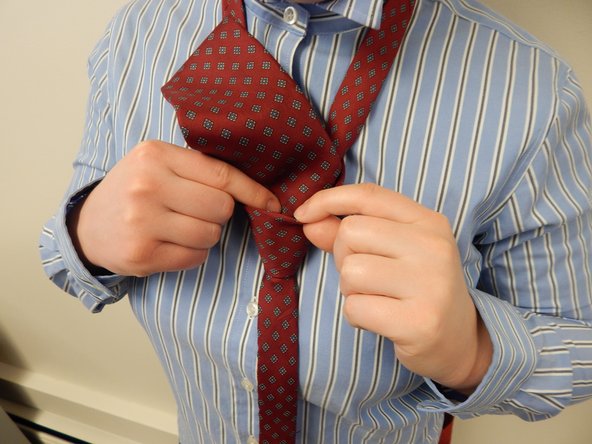
The Half Windsor’s construction begins with the tie’s width playing a critical role. Unlike the full Windsor, where the tie is wrapped fully around the collar stand, the Half Windsor involves only one partial wrap before the knot is secured. This partial wrap creates a tighter, more compact structure, which is then anchored by a second loop that sits higher on the collar. The tension is adjusted to ensure the knot sits flush against the collar, with the tie’s tip pointing toward the belt buckle—never above it.Table of Contents
- The Complete Overview of How to Tie a Half Windsor
- Historical Background and Evolution
- Core Mechanisms: How It Works
- Key Benefits and Crucial Impact
- Major Advantages
- Comparative Analysis
- Future Trends and Innovations
- Conclusion
- Comprehensive FAQs
- Q: Can I tie a Half Windsor with a very thin tie?
- Q: How do I adjust the Half Windsor if it sits too high or too low?
- Q: Is the Half Windsor suitable for black-tie events?
- Q: Can I wear a Half Windsor with a spread collar?
- Q: What’s the best fabric for a Half Windsor?
- Q: How do I fix a Half Windsor that looks lopsided?
- Q: Is the Half Windsor easier to tie than a full Windsor?
The mechanics hinge on two principles: fabric control and tension management. The tie’s width must be sufficient to form a stable knot without excessive bulk. A tie that’s too narrow will struggle to create the necessary structure, while one that’s too wide may result in a knot that sits too low or appears disproportionate. The partial wrap also requires precise hand placement; the first loop must be snug but not overly tight, as this affects the knot’s final position. Mastery comes from practice, but understanding these fundamentals ensures consistency.
Key Benefits and Crucial Impact
The Half Windsor’s rise isn’t merely a sartorial trend—it’s a response to modern menswear’s demands for precision and adaptability. In an era where suits are slimmer, collars are narrower, and ties are often made from lighter fabrics, the Half Windsor offers a solution that doesn’t compromise on sophistication. It’s the knot of the contemporary gentleman: one who understands that elegance isn’t about volume but about proportion and control.Its advantages extend beyond aesthetics. The Half Windsor’s compact structure makes it ideal for men with narrower faces or those who prefer a less dominant neckline. It also ages better than a full Windsor, which can appear heavy or outdated on modern frames. For professionals who move between formal and semi-formal settings, it’s the perfect middle ground—a knot that commands respect without demanding the full Windsor’s intensity.
"The Half Windsor is the knot of the thinking man’s wardrobe—it speaks without shouting, and that’s why it endures." — George Bryan, Master Tailor, Savile Row
Major Advantages
- Versatility: Works with collars as narrow as 2.75 inches and ties as thin as 2.5 inches, making it adaptable to contemporary dress codes.
- Subtle Authority: Projects confidence without the bulk of a full Windsor, ideal for boardrooms and formal events.
- Fabric-Friendly: Less strain on thinner or delicate fabrics compared to tighter knots like the Windsor.
- Modern Proportions: Complements slim-fit suits and modern silhouettes without appearing dated.
- Ease of Adjustment: Can be tightened or loosened more easily than a full Windsor, accommodating different collar heights.
Comparative Analysis
| Half Windsor | Full Windsor |
|---|---|
| Partial wrap around collar stand; sits higher on collar. | Full wrap around collar stand; sits lower, more pronounced. |
| Works with collars as narrow as 2.75 inches. | Requires collars 3.5 inches or wider. |
| Adaptable to thinner ties (2.5 inches+). | Best suited to thicker ties (3 inches+). |
| Less formal than Windsor but more structured than Four-in-Hand. | Most formal of standard knots; demands precision. |
Future Trends and Innovations
As menswear continues to evolve toward minimalism, the Half Windsor’s role is likely to expand. The trend toward narrower collars and lighter fabrics aligns perfectly with its design principles, making it a future-proof choice. Innovations in tie materials—such as performance fabrics that resist wrinkling—will further enhance its practicality, while sustainable sartorial movements may see it adopted as a "green" alternative to resource-heavy knots like the Windsor.Stylists predict a resurgence of "hybrid" knots that blend traditional techniques with modern adaptations. The Half Windsor, with its inherent balance, is poised to lead this shift. Expect to see it paired with unconventional fabrics (e.g., silk blends, recycled fibers) and experimental cuts, proving that its appeal transcends mere technique.

Conclusion
The Half Windsor knot is more than a tying method—it’s a statement of intent. It rejects the extremes of casualness and rigidity, offering instead a refined middle path that suits the demands of contemporary life. Whether you’re navigating a corporate hierarchy or curating a wardrobe for modern elegance, this knot delivers precision without pretension.Mastering how to tie a Half Windsor isn’t just about following steps; it’s about understanding the interplay between fabric, tension, and proportion. The result is a knot that elevates any ensemble, proving that true sophistication lies in the details.
Comprehensive FAQs
Q: Can I tie a Half Windsor with a very thin tie?
A: While the Half Windsor is more adaptable than a full Windsor, ties narrower than 2.5 inches may struggle to form a stable knot. For best results, use ties between 2.5 and 3 inches in width. If your tie is too thin, consider a Four-in-Hand or a simple reef knot instead.
Q: How do I adjust the Half Windsor if it sits too high or too low?
A: The position of the knot is determined by tension and the angle of the first loop. To lower it slightly, pull the tie down gently after securing the knot. To raise it, adjust the tension before finalizing the loops. Practice with different collar heights to refine your technique.
Q: Is the Half Windsor suitable for black-tie events?
A: While the Half Windsor is elegant, black-tie events traditionally favor the full Windsor or a bow tie for maximum formality. However, if you’re wearing a modern tuxedo with a narrower collar, a Half Windsor can be an acceptable alternative—just ensure the tie is high-quality silk or satin.
Q: Can I wear a Half Windsor with a spread collar?
A: Yes, but with caution. Spread collars (common in military or vintage styles) require extra care to ensure the knot sits symmetrically. The Half Windsor’s partial wrap can work, but you may need to adjust the tension to prevent the tie from slipping unevenly.
Q: What’s the best fabric for a Half Windsor?
A: Silk and high-quality wool blends are ideal due to their drape and durability. Avoid overly stiff fabrics (like some polyester blends), as they can make the knot appear rigid. For formal occasions, silk is the gold standard; for business wear, a fine wool or silk-wool blend offers a balance of structure and flexibility.
Q: How do I fix a Half Windsor that looks lopsided?
A: Uneven knots usually result from inconsistent tension or improper loop alignment. Start over: ensure the first loop is centered over the collar stand, and pull both sides of the tie with equal pressure. If the tie is twisted, straighten it before beginning. Practice on a mannequin to develop muscle memory.
Q: Is the Half Windsor easier to tie than a full Windsor?
A: Subjectively, yes. The Half Windsor involves fewer wraps and less tension, making it more forgiving for beginners. However, achieving a polished look requires precision—especially with narrower collars. With practice, it becomes second nature and often faster than a full Windsor.
Leave a Comment
Comments are moderated before appearing. The data you submit is processed according to the Privacy Policy of Medicine.