Beyond the Fist: The Timeless Art and Science of Kung Fu

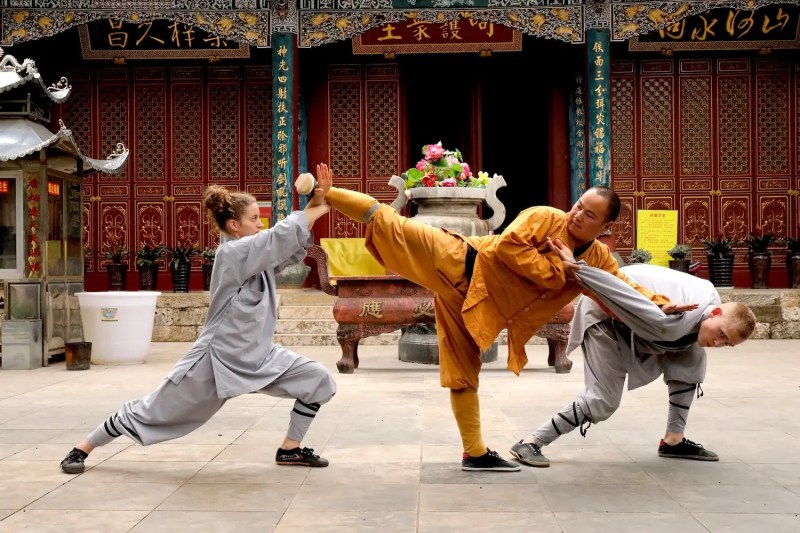
The first time a foreign observer witnessed a Shaolin monk executing a kung fu form with fluid precision, they might have mistaken it for dance. The movements—economical yet explosive, rooted in centuries of refinement—defy the brute-force expectations of combat. Yet beneath the grace lies a system so intricate it includes pressure-point anatomy, breathwork, and philosophical frameworks that predate modern psychology. This is not merely a fighting style; it is a living archive of Chinese martial tradition, where every stance encodes a principle of balance, energy (qi), and adaptability.
What separates kung fu—or wushu, its formalized counterpart—from other martial disciplines is its duality. On one hand, it is a combat methodology honed in monastic warfare, where monks used it to defend against bandits and rival factions. On the other, it is a meditative practice, a performance art, and a cultural symbol that transcends its origins. The same hands that could disarm an opponent with a single strike could also paint calligraphy or sculpt stone with equal mastery. This duality is the essence of kung fu: a fusion of violence and serenity, discipline and expression.
The global fascination with kung fu persists because it is more than a set of techniques—it is a lens through which to view Chinese history, philosophy, and even the human body. From the dimly lit halls of Hong Kong’s old-school wushu schools to the neon-lit gyms of Los Angeles, where practitioners blend traditional forms with modern fitness, the art continues to evolve. Yet at its core remains an unbroken lineage: a testament to how an ancient practice can remain relevant without losing its soul.
The Complete Overview of Kung Fu
Kung fu—literally "skill achieved through effort"—is a broad umbrella term encompassing hundreds of regional styles, each with distinct philosophies, techniques, and historical contexts. While Western media often reduces it to acrobatic choreography (thanks in no small part to cinema), the reality is far more nuanced. At its foundation, kung fu is a martial art system that integrates physical conditioning, mental focus, and spiritual alignment. Styles like Northern Shaolin, Southern Praying Mantis, and Tai Chi Chuan (often mistakenly classified as kung fu) represent just a fraction of the diversity, each developed in response to geographical terrain, cultural influences, and tactical necessities.The term itself is frequently conflated with wushu, the modern sportification of kung fu standardized in the 20th century. While wushu emphasizes aesthetic presentation and competition, traditional kung fu schools prioritize practical application, self-cultivation (yang sheng), and the preservation of lineage-based knowledge. This distinction is critical: a wushu athlete might perform a flawless routine, but a kung fu practitioner understands how to adapt those movements under duress. The former is art; the latter is survival.
Historical Background and Evolution
The origins of kung fu are shrouded in legend, but archaeological evidence and historical texts point to its development during China’s Warring States period (475–221 BCE), when philosophers like Sun Tzu (author of The Art of War) and martial artists refined combat techniques. The Shaolin Monastery, founded in 495 CE in Henan province, became the crucible where kung fu was systematized. According to lore, an Indian monk named Bodhidharma introduced Chan Buddhism to the monks, who adapted his meditative postures into physical exercises to maintain vitality during long hours of prayer. This fusion of martial and spiritual practices gave birth to Shaolin kung fu, characterized by dynamic strikes, joint locks, and animal-inspired forms (quanfa).By the Tang Dynasty (618–907 CE), kung fu had diversified into regional styles. Southern styles like Hung Gar and Wing Chun emerged in Guangdong, where practitioners developed close-quarters combat to counter the broader, slower movements of northern fighters. Meanwhile, Tai Chi Chuan evolved in the Yang family’s rural practice, blending kung fu with Qigong (energy cultivation) to create a fluid, internal art. The Qing Dynasty’s (1644–1912) suppression of kung fu as a "rebellious" practice forced many masters into secrecy, leading to the proliferation of family styles and secret transmissions. It was during this era that kung fu began infiltrating pop culture, first through Peking Opera and later through silent films of the 1920s.
Core Mechanisms: How It Works
The mechanics of kung fu are deceptively simple yet profoundly complex. At its core, it operates on three interconnected layers: physical technique, energy cultivation (qi), and mental discipline. Physically, kung fu employs striking (chui), grabbing (na), throwing (shuai), and weaponry (qiang)—each broken into subcategories like punches (quan), kicks (ti), and elbow strikes (zhuai). The Five Elements Theory (Wu Xing)—Wood, Fire, Earth, Metal, Water—governs how practitioners match techniques to an opponent’s movements, creating a dynamic, adaptive system.Table of Contents
- The Complete Overview of Kung Fu
- Historical Background and Evolution
- Core Mechanisms: How It Works
- Key Benefits and Crucial Impact
- Major Advantages
- Comparative Analysis
- Future Trends and Innovations
- Conclusion
- Comprehensive FAQs
- Q: Is kung fu the same as wushu ?
- Q: Can beginners learn kung fu effectively?
- Q: How long does it take to master kung fu ?
- Q: Are there female masters in kung fu ?
- Q: Can kung fu be practiced without weapons?
- Q: How does kung fu differ from other martial arts like Karate or Taekwondo?
Energy cultivation distinguishes kung fu from purely external arts. Styles like Tai Chi and Xing Yi focus on internal power (neijia), where breath control (tianyi) and rooting (ben) generate force from the dantian (energy center). External styles (wai jia), such as Northern Shaolin’s Hong Quan, rely on explosive, linear power. The 18 Luohan Hands—a set of 72 palm strikes—illustrates this duality: each hand encodes a principle of leverage, timing, and structural alignment. Mastery requires years of silk-reeling exercises (chan si jin) to refine sensitivity and meditation (zuowang) to cultivate mental clarity.
Key Benefits and Crucial Impact
The impact of kung fu extends beyond the dojo. As a holistic practice, it enhances physical health, mental resilience, and cultural connection. Traditional schools treat kung fu as a lifelong pursuit, not a sport—one where students study not just combat, but Chinese medicine, calligraphy, and philosophy. The discipline fosters body awareness, reducing injury risk through proper alignment and joint protection. Meanwhile, the meditative aspects lower stress by regulating the sympathetic nervous system, a finding increasingly validated by modern neuroscience.Beyond the individual, kung fu has shaped global martial arts. Bruce Lee’s Jeet Kune Do synthesized kung fu with Western boxing, while Brazil’s Capoeira and Japan’s Karate bear traces of its influence. Even military hand-to-hand combat programs, like the U.S. Marine Corps’ MCMAP, incorporate kung fu principles. The art’s adaptability lies in its problem-solving approach: rather than rigid techniques, it teaches pattern recognition and creative response.
"The highest form of martial art is not to fight, but to avoid conflict through wisdom." — Bruce Lee, interpreting a core kung fu principle.
Major Advantages
- Full-Body Conditioning: Kung fu trains flexibility, strength, and balance through dynamic movements, reducing joint stress compared to high-impact sports.
- Mental Resilience: The meditative focus improves concentration, emotional regulation, and stress adaptation, aligning with mindfulness practices.
- Self-Defense Utility: Styles like Kung Fu Praying Mantis and Loh Han Sha teach close-quarters combat, pressure points, and weapon disarmament with practical efficacy.
- Cultural Preservation: Practicing kung fu connects individuals to Chinese heritage, including philosophy (e.g., Yin-Yang), history, and traditional medicine.
- Adaptability: Unlike sport-focused martial arts, kung fu emphasizes improvisation, making it effective in real-world scenarios where opponents deviate from scripted moves.
Comparative Analysis
| Aspect | Kung Fu (Traditional) | Wushu (Sport) |
|---|---|---|
| Primary Focus | Self-cultivation, practical combat, lineage preservation | Performance, competition, aesthetic execution |
| Training Structure | Private instruction, form (taolu) practice, sparring (sanshou) | Standardized routines, judged on technique and presentation |
| Philosophical Depth | Integrates Daoism, Buddhism, and Confucianism | Minimal philosophical emphasis; focuses on physicality |
| Global Influence | Foundational to Jeet Kune Do, Capoeira, and modern MMA | Olympic recognition (since 2021), but limited combat application |
Future Trends and Innovations
The future of kung fu lies in its ability to reconcile tradition with innovation. As digital culture dominates, hybrid schools are emerging—online sifu (masters) streaming live lessons, while VR training simulates sparring with AI-generated opponents. However, purists argue that tangible transmission (learning from a physical master) remains irreplaceable for cultivating intuition and energy sensitivity. Another trend is the fusion of kung fu with modern fitness, where practitioners blend HIIT principles with traditional forms to appeal to younger audiences.Culturally, kung fu is experiencing a renaissance in China, where the government promotes it as a national treasure to combat the dominance of Western sports. Meanwhile, diasporic communities in the U.S., Europe, and Southeast Asia are reviving obscure styles like Ba Gua Zhang and Tai Chi Push Hands. The challenge ahead is balancing accessibility with authenticity—ensuring that as kung fu evolves, it does not lose the spiritual and technical depth that defines it.

Conclusion
Kung fu is more than a martial art; it is a living system that has survived wars, dynasties, and cultural shifts by remaining true to its adaptive core. Whether practiced for health, self-defense, or spiritual growth, its value lies in its holistic approach—body, mind, and spirit in harmony. The art’s enduring legacy is a reminder that true mastery is not about perfection, but about continuous refinement, respect for tradition, and wisdom in application.As global interest in mind-body practices grows, kung fu stands poised to reclaim its rightful place as a pillar of human physical and mental development. Yet its future depends on practitioners who understand that innovation must never overshadow integrity. In an era of algorithmic efficiency, kung fu offers something rare: a discipline where effort, time, and respect yield results that no machine can replicate.
Comprehensive FAQs
Q: Is kung fu the same as wushu?
Not exactly. Kung fu is the broad term for traditional Chinese martial arts, encompassing hundreds of styles with practical, spiritual, and combat applications. Wushu is a modern, sport-oriented adaptation of kung fu, standardized for competition with an emphasis on forms (taolu) and aesthetics. While wushu athletes train rigorously, traditional kung fu schools prioritize self-defense utility, energy cultivation (qi), and philosophical study.
Q: Can beginners learn kung fu effectively?
Yes, but with the right approach. Beginners should start with foundational styles like Northern Shaolin or Tai Chi, which teach basic stances, breath control, and alignment. Avoid jumping into advanced techniques (e.g., iron palm training) without proper conditioning. Many schools offer beginner-friendly classes, but progress depends on consistency and respect for the art’s principles. Online resources can supplement training, but in-person instruction from a qualified sifu is ideal for correcting form and transmitting lineage knowledge.
Q: How long does it take to master kung fu?
Mastery is a lifelong pursuit, not a finite goal. Traditional kung fu schools often use the 10,000-hour rule as a benchmark, but true expertise requires decades of practice. For example, a student might earn a black belt (heidan) in 5–10 years, but proficiency in sparring (sanshou) or weapon forms takes far longer. The journey includes plateaus, where students refine subtle aspects like energy sensitivity or instinctive reaction. Unlike sports wushu, traditional kung fu emphasizes internal progress over external milestones.
Q: Are there female masters in kung fu?
Absolutely. Women have played pivotal roles in kung fu history, though their contributions are often overlooked. Fong Sai-yuk, a legendary figure in Southern kung fu, was said to have defeated male opponents using internal power and precision. Modern female masters like Grandmaster Wong Kiew Kit (Tai Chi) and Sifu Leung Ting (Hung Gar) have preserved and innovated within the art. Many styles, such as Loh Han Sha, were developed by women for women, focusing on close-quarters combat and efficiency. Today, female practitioners dominate in competitive wushu and traditional schools alike.
Q: Can kung fu be practiced without weapons?
Yes, and many practitioners focus solely on empty-hand techniques (shou quan). Styles like Tai Chi, Xing Yi, and Bagua Zhang prioritize internal power, footwork, and energy flow without weapons. However, weapon training (qiang) is integral to understanding distance, balance, and precision. Even in empty-hand practice, imaginary weapon drills (e.g., treating a fist as a sword) are common. The choice depends on the practitioner’s goals: self-defense, health, or competition. That said, traditional schools often require basic weapon familiarity (e.g., straight sword, spear) to grasp kung fu’s full spectrum.
Q: How does kung fu differ from other martial arts like Karate or Taekwondo?
The differences lie in philosophy, technique, and training philosophy:
- Karate (Japan): Linear strikes, rigid stances, and a strong discipline-based culture. Kung fu often employs circular movements and close-range combat.
- Taekwondo (Korea): Emphasizes high, fast kicks and Olympic competition. Kung fu balances strikes, grappling, and weaponry more evenly.
- Brazilian Jiu-Jitsu (Brazil): Ground-focused, leveraging grappling and submissions. Kung fu includes standing combat and striking as primary tools.
Leave a Comment
Comments are moderated before appearing. The data you submit is processed according to the Privacy Policy of Medicine.