When Will Easter Fall in 2026? The Exact Date & Why It Matters

Easter 2026 will arrive on April 5, a date determined by an intricate balance of lunar cycles, solar observations, and centuries-old ecclesiastical tradition. Unlike fixed-date holidays, the Easter date 2026—and every year’s—shifts based on the first Sunday after the first full moon following the spring equinox. This astronomical and theological interplay creates a moving feast that confounds secular calendars while anchoring Christian liturgical cycles.
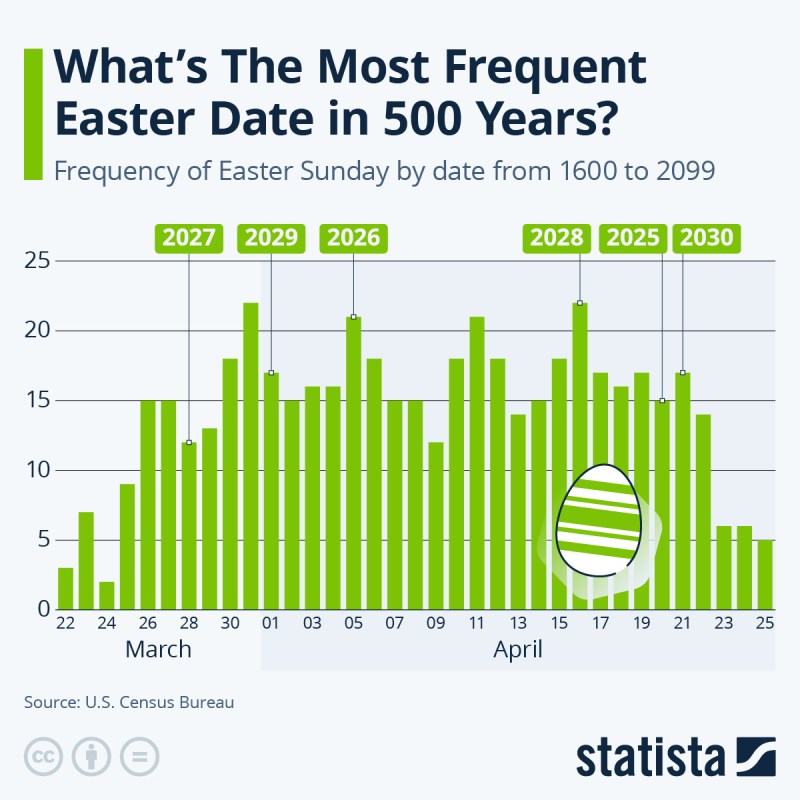
The variability of the Easter date 2026 reflects deeper patterns: in the 21st century alone, Easter has fallen between March 22 and April 25. Yet for believers worldwide, the precise timing isn’t arbitrary—it ties directly to Passover, the Last Supper, and the Resurrection narrative. Even in secular contexts, the Easter date 2026 influences everything from school breaks to retail promotions, proving how a single astronomical rule can ripple across cultures.
What makes 2026 particularly notable is the convergence of its early April timing with other global spring festivals, from Jewish Passover to Hindu Holi. The Easter date 2026 isn’t just a religious marker; it’s a cultural pivot point where astronomy, faith, and commerce intersect.
The Complete Overview of Easter Date 2026
The Easter date 2026—April 5—emerges from a calculation system established in the 4th century by the Council of Nicaea, which standardized Christian practices. The rule stipulates Easter must occur on the first Sunday after the "Paschal Full Moon," defined as the 14th day of a lunar month that aligns with the March equinox. This ensures Easter always follows Passover, a requirement rooted in the New Testament’s timing of Jesus’ crucifixion.While the Easter date 2026 may seem arbitrary to outsiders, its determination involves precise astronomical tables. The U.S. Naval Observatory and Vatican astronomers use algorithms accounting for leap years, lunar phases, and equinox variations. For example, 2026’s equinox falls on March 19, and the next full moon is March 23—making March 27 the first Sunday after the Paschal Full Moon.
Historical Background and Evolution
The origins of Easter’s movable date trace back to the early Christian Church’s need to reconcile Jewish and Gentile traditions. Prior to Nicaea, communities celebrated Easter on different days, creating theological divisions. The council’s 325 AD decree unified the date but retained its lunar-solar foundation, linking it to the Jewish calendar while accommodating solar observations.Over centuries, the Easter date 2026 and similar years became a testing ground for ecclesiastical precision. Medieval scholars like Bede and later astronomers refined the "Computus" (Easter calculation), incorporating Julian and Gregorian calendar reforms. Today, the Easter date 2026 reflects this evolution: a blend of ancient tradition and modern scientific accuracy.
Core Mechanisms: How It Works
At its core, the Easter date 2026 calculation hinges on three variables:1. The March Equinox: Defined as March 21 (or 20 in leap years), it marks the astronomical start of spring in the Northern Hemisphere.
2. The Paschal Full Moon: The first full moon after the equinox, not necessarily the astronomical full moon. For 2026, this is March 23.
3. The First Sunday After: Easter is the first Sunday following the 14th day of the lunar month containing the Paschal Full Moon.
Table of Contents
- The Complete Overview of Easter Date 2026
- Historical Background and Evolution
- Core Mechanisms: How It Works
- Key Benefits and Crucial Impact
- Major Advantages
- Comparative Analysis
- Future Trends and Innovations
- Conclusion
- Comprehensive FAQs
- Q: Why does Easter 2026 fall on April 5?
- Q: Will Easter 2026 be early or late?
- Q: How do Orthodox Christians calculate Easter 2026?
- Q: Can Easter ever fall in May?
- Q: Why isn’t Easter always on the same date?
- Q: How do I calculate Easter for any year?
- Q: Does the Easter date affect other holidays?
- Q: Are there exceptions to the Easter date rules?
- Q: How does climate change impact Easter dates?
- Q: What’s the earliest Easter can be?
This system ensures Easter never coincides with Passover (which uses a different lunar calculation) and always falls in spring. The Easter date 2026 exemplifies how these rules interact: the full moon on March 23 pushes Easter to April 5, the first Sunday after March 27.
Key Benefits and Crucial Impact
The Easter date 2026 isn’t just a religious curiosity—it’s a cultural and economic linchpin. For Christians, it anchors the liturgical year, dictating the timing of Lent, Holy Week, and Pentecost. Secularly, it influences travel, retail sales, and even sports schedules. The holiday’s movable nature also fosters global unity: regardless of denomination, Easter 2026 will be celebrated on the same day worldwide.Beyond practicality, the Easter date 2026 reflects humanity’s enduring quest to harmonize faith with the cosmos. It’s a reminder that even in an era of digital precision, ancient rhythms still govern our shared calendar.
"Easter is not a fixed feast; it is a moving testament to the Church’s ability to reconcile celestial observation with spiritual truth." — Cardinal Robert Sarah, Prefect Emeritus of the Congregation for Divine Worship
Major Advantages
- Liturgical Alignment: The Easter date 2026 ensures all Christian denominations celebrate Resurrection Sunday uniformly, preserving theological consistency.
- Astronomical Accuracy: By tying to the equinox and lunar cycles, the date maintains harmony with natural seasons and Jewish traditions.
- Cultural Cohesion: The fixed annual calculation allows families and communities to plan gatherings, vacations, and events with certainty.
- Economic Predictability: Retailers and industries rely on the Easter date 2026 to schedule promotions, travel packages, and supply chains.
- Scientific Legacy: The Computus system has influenced calendrical science, from medieval chronology to modern algorithms for date calculations.
Comparative Analysis
| Easter 2026 (April 5) | Passover 2026 (April 22–30) |
|---|---|
| First Sunday after Paschal Full Moon (March 23) | 15th day of Nisan (lunar calendar) |
| Christian commemoration of Resurrection | Jewish liberation from Egypt |
| Influences Lent (40 days before) | Preceded by Passover Seder (14th day) |
| Celebrated worldwide on same date | Date varies by Jewish calendar year |
Future Trends and Innovations
As technology advances, the Easter date 2026 may see indirect innovations. Astronomical software now calculates Easter with millisecond precision, while some churches explore digital liturgical calendars. However, the core rules remain unchanged—preserving tradition amid modernization.One emerging trend is the "Easter Effect" on global tourism. With the Easter date 2026 falling early in April, destinations like Spain (Semana Santa) and Greece (Lent celebrations) will experience peak visitor numbers. Meanwhile, climate change may subtly alter equinox timings, prompting debates about recalibrating the Computus.

Conclusion
The Easter date 2026—April 5—is more than a date on the calendar; it’s a microcosm of history, science, and faith. From the Council of Nicaea to NASA’s astronomical tables, its calculation spans millennia. For believers, it’s a sacred anchor; for cultures, a seasonal pivot; and for economies, a predictable rhythm.As we approach 2026, the Easter date serves as a bridge between the ancient and the modern, proving that even in a digital age, the oldest traditions still dictate our shared future.
Comprehensive FAQs
Q: Why does Easter 2026 fall on April 5?
The Easter date 2026 is determined by the Paschal Full Moon (March 23) and the first Sunday after (March 27). Easter is the following Sunday, April 5.
Q: Will Easter 2026 be early or late?
By historical standards, April 5 is considered an "early" Easter. The latest possible date in the 21st century is April 25 (2038).
Q: How do Orthodox Christians calculate Easter 2026?
Orthodox Easter follows the Julian calendar, so in 2026 it will be May 17—13 days later than Catholic/Protestant Easter.
Q: Can Easter ever fall in May?
No. The latest Easter can occur is April 25 (Gregorian calendar). Orthodox Easter may extend to May due to the Julian calendar.
Q: Why isn’t Easter always on the same date?
The Easter date 2026 (and all years) varies because it’s tied to lunar cycles, not the solar calendar. This ensures it follows Passover and remains in spring.
Q: How do I calculate Easter for any year?
Use the Computus algorithm: Find the March equinox, identify the Paschal Full Moon, then count to the first Sunday after. Online calculators (e.g., Vatican or U.S. Naval Observatory tools) automate this.
Q: Does the Easter date affect other holidays?
Yes. Pentecost (50 days after Easter) and Ascension Thursday (40 days after) shift with the Easter date 2026.
Q: Are there exceptions to the Easter date rules?
Only in cases of ecclesiastical discretion. For example, if the Paschal Full Moon falls on a Sunday, Easter is delayed to the next Sunday.
Q: How does climate change impact Easter dates?
Indirectly. Shifts in equinox timings (due to Earth’s axial tilt changes) could theoretically alter calculations, but current models show negligible effect.
Q: What’s the earliest Easter can be?
The earliest possible Easter is March 22 (next occurrence: 2035). This happens when the equinox is March 20 and the Paschal Full Moon is March 21.
Leave a Comment
Comments are moderated before appearing. The data you submit is processed according to the Privacy Policy of Medicine.