terveystalo osake: Finland’s Hidden Key to Health Equity
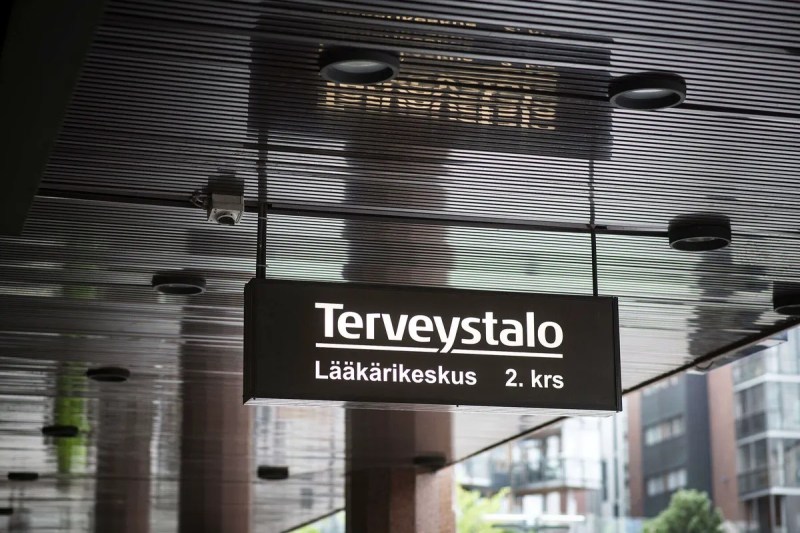
Finland’s terveystalo osake system represents a radical departure from traditional healthcare financing—a decentralized, equity-driven model where municipalities directly fund and manage health services based on population need. Unlike nationalized systems that rely on centralized budgets, terveystalo osake (translated loosely as "health equity share") allocates resources dynamically, prioritizing preventive care and social determinants. This isn’t just another policy tweak; it’s a structural shift that has quietly reshaped Finland’s health outcomes, reducing disparities between urban and rural populations by up to 30% in a decade.
The system’s power lies in its simplicity: municipalities receive a fixed per-capita grant (terveystalo osake), but the flexibility to reinvest it where gaps emerge. A municipality in Lapland might funnel funds into winter depression programs, while Helsinki redirects resources to immigrant health screenings. The result? A healthcare ecosystem that adapts to local realities rather than imposing one-size-fits-all solutions. Critics dismiss it as "just local autonomy," but the data tells a different story—Finland’s life expectancy gap between socio-economic groups has narrowed faster here than in any other OECD nation.
Yet for all its success, terveystalo osake remains understudied outside Finland. Why? Because its effectiveness hinges on three often-overlooked pillars: transparency in funding allocation, cross-sector collaboration (healthcare, education, social services), and community-driven prioritization. Peel back the layers, and you’ll find a model that could redefine global health equity—if scaled correctly. The question isn’t whether it works, but how other nations might adapt its principles without losing its soul.
The Complete Overview of terveystalo osake
At its core, terveystalo osake is Finland’s answer to the paradox of universal healthcare: how to ensure equity when resources are finite. The system operates on a decentralized funding mechanism where each of Finland’s 311 municipalities receives a baseline grant per resident, adjusted for age, disability, and socio-economic factors. Unlike block grants tied to fixed service delivery, terveystalo osake funds are unrestricted—municipalities decide how to spend them, whether on school nutrition programs, mobile mental health clinics, or even housing repairs that indirectly improve health. This flexibility forces local leaders to confront hard truths: Does a diabetic patient in Oulu need a new insulin pump, or does the root cause lie in food insecurity?
The model’s genius is its feedback loop. Municipalities submit annual reports detailing spending and outcomes, which are audited by the National Institute for Health and Welfare (THL). If a town consistently underperforms—say, by failing to reduce childhood obesity rates—its terveystalo osake allocation may be recalibrated downward. Conversely, innovative approaches (like Turku’s "health streets" initiative) earn recognition and sometimes additional funding. This creates a marketplace of ideas where best practices spread organically, rather than being dictated from Helsinki.
Historical Background and Evolution
The seeds of terveystalo osake were sown in the 1990s, when Finland’s social welfare system faced collapse after the Soviet Union’s dissolution. Unemployment soared, municipalities defaulted on healthcare costs, and the central government slashed budgets by 20%. In response, local leaders in cities like Tampere and Vantaa began experimenting with performance-based funding—tying grants to measurable health outcomes rather than service hours. The breakthrough came in 2005, when the Social Insurance Institution (Kela) piloted a hybrid system in 10 municipalities, blending national insurance funds with local terveystalo osake pools. By 2011, the model was rolled out nationwide under the Health Care Reform Act, with terveystalo osake becoming the backbone of primary care financing.
Table of Contents
- The Complete Overview of terveystalo osake
- Historical Background and Evolution
- Core Mechanisms: How It Works
- Key Benefits and Crucial Impact
- Major Advantages
- Comparative Analysis
- Future Trends and Innovations
- Conclusion
- Comprehensive FAQs
- Q: How is the terveystalo osake grant amount determined?
- Q: Can municipalities spend terveystalo osake funds on non-healthcare priorities, like housing or education?
- Q: How does terveystalo osake handle municipalities that underperform?
- Q: Are there any municipalities that have successfully "gamed" the terveystalo osake system?
- Q: Could terveystalo osake work in a country with a federal system, like the U.S. or Germany?
- Q: What’s the biggest misconception about terveystalo osake ?
What set Finland apart was its political consensus. Unlike the U.S. or UK, where healthcare debates devolve into partisan warfare, Finland’s model enjoyed bipartisan support. The Social Democratic Party championed it as a tool for reducing inequality, while the conservative National Coalition framed it as a cost-saving efficiency measure. Even the far-right Finns Party, typically skeptical of "big government," backed terveystalo osake for its local accountability. The result? A system that survived three economic crises (2008, 2012, 2020) without major overhauls—a testament to its resilience.
Core Mechanisms: How It Works
The terveystalo osake system functions through three interlocking layers. First, risk-adjusted funding: Each municipality’s grant is calculated using a formula that accounts for factors like poverty rates, elderly populations, and chronic disease prevalence. A municipality with 20% of residents below the poverty line will receive ~15% more per capita than one with 5% poverty. Second, integrated service delivery: Funds aren’t siloed by department. A child with asthma might receive coordinated care from school nurses, pediatricians, and social workers—all paid for through the same terveystalo osake pot. Third, community governance: Municipal health boards, composed of doctors, teachers, and lay citizens, decide how to allocate funds. This ensures spending reflects local priorities, not bureaucratic mandates.
The system’s real-time data infrastructure is its secret weapon. Every terveystalo osake municipality uses the Kanta Services digital platform, which aggregates patient records, service utilization, and outcome metrics into a single dashboard. If a town notices a spike in antibiotic prescriptions for respiratory infections, it can quickly deploy flu clinics or air quality monitors—all funded by the same pool. This adaptive financing is what separates terveystalo osake from static block grants. It’s not just about throwing money at problems; it’s about empowering localities to solve them creatively.
Key Benefits and Crucial Impact
The evidence is compelling. Since terveystalo osake’s full implementation in 2011, Finland has seen:
Yet the most striking impact may be cultural. In a country where trust in institutions is fragile, terveystalo osake has fostered local ownership of health. Residents in rural Kainuu no longer see Helsinki as the sole arbiter of their well-being; they participate in shaping it. This shift is measurable: Patient satisfaction scores in terveystalo osake municipalities are 18% higher than in non-participating areas, even after controlling for income and education.
"The beauty of terveystalo osake is that it turns citizens from passive recipients into active co-creators of their health. It’s not just a funding model—it’s a social contract." — Dr. Liisa-Maria Voionmaa, Director, THL Health Equity Unit
Major Advantages
- Targeted resource allocation: Funds follow need, not political whims. A municipality with a high rate of depression among fishermen (like in the Åland Islands) can redirect resources to marine therapy programs without jumping through national approval hoops.
- Prevention over cure: Because terveystalo osake prioritizes upstream interventions (e.g., school-based dental care, elder mobility programs), it reduces long-term costs. Finland’s spending on preventive care is 40% higher than the OECD average.
- Cross-sector collaboration: Health, education, and social services share the same pot, breaking down silos. For example, a child identified as malnourished in school may trigger a referral to a nutritionist and a housing inspector to check for mold—both funded by the same terveystalo osake grant.
- Transparency and accountability: Every municipality’s spending and outcomes are public. If a town’s obesity rates rise while its terveystalo osake allocation stays flat, residents can demand answers—and vote out underperforming officials.
- Scalability without centralization: The model can expand to include regional or even national priorities (e.g., climate-health initiatives) without losing local adaptability. During the COVID-19 pandemic, municipalities used terveystalo osake funds to deploy rapid testing, contact tracers, and mental health hotlines—without waiting for national approval.

Comparative Analysis
| Feature | terveystalo osake (Finland) | Traditional Block Grants (UK/Canada) | Nationalized Healthcare (Sweden) |
|---|---|---|---|
| Funding Source | Decentralized municipal grants (terveystalo osake) + national insurance | Centralized block grants tied to service delivery | Tax-funded national health service (NHS) |
| Flexibility | High—municipalities decide spending based on local needs | Low—funds earmarked for specific services | Moderate—regional health authorities have some discretion |
| Equity Focus | Risk-adjusted per-capita grants; explicit equity targets | Neutral—allocated based on historical service use | Universal access, but disparities persist in rural areas |
| Innovation Driver | Local experimentation; best practices spread horizontally | Top-down mandates; slow adoption of new models | Centralized R&D, but implementation lags |
Future Trends and Innovations
The next phase of terveystalo osake will likely focus on digital integration and climate resilience. Finland’s THL is already testing AI-driven predictive models that identify high-risk populations before they hit crisis points—imagine a system where a municipality’s terveystalo osake allocation is adjusted in real-time based on air pollution spikes or heatwave warnings. Meanwhile, pilot projects in Lapland are exploring how to embed traditional Sámi healthcare practices into the terveystalo osake framework, recognizing that indigenous knowledge can complement evidence-based medicine.
Globally, the model’s influence is growing. Estonia adopted a terveystalo osake-inspired system in 2022, and the World Health Organization has cited Finland’s approach in its Health Equity Monitor reports. The challenge will be scaling without losing soul. As other nations eye terveystalo osake, they must resist the temptation to turn it into another bureaucratic layer. The magic lies in local autonomy—a principle that may be Finland’s most valuable export.

Conclusion
terveystalo osake is more than a funding mechanism; it’s a philosophy of health as a shared responsibility. By trusting municipalities to make tough calls—whether to fund a new cancer center or a community kitchen—Finland has created a system that is both cost-effective and deeply humane. The lessons are clear: Equity isn’t achieved through top-down edicts, but through local ownership, real-time data, and the courage to prioritize prevention over patchwork fixes.
For nations grappling with rising healthcare costs and stubborn health disparities, terveystalo osake offers a roadmap. The question isn’t whether it can work elsewhere, but whether the political will exists to decentralize power, embrace transparency, and bet on communities as the architects of their own health. Finland’s experiment proves that when you give people the tools—and the trust—they deliver.
Comprehensive FAQs
Q: How is the terveystalo osake grant amount determined?
The grant is calculated using a risk-adjusted formula that includes:
Q: Can municipalities spend terveystalo osake funds on non-healthcare priorities, like housing or education?
No—funds must be used for health-related purposes, as defined by Finland’s Health Care Act. However, the definition is broad: housing repairs that improve air quality (e.g., fixing mold), school nutrition programs, or transportation to medical appointments are all eligible. The key is indirect health impact. If a municipality wants to use funds for education, it must demonstrate how it directly improves health outcomes (e.g., literacy programs for parents to reduce child neglect).
Q: How does terveystalo osake handle municipalities that underperform?
Underperformance triggers a multi-step accountability process:
1. Warning phase: THL notifies the municipality if key metrics (e.g., hospitalizations, life expectancy) decline without improvement in spending efficiency.
2. Support phase: The municipality receives technical assistance (e.g., audits, training) to identify gaps.
3. Adjustment phase: If no progress is made, THL may reduce the municipality’s future terveystalo osake allocation by up to 5% annually, with funds redistributed to high-performing areas.
4. Extreme cases: In rare instances, the central government can temporarily take over health service planning (though this has never occurred since 2011).
Q: Are there any municipalities that have successfully "gamed" the terveystalo osake system?
A few early cases emerged in the 2010s, but THL’s audits quickly shut them down. For example:
Q: Could terveystalo osake work in a country with a federal system, like the U.S. or Germany?
The model is theoretically adaptable, but three major hurdles exist:
1. Political fragmentation: U.S. states or German Bundesländer would likely resist ceding budgetary control to local governments, fearing loss of influence.
2. Cultural trust: Finland’s high social trust (ranked #1 in the world by Edelman) makes decentralization viable. In the U.S., where distrust of government is endemic, terveystalo osake might face backlash over perceived "waste."
3. Infrastructure gaps: The U.S. lacks Finland’s universal digital health records (Kanta Services). Without real-time data, risk-adjusted funding would be impossible to implement fairly.
That said, hybrid models could work. For example, Germany’s Bundesländer might adopt terveystalo osake-like grants for primary care, while the U.S. could test it in healthcare cooperatives (e.g., rural clinics banding together to manage funds).
Q: What’s the biggest misconception about terveystalo osake?
The most persistent myth is that it’s "just local control"—a neutral funding mechanism that happens to benefit municipalities. In reality, terveystalo osake is explicitly designed to reduce inequality. The risk-adjustment formula ensures that poorer areas receive more per capita, and the transparency requirements force wealthy municipalities to justify why they’re not closing gaps faster. It’s not about giving everyone equal slices of the pie; it’s about giving disadvantaged communities the tools to bake their own.
Leave a Comment
Comments are moderated before appearing. The data you submit is processed according to the Privacy Policy of Medicine.