When Is the FOMC Meeting? Decoding the Fed’s Timing & Market Moves

The Federal Reserve’s decisions don’t just shape U.S. financial markets—they ripple across currencies, commodities, and corporate earnings worldwide. Investors, policymakers, and even casual observers fixate on one question: when is the FOMC meeting next? The answer isn’t static; it follows a rigid schedule, yet the stakes are always high. A single rate hike or dovish pivot can send stocks surging or bonds tumbling, proving that timing isn’t just critical—it’s everything.
Market participants don’t just track the when; they dissect the why behind the Fed’s calendar. The FOMC’s eight scheduled meetings per year are the backbone of monetary policy, but the real drama unfolds in the weeks leading up to each announcement. Leaked minutes, inflation data, and even geopolitical tensions can shift expectations overnight. Understanding the rhythm of these meetings—from the pre-meeting buildup to the post-decision fallout—isn’t optional for traders; it’s survival.
The Fed’s transparency has improved over decades, but the opacity of its internal deliberations ensures that when is the FOMC meeting remains a question with outsized influence. Whether you’re a hedge fund manager or a retail investor, the answer dictates your strategy. Below, we break down the mechanics, historical context, and future shifts in the FOMC’s schedule—because in finance, knowledge of the calendar is power.
The Complete Overview of FOMC Meetings
The Federal Open Market Committee (FOMC) is the branch of the Federal Reserve responsible for setting monetary policy, primarily through adjustments to the federal funds rate. Its meetings are the most closely watched events in global finance, often triggering immediate reactions in asset classes from Treasuries to cryptocurrencies. The FOMC’s schedule is semi-annualized: eight meetings per year, with decisions announced at 2:00 PM ET on predetermined dates. However, the Fed reserves the right to hold emergency meetings—known as "intermeetings"—if economic conditions demand urgent action, as seen during the 2008 financial crisis and the COVID-19 pandemic.The timing of when the FOMC meeting occurs isn’t arbitrary. The schedule is designed to align with key economic data releases, such as non-farm payrolls, CPI, and GDP reports, ensuring policymakers have the latest information before making decisions. Yet, the market’s reaction isn’t just about the data; it’s about the Fed’s interpretation of that data. A hawkish tone in the post-meeting statement can send yields spiking, while a dovish pivot might spark a "Fed put" rally in equities. The interplay between the meeting’s timing, the data’s release, and the Fed’s communication strategy creates a high-stakes game of cat and mouse for traders.
Historical Background and Evolution
The FOMC’s origins trace back to the Banking Act of 1935, which established the Federal Reserve System as we know it today. Initially, monetary policy was reactive—central banks would respond to crises with ad-hoc measures. However, the post-World War II era saw the rise of formalized meetings, with the FOMC adopting a structured schedule in the 1970s. This shift was critical: it provided markets with predictability, reducing volatility and allowing for longer-term financial planning. Before this, when the FOMC meeting was held was often a mystery, leaving traders to speculate based on rumors and backroom deals.The 1980s marked a turning point. Under Chairman Paul Volcker, the Fed adopted a more transparent approach, including the publication of meeting minutes with a lag. This transparency was further enhanced in the 1990s under Alan Greenspan, who began holding press conferences after each meeting—a practice continued by his successors, Ben Bernanke and Janet Yellen. The 2008 financial crisis accelerated these reforms, with the Fed introducing forward guidance to manage expectations. Today, the FOMC’s schedule is not just about timing; it’s about managing the narrative around monetary policy, ensuring that markets don’t misinterpret signals.
Core Mechanisms: How It Works
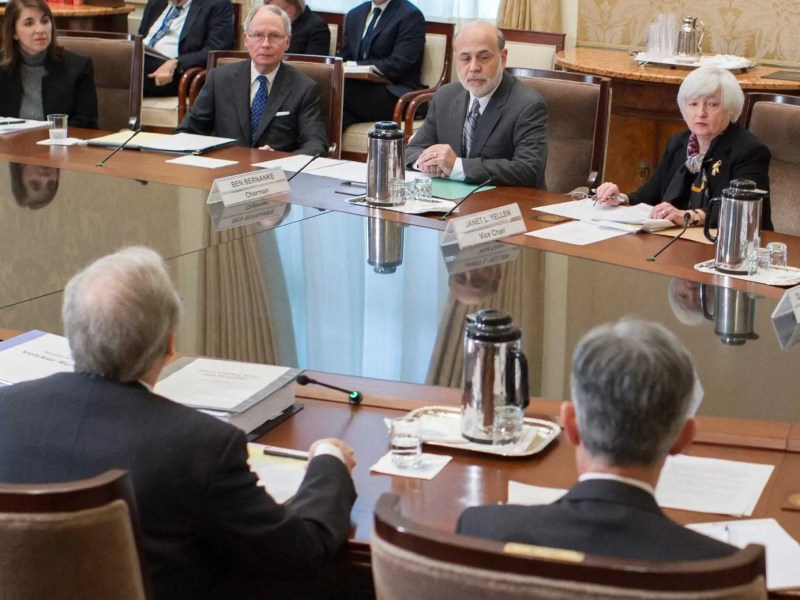
At its core, the FOMC meeting is a closed-door deliberation among 12 voting members: the seven Board of Governors, the president of the Federal Reserve Bank of New York, and four rotating regional Fed presidents. The process begins with a review of economic data, including inflation, employment, and GDP growth. Participants then discuss whether to adjust the federal funds rate, which serves as the benchmark for short-term borrowing costs. The decision is made by majority vote, with the outcome announced in a post-meeting statement and followed by a press conference with the Fed chair.Table of Contents
- The Complete Overview of FOMC Meetings
- Historical Background and Evolution
- Core Mechanisms: How It Works
- Key Benefits and Crucial Impact
- Major Advantages
- Comparative Analysis
- Future Trends and Innovations
- Conclusion
- Comprehensive FAQs
- Q: How often does the FOMC meet in a year?
- Q: What time are FOMC announcements made?
- Q: Can the Fed change the meeting schedule last minute?
- Q: What economic data influences FOMC decisions?
- Q: How do markets react to FOMC meetings?
- Q: Who votes in FOMC meetings?
- Q: Are FOMC meeting minutes released publicly?
- Q: How far in advance is the FOMC schedule announced?
- Q: What is the "dot plot" in FOMC projections?
- Q: Can individual FOMC members leak information?
The real work, however, happens in the weeks leading up to the meeting. The Federal Reserve Bank of New York’s staff prepares a detailed economic forecast, known as the "Greenbook," which is distributed to FOMC members in advance. Market participants scour every word of the statement for clues—even a single phrase like "some additional policy firming may be appropriate" can send ripples through financial markets. The Fed’s dual mandate of maximum employment and price stability means that when the FOMC meeting occurs is less important than the context in which it’s held.
Key Benefits and Crucial Impact
The FOMC’s meetings are the linchpin of global financial stability, providing a structured framework for monetary policy that influences everything from mortgage rates to corporate borrowing costs. For investors, the benefits are clear: a predictable schedule allows for strategic positioning, whether it’s hedging against rate hikes or capitalizing on liquidity injections. Governments and businesses rely on the Fed’s decisions to plan budgets, hire employees, and set pricing strategies. Without the FOMC’s meetings, the financial system would lack a critical anchor, leading to chaos in credit markets and asset valuations.The impact of these meetings extends beyond borders. The U.S. dollar’s status as the world’s reserve currency means that Fed policy has global repercussions. A rate hike can strengthen the dollar, making imports cheaper but exports more expensive for trading partners. Emerging markets, in particular, are vulnerable to Fed moves, as capital flows can shift abruptly in response to U.S. monetary policy. Even cryptocurrencies, often seen as a hedge against traditional finance, are not immune—Bitcoin’s price has historically reacted to FOMC announcements, reflecting its growing integration into mainstream markets.
"The Fed’s meetings are like the economic equivalent of a nuclear option—everyone knows they’re powerful, but you never know exactly how they’ll detonate until it’s too late." — Mohamed El-Erian, Chief Economic Advisor at Allianz
Major Advantages
- Market Predictability: The fixed schedule allows traders to anticipate liquidity shifts, reducing speculative bubbles and crashes.
- Policy Coordination: Central banks worldwide align their strategies with the Fed’s moves, preventing currency wars and financial instability.
- Inflation Control: By adjusting rates preemptively, the FOMC can head off runaway inflation or deflation before they become crises.
- Employment Stability: Loose monetary policy stimulates hiring, while tight policy curbs wage inflation—balancing the Fed’s dual mandate.
- Global Trust: Transparency in when the FOMC meeting occurs and its outcomes reinforces confidence in the U.S. financial system.
Comparative Analysis
| FOMC Meetings | ECB Meetings |
|---|---|
| 8 scheduled meetings/year; emergency sessions possible. | 6 scheduled meetings/year; no emergency sessions. |
| Federal funds rate target (0.00%-0.25% in 2024). | Deposit facility rate (-0.50% in 2024). |
| Press conference with Fed Chair after every meeting. | Press conference after every meeting, but less frequent rate changes. |
| Global impact due to USD dominance. | Eurosystem focus; Eurozone-specific effects. |
Future Trends and Innovations
The FOMC’s meeting schedule may soon evolve in response to technological and economic shifts. One potential change is the adoption of real-time data integration, where policymakers could adjust rates dynamically based on AI-driven economic forecasts. While this would increase responsiveness, it could also introduce volatility if markets struggle to interpret rapid policy shifts. Another trend is the growing influence of environmental, social, and governance (ESG) factors in monetary policy, with some economists arguing that climate risks should be factored into rate decisions.Additionally, the rise of digital currencies and decentralized finance (DeFi) may force the Fed to reconsider its communication strategies. If cryptocurrencies gain mainstream adoption, the FOMC might need to clarify how its policies interact with these assets—especially during periods of market stress. The question of when the FOMC meeting occurs could also become more flexible, with ad-hoc sessions increasing if geopolitical tensions or technological disruptions (like a cyberattack on financial systems) demand immediate action.

Conclusion
The FOMC’s meeting schedule is more than a calendar entry—it’s the heartbeat of the global economy. Understanding when the FOMC meeting takes place isn’t just about memorizing dates; it’s about grasping the broader implications of monetary policy on everything from your mortgage to multinational corporate profits. As financial markets grow more interconnected, the Fed’s decisions will continue to dominate headlines, shaping not just U.S. economics but global stability.For investors, the key takeaway is preparation. The weeks leading up to an FOMC announcement are prime opportunities to adjust portfolios, hedge risks, or capitalize on expected moves. Meanwhile, policymakers and economists will keep pushing for greater transparency, ensuring that the Fed’s schedule remains both predictable and adaptable. In an era of rapid change, one thing is certain: the FOMC’s meetings will remain the most important dates on any trader’s calendar.
Comprehensive FAQs
Q: How often does the FOMC meet in a year?
The FOMC holds eight scheduled meetings annually, typically spaced roughly eight weeks apart. Emergency sessions can occur outside this schedule if economic conditions warrant.
Q: What time are FOMC announcements made?
FOMC decisions are announced at 2:00 PM Eastern Time on the scheduled meeting day, followed by a press conference with the Fed Chair approximately 30-45 minutes later.
Q: Can the Fed change the meeting schedule last minute?
While the FOMC’s schedule is generally fixed, the Fed has held unscheduled meetings in crises (e.g., 2008, 2020). However, such changes are rare and usually communicated in advance.
Q: What economic data influences FOMC decisions?
The Fed primarily focuses on inflation (CPI/PCE), employment (non-farm payrolls), and GDP growth. Additionally, it monitors financial stability risks, such as asset bubbles or liquidity shortages.
Q: How do markets react to FOMC meetings?
Reactions vary: stocks may rally on dovish signals, bonds may spike on rate cuts, and currencies can shift based on growth expectations. The dollar often strengthens on hawkish policy, while risk assets like crypto can volatility.
Q: Who votes in FOMC meetings?
Twelve members vote: seven Board of Governors, the New York Fed president, and four rotating regional Fed presidents. The voting structure changes annually.
Q: Are FOMC meeting minutes released publicly?
Yes, meeting minutes are published with a three-week delay, providing insights into policymakers’ deliberations and dissenting views.
Q: How far in advance is the FOMC schedule announced?
The Fed typically releases the meeting schedule for the entire year in advance, usually around the start of each calendar year.
Q: What is the "dot plot" in FOMC projections?
The dot plot is a graphical representation of Fed officials’ projections for the federal funds rate over the next few years. It’s released quarterly and offers clues about future policy direction.
Q: Can individual FOMC members leak information?
Leaking is strictly prohibited and can result in disciplinary action. However, market participants often infer policy intentions from speeches, regional Fed reports, and economic data trends.
Leave a Comment
Comments are moderated before appearing. The data you submit is processed according to the Privacy Policy of Medicine.