How Nature Repeats Itself: What Is Convergent Evolution and Why It Matters

The wings of bats and birds slice through the air with eerie precision, yet their skeletons could not be more different. One evolved from mammalian ancestors; the other from dinosaurs. The streamlined bodies of dolphins and sharks glide effortlessly through water, though their genetic lineages diverged hundreds of millions of years ago. These aren’t coincidences—they’re textbook cases of what is convergent evolution in action. Nature, it turns out, has a habit of reinventing the wheel when faced with similar environmental pressures. Whether in the depths of the ocean, the skies, or the desert, evolution repeatedly converges on solutions that optimize survival, regardless of ancestry. This isn’t just a quirk of biology; it’s a fundamental principle that challenges our understanding of progress, innovation, and even human ingenuity.
The phenomenon forces us to question long-held assumptions about uniqueness in nature. Take the eyes of octopuses and vertebrates: both developed complex optics independently, yet their neural wiring and genetic pathways differ drastically. Or consider the thorns of roses and the spines of cacti—both serve as defenses, but one is a modified leaf, the other a photosynthetic stem. These parallels aren’t just fascinating; they’re proof that evolution isn’t a linear march toward perfection but a dynamic, iterative process where form follows function across vast evolutionary distances. The more we study what is convergent evolution, the clearer it becomes that the natural world operates on a kind of "pattern recognition" system, where similar problems yield similar solutions.
What makes this even more compelling is how convergent evolution bridges disciplines. Ecologists use it to predict species interactions, engineers mimic its designs in aerodynamics, and philosophers ponder its implications for intelligence. The fact that evolution can produce identical outcomes from entirely different starting points suggests that the universe itself may favor certain configurations of matter and energy. But how does this process actually work? And why does it matter beyond the pages of a biology textbook?
The Complete Overview of What Is Convergent Evolution
Convergent evolution occurs when distinct species independently evolve analogous traits due to similar environmental pressures or functional demands. Unlike parallel evolution—where closely related species develop similar features—the unrelated lineages here share no recent common ancestor. This phenomenon underscores the power of natural selection: if a trait enhances survival or reproduction, evolution will "discover" it repeatedly, regardless of genetic heritage. The result is a striking convergence of form and function, from the wing shapes of insects and pterosaurs to the echolocation systems of bats and whales. What’s particularly fascinating is that these traits often emerge at the molecular level, too—genes that regulate development (like PAX6 in eye formation) are co-opted across vastly different organisms.The beauty of what is convergent evolution lies in its unpredictability. Take the case of the sugar glider and the flying squirrel: both glide between trees using a membrane called a patagium, but one is a marsupial, the other a rodent. Their last common ancestor didn’t glide—yet both evolved the same solution to arboreal life. Similarly, the venomous spits of platypuses and certain snakes evolved independently, yet both deliver neurotoxic saliva through specialized ducts. These examples aren’t just curiosities; they reveal that evolution is constrained by physics and chemistry. Whether it’s the need for lift in flight or the efficiency of a venom delivery system, nature’s toolkit of solutions is finite, and convergent evolution exploits that constraint.
Historical Background and Evolution
The concept of what is convergent evolution didn’t emerge until the late 19th century, when biologists grappled with the implications of Darwin’s theory. Early naturalists like Alfred Russel Wallace noted that species in similar climates often resembled each other, even if they were unrelated. Wallace’s observations in the Amazon and Malay Archipelago highlighted how environmental factors could shape evolution independently. Meanwhile, Darwin himself acknowledged the phenomenon in On the Origin of Species, citing the marsupial mammals of Australia and the placental mammals of Europe as examples of how "nature has taken the same course in widely separated regions."The term "convergent evolution" was later formalized by biologists to describe this process more precisely. By the mid-20th century, advancements in genetics and paleontology provided concrete evidence. The discovery of homologous genes (like Hox genes) in diverse species showed that even unrelated organisms could activate similar developmental pathways under selective pressure. Fossil records further illuminated the timeline: the wings of pterosaurs, birds, and bats all evolved over tens of millions of years, yet their skeletal structures converged on aerodynamic efficiency. This historical context underscores that what is convergent evolution isn’t just a modern discovery—it’s a recurring theme in Earth’s 3.5-billion-year biological experiment.
Core Mechanisms: How It Works
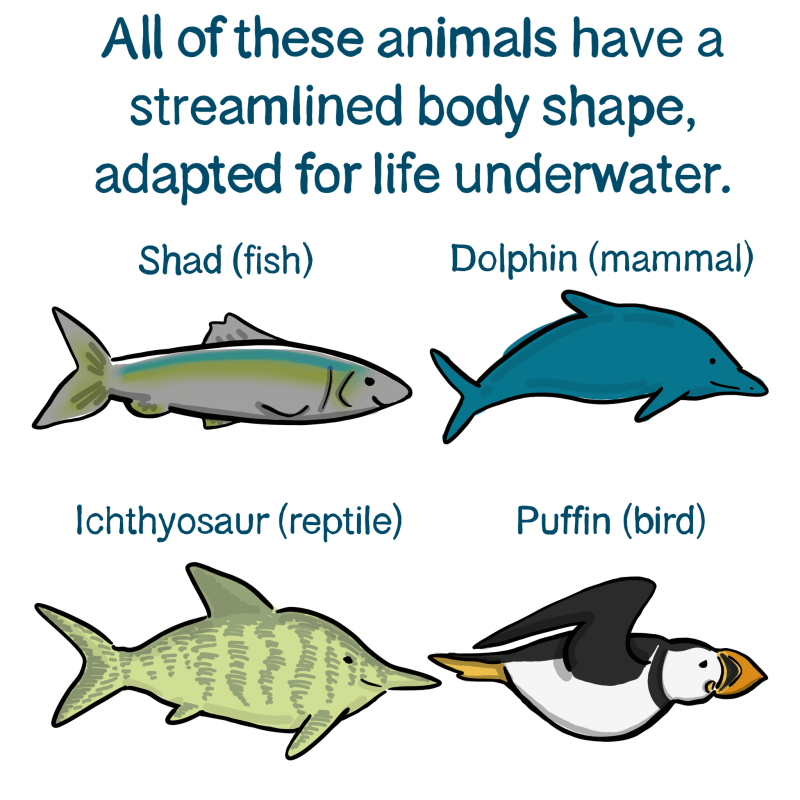
At its core, convergent evolution operates through natural selection acting on pre-existing genetic variation. When two unrelated species face analogous challenges—such as predation, resource scarcity, or extreme climates—their genomes may independently stumble upon mutations that confer an advantage. For instance, the streamlined bodies of dolphins and ichthyosaurs (extinct marine reptiles) both reduced drag, but their evolutionary paths were entirely separate. The key mechanism here is exaptation: traits that evolve for one purpose (e.g., feathers for insulation in dinosaurs) are later co-opted for another (flight in birds). This process is driven by genetic plasticity—the ability of DNA to respond to environmental cues in flexible ways.Table of Contents
- The Complete Overview of What Is Convergent Evolution
- Historical Background and Evolution
- Core Mechanisms: How It Works
- Key Benefits and Crucial Impact
- Major Advantages
- Comparative Analysis
- Future Trends and Innovations
- Conclusion
- Comprehensive FAQs
- Q: Is convergent evolution the same as parallel evolution?
- Q: Can convergent evolution occur at the molecular level?
- Q: Are there examples of convergent evolution in humans?
- Q: How does convergent evolution affect biodiversity?
- Q: Can convergent evolution happen in non-biological systems?
- Q: Why do some traits converge more often than others?
- Q: How is convergent evolution studied in the lab?
Molecular biology has revealed that convergent evolution often involves the reuse of ancient genetic toolkits. For example, the PAX6 gene, which regulates eye development, is found in vertebrates, octopuses, and even fruit flies—yet these species evolved eyes independently. Similarly, the MC1R gene, linked to red hair and fair skin in humans, also influences pigmentation in fish and mammals under similar selective pressures. These shared genetic underpinnings suggest that evolution doesn’t reinvent the wheel from scratch; it repurposes what’s already available. Understanding what is convergent evolution at this level explains why certain traits recur across the tree of life, from the bioluminescence of deep-sea creatures to the social structures of ants and primates.
Key Benefits and Crucial Impact
The implications of what is convergent evolution extend far beyond taxonomy. For ecologists, it provides insights into how ecosystems assemble: if unrelated species fill similar niches, they may compete or cooperate in predictable ways. For engineers, it’s a blueprint for innovation—why reinvent the wheel when nature has already optimized it? The aerodynamic shapes of birds and planes, the adhesive properties of gecko feet and synthetic glues, and even the computational power of neural networks in octopuses and mammals all stem from convergent solutions to complex problems. This phenomenon also challenges our definitions of progress: evolution doesn’t aim for perfection but for "good enough" solutions that work within biological constraints.The ripple effects of studying what is convergent evolution are profound. It reshapes our understanding of biodiversity, showing that species richness isn’t just about genetic diversity but about functional redundancy—multiple species solving the same problems. In medicine, it explains why certain pathogens (like viruses) evolve similar resistance mechanisms across hosts. Even in technology, the concept informs AI research, where machine learning models converge on similar architectures to solve tasks like image recognition. As one evolutionary biologist put it:
"Convergent evolution is nature’s way of saying, ‘Here’s a problem—now let’s see who can solve it best.’ The fact that the answers are often the same, no matter the starting point, tells us something deep about the universe’s rules."
Major Advantages
- Predictive Power in Ecology: Understanding what is convergent evolution allows scientists to predict how species will adapt to climate change or invasive predators. For example, if two unrelated herbivores in different regions both evolve thicker shells to deter grazing, we can infer that shell thickness is a reliable defense mechanism.
- Biological Innovation: Convergent traits often lead to breakthroughs in biomimicry. The lotus leaf’s self-cleaning properties, inspired by its convergent evolution of hydrophobic surfaces, now inform water-repellent coatings for buildings and fabrics.
- Evolutionary Constraints: By studying repeated evolutionary outcomes, researchers identify universal limits—such as why no land animal has evolved true flight like birds or bats, despite multiple attempts (e.g., Pteranodon).
- Medical Applications: Convergent evolution in pathogens (e.g., antibiotic resistance in bacteria and viruses) helps develop broad-spectrum treatments. If unrelated microbes evolve similar resistance genes, targeting those pathways becomes more effective.
- Philosophical Implications: The phenomenon raises questions about determinism in nature. If evolution consistently produces certain solutions, does that imply an underlying order in the universe, or is it merely a product of random mutations and selection?

Comparative Analysis
| Convergent Evolution | Parallel Evolution |
|---|---|
| Definition: Unrelated species develop similar traits independently. | Definition: Closely related species evolve similar traits due to shared ancestry. |
| Examples: Wings of insects vs. birds; echolocation in bats vs. dolphins. | Examples: Antlers in deer and elk; venom in snakes and lizards. |
| Genetic Basis: Often involves distinct genes or pathways (e.g., PAX6 in eyes). | Genetic Basis: Inherits similar genes from a recent common ancestor. |
| Ecological Role: Highlights functional redundancy in ecosystems. | Ecological Role: Reflects adaptive radiation within a niche. |
Future Trends and Innovations
As genomics and synthetic biology advance, our ability to study what is convergent evolution at unprecedented scales will grow. Projects like the Earth BioGenome Project aim to sequence all eukaryotic life, revealing how often convergence occurs at the molecular level. Meanwhile, AI-driven evolutionary modeling is simulating how traits might converge under hypothetical scenarios, testing theories about the limits of biological innovation. In technology, biomimetic engineering will likely accelerate, with materials scientists designing new alloys inspired by the convergent evolution of strength and flexibility in spider silk and bone.The ethical dimensions of convergent evolution are also coming into focus. As CRISPR and gene editing allow us to manipulate traits that evolution has converged on (like disease resistance or longevity), questions arise about whether we’re accelerating or interfering with natural processes. Could we, for instance, "engineer" convergent traits in crops to withstand climate stress? The answers will shape not just biology but policy, agriculture, and even our definition of what it means to be "natural." One thing is certain: the more we unravel what is convergent evolution, the more we’ll see that nature’s experiments—like our own—are far from random.
Conclusion
Convergent evolution is more than a biological curiosity; it’s a testament to the ingenuity of life under pressure. By studying what is convergent evolution, we gain a deeper appreciation for the constraints and possibilities that shape all living things. It reminds us that innovation isn’t the sole domain of humans—it’s a universal process, one that repeats across time and space. From the deep ocean to the stratosphere, evolution’s solutions are often the same, not because of shared ancestry, but because the universe rewards efficiency. As we stand on the brink of new scientific frontiers, this phenomenon offers both humility and inspiration: if nature can solve the same problems again and again, what might we achieve by learning from its playbook?The study of convergent evolution also humbles us. It reveals that the diversity of life, despite its dazzling variety, is bound by underlying rules. Whether in the lab or the wild, the principle that form follows function remains as true today as it was when the first wing took flight. In an era where technology and biology increasingly intersect, understanding what is convergent evolution isn’t just academic—it’s a roadmap to the future.
Comprehensive FAQs
Q: Is convergent evolution the same as parallel evolution?
A: No. Parallel evolution occurs in closely related species that develop similar traits due to shared ancestry (e.g., marsupial and placental mammals evolving similar body plans). Convergent evolution, however, involves unrelated species evolving analogous traits independently (e.g., wings in birds and bats). The key difference is lineage: parallel evolution starts from a recent common ancestor; convergent evolution does not.
Q: Can convergent evolution occur at the molecular level?
A: Absolutely. Many convergent traits at the organismal level have molecular foundations. For example, the PAX6 gene regulates eye development in vertebrates, octopuses, and even fruit flies—all of which evolved eyes independently. Similarly, the MC1R gene influences pigmentation in mammals and fish under similar selective pressures, demonstrating that genetic convergence is just as real as phenotypic convergence.
Q: Are there examples of convergent evolution in humans?
A: Yes. Lactose tolerance in adult humans is a classic example. Most mammals lose the ability to digest lactose after weaning, but in human populations with a history of dairy farming (e.g., Northern Europeans, some African groups), a genetic mutation allowed adults to digest lactose. This trait evolved independently in these groups due to the selective advantage of dairy consumption.
Q: How does convergent evolution affect biodiversity?
A: It can both increase and decrease biodiversity. On one hand, convergent species may compete for the same resources, reducing niche diversity. On the other, it can lead to "ecological release," where unrelated species exploit similar roles, increasing overall ecosystem resilience. For example, the convergent evolution of herbivory in mammals and insects has led to diverse plant-pollinator and plant-grazer interactions.
Q: Can convergent evolution happen in non-biological systems?
A: While the term is primarily biological, analogous processes occur in other fields. In technology, for instance, unrelated industries often converge on similar solutions (e.g., touchscreens in smartphones and tablets). In physics, the behavior of fluids or the optimization of energy use in systems like stars and black holes can show "convergent" patterns where different starting conditions lead to similar outcomes under shared constraints.
Q: Why do some traits converge more often than others?
A: Traits that converge frequently are those that solve fundamental problems with limited solutions. For example, streamlining for aquatic life or wings for flight are constrained by aerodynamics and hydrodynamics, leaving few viable alternatives. Additionally, traits that rely on pre-existing genetic toolkits (like PAX6 for eyes) are more likely to converge because the raw materials are already present in diverse lineages.
Q: How is convergent evolution studied in the lab?
A: Researchers use a combination of comparative genomics, developmental biology, and experimental evolution. For example, they might sequence the genomes of convergent species to identify shared genes, manipulate those genes in model organisms (like Drosophila flies) to see how they affect traits, or use computational models to simulate how traits might evolve under specific selective pressures. Lab experiments with bacteria or viruses also demonstrate convergence in real time, as unrelated strains evolve similar resistance mechanisms.
Leave a Comment
Comments are moderated before appearing. The data you submit is processed according to the Privacy Policy of Medicine.