The Hidden Crisis: What Is Pink Slipping and Why It’s Reshaping Workplaces

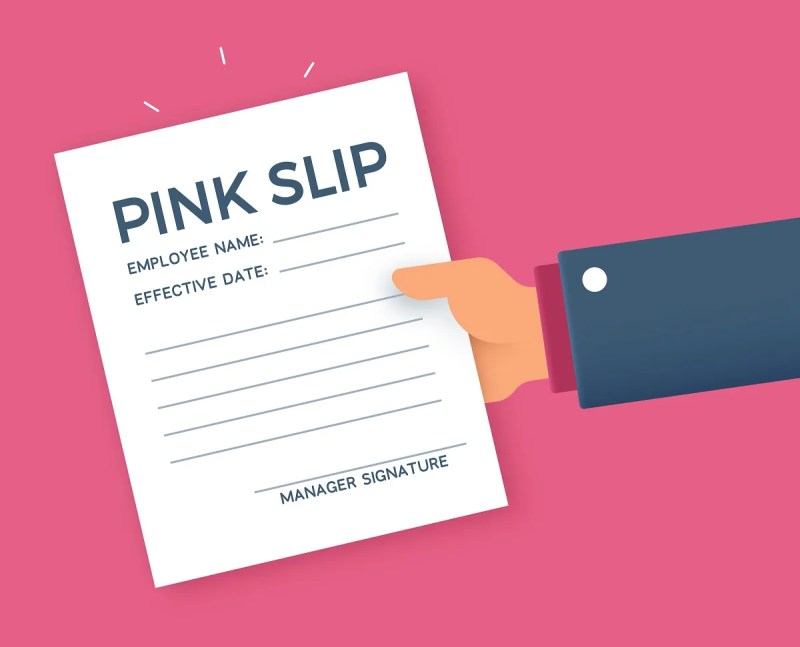
Every year, thousands of employees receive a document they never expected: a pink slip delivered not as a termination notice, but as a silent dismissal. No severance. No warning. Just a one-way ticket out the door. This practice—what is pink slipping—has evolved from a rare HR tactic into a systemic issue, exposing vulnerabilities in labor protections and corporate accountability. The term itself, though often misused, refers to the deliberate withholding of formal termination procedures, leaving workers in legal and financial limbo.
What makes pink slipping particularly insidious is its psychological warfare. Unlike traditional layoffs, which (however unfairly) follow company protocols, this method thrives on ambiguity. Employees may learn of their dismissal through a text message, a locked-out email, or—worst of all—a casual comment from a manager. The absence of documentation creates a power imbalance: workers lack proof of termination, making it nearly impossible to challenge unfair treatment or access benefits like unemployment insurance. For gig workers and contract employees, the stakes are even higher, as their already precarious status becomes a weapon.
The phenomenon isn’t just a U.S. problem, though it’s most documented there. In Europe, "silent dismissals" have surged during economic downturns, while in Asia, companies use "performance reviews" to mask forced exits. The global rise of remote work has amplified the issue—out-of-sight employees are easier to discard without consequences. Yet for all its stealth, pink slipping leaves a trail of wreckage: shattered careers, unpaid severance, and a workforce that’s increasingly wary of trusting employers. The question isn’t just what is pink slipping—it’s how to fight back.
The Complete Overview of What Is Pink Slipping
Pink slipping operates at the intersection of labor law and corporate malfeasance, where employers exploit legal gray areas to avoid accountability. At its core, it’s a form of termination that bypasses standard procedures—no formal notice, no exit interview, and often no record of the dismissal. The term "pink slip" originates from the literal paper (historically pink) used in early 20th-century auto plants to signal immediate termination. Today, the practice has metastasized into a broader strategy to sidestep labor regulations, severance obligations, and even wrongful-termination protections.
The mechanics are deceptive. Employers may claim an employee "resigned" or "voluntarily left," even when no resignation was submitted. Others use vague language like "role elimination" to obscure the fact that the worker was fired. In some cases, companies pay employees to sign a "separation agreement" that includes a non-disparagement clause—effectively silencing them in exchange for a severance payout that may not cover lost wages. The result? Workers who are legally terminated but treated as if they quit, stripping them of unemployment benefits and recourse.
Historical Background and Evolution
The roots of pink slipping trace back to the Industrial Revolution, when employers used arbitrary dismissals to control labor. However, the modern iteration emerged in the 1980s and 1990s as companies sought to avoid costly layoff notifications under laws like the Worker Adjustment and Retraining Notification (WARN) Act. By the 2000s, the rise of at-will employment doctrine—where employers can fire workers for any reason (with exceptions)—gave pink slipping legal cover. The 2008 financial crisis accelerated its use, as companies laid off thousands without triggering WARN Act requirements by spreading terminations across multiple sites or using contractors.
Table of Contents
- The Complete Overview of What Is Pink Slipping
- Historical Background and Evolution
- Core Mechanisms: How It Works
- Key Benefits and Crucial Impact
- Major Advantages
- Comparative Analysis
- Future Trends and Innovations
- Conclusion
- Comprehensive FAQs
- Q: Can I sue if I’ve been pink-slipped?
- Q: How do I know if I’m being pink-slipped instead of laid off?
- Q: Will I get unemployment benefits if I’m pink-slipped?
- Q: Can my employer legally force me to sign a non-disparagement clause in exchange for severance?
- Q: Are there industries where pink slipping is more common?
- Q: What should I do if I suspect I’m about to be pink-slipped?
In the digital age, pink slipping has become more sophisticated. Social media firings (where employees are terminated via LinkedIn or internal chats) and "ghost layoffs" (where workers are removed from payroll but told to keep working) are new variations. The COVID-19 pandemic further normalized the practice, with remote workers often discovering their jobs had vanished overnight. Legal scholars now classify pink slipping as a form of constructive discharge, where working conditions are so intolerable that an employee feels forced to leave—even if no direct order is given. Courts are slowly recognizing these cases, but enforcement remains inconsistent.
Core Mechanisms: How It Works
The execution of pink slipping relies on three key tactics: documentation manipulation, psychological coercion, and legal ambiguity. Employers may alter HR records to reflect a resignation instead of a termination, or they might pressure employees to sign false paperwork under duress. For example, a worker might be told, "If you don’t sign this, we’ll have to let you go immediately with no benefits." The coercion works because the alternative—public termination—is often worse. Meanwhile, companies exploit loopholes in at-will employment laws, arguing that since no explicit contract exists, they can dismiss workers at any time.
Technology has also become a tool for pink slipping. Automated systems can process mass layoffs without human oversight, while email filters or Slack messages can deliver termination notices without leaving a paper trail. Some companies use "quiet firing"—where employees are given menial tasks and ignored—to push them out indirectly. The goal is always the same: minimize legal exposure while maximizing cost savings. For workers, the lack of a formal process means they’re left scrambling to prove wrongful termination, a battle that’s nearly impossible without evidence.
Key Benefits and Crucial Impact
From an employer’s perspective, pink slipping offers a seductive combination of cost savings and risk avoidance. By avoiding formal layoff procedures, companies skip out on severance payments, extended notice periods, and potential lawsuits. They also sidestep the reputational damage of public firings, which can deter customers and investors. For industries facing margin pressures—tech, retail, and manufacturing—pink slipping has become a go-to strategy to "right-size" workforces without the backlash of traditional layoffs.
Yet the human cost is devastating. Workers who are pink-slipped often face immediate financial ruin, as they’re ineligible for unemployment benefits if they’re classified as voluntary departures. The psychological toll is equally severe: studies show that victims experience higher rates of depression, anxiety, and long-term unemployment compared to those who receive fair severance. The lack of closure also makes it harder to move on, as former colleagues may avoid them out of guilt or fear of retaliation. For minorities and low-wage workers, pink slipping disproportionately affects those already marginalized in the job market.
—Labor attorney David Weil, former Wage and Hour Division administrator at the U.S. Department of Labor
"Pink slipping is the ultimate exploitation of power asymmetry. Employers know that most workers can’t afford to fight back, so they weaponize the system. The result isn’t just job loss—it’s the erosion of trust in the entire employment relationship."
Major Advantages
- Cost Reduction: Companies avoid severance packages, outplacement services, and legal fees associated with mass layoffs. For example, a tech firm might save millions by pink-slipping 500 employees instead of offering 4 weeks’ pay.
- Legal Evasion: By misclassifying terminations as resignations, employers bypass WARN Act requirements and state unemployment laws, which often mandate notice periods for large-scale layoffs.
- Reputational Control: Silent dismissals prevent media scrutiny and investor backlash. A company can downsize without headlines like "Company X Fires 1,000 Workers."
- Flexibility in Hiring/Firing: Pink slipping allows companies to adjust workforces quickly in response to market shifts without committing to long-term contracts or benefits.
- Targeted Elimination: Employers can selectively remove underperforming or "problematic" employees without triggering union negotiations or anti-discrimination lawsuits.
Comparative Analysis
| Traditional Layoff | Pink Slipping |
|---|---|
| Formal notice period (e.g., 30–90 days). | No notice; sudden or covert termination. |
| Severance pay and benefits (varies by company). | Minimal or no severance; often coerced into signing unfair agreements. |
| Eligible for unemployment insurance. | Denied unemployment benefits if classified as a resignation. |
| Public or semi-public process (HR involvement). | Private, often with no documentation or witness. |
Future Trends and Innovations
The rise of AI and algorithmic management is poised to make pink slipping even more efficient—and insidious. Companies already use predictive analytics to identify "low-performing" employees, and as AI-driven HR systems mature, terminations could become fully automated. Imagine an algorithm flagging workers for dismissal based on vague metrics like "engagement scores," with no human oversight. The result? A workforce where pink slipping isn’t an exception but the default. Meanwhile, gig economy platforms are perfecting the art of the silent deactivation, where workers wake up to find their accounts suspended with no explanation.
On the defensive side, legal reforms and worker advocacy groups are pushing back. Some states, like California, have strengthened protections against misclassification, while class-action lawsuits are forcing companies to disclose pink-slipping practices. The future may also see a rise in "termination insurance"—policies where employees pay a small fee for legal protection against unfair dismissals. However, the biggest shift could come from corporate culture. As younger generations demand transparency and ethical leadership, companies that rely on pink slipping may find themselves isolated in the talent market. The question is whether the damage will be irreversible by then.

Conclusion
What is pink slipping, at its heart, is a symptom of a broken employment system. It thrives where laws are weak, where workers fear retaliation, and where companies prioritize short-term gains over human dignity. The practice isn’t just about saving money—it’s about maintaining control. And in an era where remote work has dissolved the boundaries of the office, that control feels more absolute than ever. The challenge for workers is recognizing the signs early: the sudden shift in communication, the vague performance reviews, the "we’re restructuring" emails that arrive out of the blue.
But the fightback is possible. Documenting every interaction, consulting an employment lawyer before signing anything, and joining worker collectives can mitigate the risks. The goal isn’t just to survive pink slipping—it’s to expose it. As more cases make their way into courts and the media, the veil of secrecy may finally lift. Until then, the message is clear: if it sounds too good to be true (like a sudden promotion or a "voluntary" exit), it probably is. And in the world of pink slipping, trust is the first casualty.
Comprehensive FAQs
Q: Can I sue if I’ve been pink-slipped?
A: Yes, but it’s legally complex. You’d need to prove wrongful termination, retaliation, or breach of contract. Document everything—emails, performance reviews, witness statements—and consult an employment attorney immediately. Many pink-slipping cases hinge on whether the employer misclassified your departure as a resignation.
Q: How do I know if I’m being pink-slipped instead of laid off?
A: Red flags include sudden access revocation, no formal meeting, vague explanations like "budget cuts," or pressure to sign documents under time constraints. Legitimate layoffs involve HR, severance discussions, and (in some cases) outplacement services. If you’re told to "clear your desk by Friday" with no explanation, that’s a classic pink slip.
Q: Will I get unemployment benefits if I’m pink-slipped?
A: It depends on your state and how the termination is classified. If the employer argues you "quit," you’ll likely be denied. However, some states have "constructive discharge" laws where intolerable conditions force you to leave. Keep records of mistreatment and consult an unemployment attorney before applying.
Q: Can my employer legally force me to sign a non-disparagement clause in exchange for severance?
A: In many states, yes—but with caveats. Some courts have ruled that such clauses are unenforceable if they prevent you from reporting illegal activity (e.g., wage theft, discrimination). Others allow them if the severance is fair. Never sign anything without legal review, especially if you suspect wrongdoing.
Q: Are there industries where pink slipping is more common?
A: Yes. Tech (especially startups), retail, manufacturing, and gig economy platforms (like Uber or DoorDash) are hotspots. These sectors rely on high turnover, flexible labor, and weak unionization. Remote-first companies are also prime targets, as workers are harder to monitor—and thus easier to discard silently.
Q: What should I do if I suspect I’m about to be pink-slipped?
A: Act fast. Save all communications, request a private meeting with HR in writing, and avoid signing anything. If possible, speak to a lawyer before your last day. Some workers have successfully challenged pink slips by proving the employer violated company policy or labor laws. The key is evidence—documentation is your best defense.
Leave a Comment
Comments are moderated before appearing. The data you submit is processed according to the Privacy Policy of Medicine.