The Cold War Arms Race Explained: What Was the Arms Race and Why It Changed History

The Cold War arms race was not merely a competition of military might—it was a high-stakes gamble where two ideological superpowers, the United States and the Soviet Union, pushed the boundaries of technological and strategic warfare to the brink of annihilation. For nearly five decades, from the end of World War II until the collapse of the USSR in 1991, the world teetered on the edge of nuclear conflict, with each side accumulating arsenals capable of destroying civilization multiple times over. The question "what was the arms race" isn’t just about stockpiling weapons; it’s about understanding how fear, ideology, and mutual assured destruction reshaped global power structures, diplomacy, and even the daily lives of ordinary citizens.
At its core, the arms race was a paradox: the more one side advanced, the more the other had to respond, creating an endless cycle of escalation. This wasn’t just about tanks, bombers, or submarines—it was a race for supremacy in nuclear warheads, intercontinental ballistic missiles (ICBMs), and espionage capabilities. The stakes were existential, and the strategies—like Mutually Assured Destruction (MAD)—were designed to prevent war by making it unthinkable. Yet, accidents, miscalculations, and proxy conflicts (from Vietnam to Afghanistan) kept tensions simmering. The arms race wasn’t a static event; it evolved with each technological breakthrough, from the atomic bomb to stealth aircraft and cyber warfare precursors.
The arms race also forced the world to confront uncomfortable truths: that humanity’s survival depended on the rationality of its leaders, that economic resources could be drained by military spending, and that even the most advanced weapons systems were vulnerable to human error. For those who lived through it, the arms race was a constant backdrop—school drills for nuclear fallout, the fear of a "hot line" miscommunication turning cold into catastrophe, and the moral dilemmas of deterrence. To grasp what was the arms race is to understand not just military history, but the psychological and political landscape of the 20th century.
The Complete Overview of What Was the Arms Race
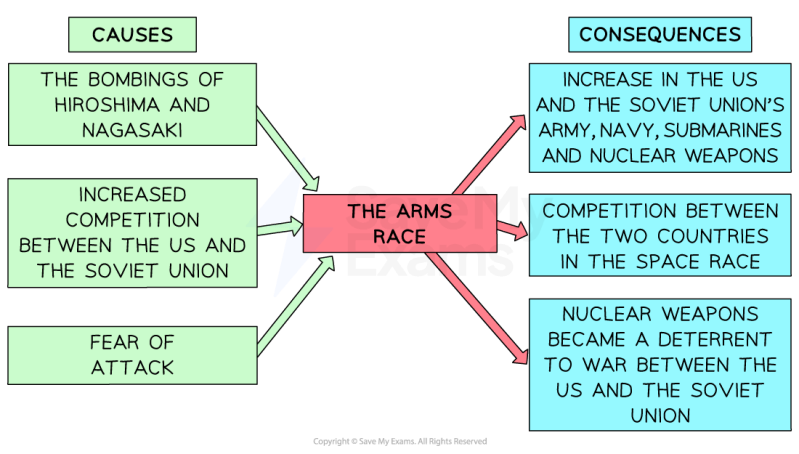
The Cold War arms race was the defining security dilemma of the 20th century, a shadowy competition where neither side could afford to fall behind without risking global domination. It began in earnest after World War II, as the U.S. and USSR emerged as the two dominant powers, each viewing the other’s advances as an existential threat. The arms race wasn’t just about quantity—it was about qualitative superiority: who could deliver a nuclear strike faster, who could develop more accurate missiles, and who could outmaneuver the other in espionage and propaganda. The race extended beyond conventional weapons to include space technology (satellites for surveillance), chemical and biological weapons research, and even non-lethal psychological warfare. The goal wasn’t just to win a hypothetical conflict, but to ensure the other side could never win—or even contemplate a first strike.What made the arms race uniquely dangerous was its self-perpetuating nature. Every innovation by one side—such as the U.S. development of the hydrogen bomb in 1952—forced the other to accelerate its own programs. The Soviet Union’s launch of Sputnik in 1957, for example, triggered the U.S. space race and a massive investment in missile technology. The arms race also had a domino effect on global alliances: NATO and the Warsaw Pact became military blocs not just for defense, but to signal strength to the adversary. Even smaller nations, like France and China, sought nuclear capabilities to avoid being left vulnerable. The arms race wasn’t confined to the superpowers; it rippled through the entire international system, creating a world where no country could afford to be neutral.
Historical Background and Evolution
The origins of the arms race can be traced to the final days of World War II, when the U.S. dropped atomic bombs on Hiroshima and Nagasaki in 1945. This demonstration of nuclear power sent shockwaves through the Soviet leadership, who accelerated their own atomic program. By 1949, the USSR tested its first nuclear device, and the arms race entered a new phase. The 1950s saw the introduction of thermonuclear weapons—far more destructive than the atomic bombs of WWII—and the development of intercontinental ballistic missiles (ICBMs), which could strike anywhere on Earth within minutes. The Cuban Missile Crisis of 1962, when the world came closest to nuclear war, highlighted the fragility of deterrence. After this near-catastrophe, both sides signed the Partial Nuclear Test Ban Treaty (1963), but the race for Multiple Independently Targetable Reentry Vehicles (MIRVs)—missiles that could carry multiple warheads—continued unabated.The 1970s and 1980s brought strategic arms limitation talks (SALT I and II), attempts to cap the number of nuclear warheads, but these were often undermined by new technologies. The U.S. deployed Pershing II missiles in Europe, while the USSR expanded its SS-20 missiles, leading to a renewed arms buildup. The Reagan administration’s Strategic Defense Initiative (SDI), or "Star Wars," proposed a space-based missile defense system, which the Soviets could not afford to match. By the late 1980s, both superpowers were spending over 6% of their GDP on defense, draining economies and fueling domestic unrest. The collapse of the USSR in 1991 marked the end of the arms race as it had been known, but the legacy of nuclear proliferation and military innovation persists today.
Core Mechanisms: How It Worked
The arms race operated on two fundamental principles: deterrence and escalation dominance. Deterrence relied on the threat of Mutually Assured Destruction (MAD), the idea that a nuclear attack would inevitably lead to retaliation so devastating that neither side would risk launching first. This required both sides to maintain a second-strike capability—the ability to respond even after a surprise attack. The U.S. achieved this with submarine-launched ballistic missiles (SLBMs), while the USSR relied on land-based silos and mobile launchers. Escalation dominance, meanwhile, sought to ensure that in any conflict, the U.S. or USSR could always escalate to a level the other could not match—whether through superior missile accuracy, stealth technology, or cyber warfare.Table of Contents
- The Complete Overview of What Was the Arms Race
- Historical Background and Evolution
- Core Mechanisms: How It Worked
- Key Benefits and Crucial Impact
- Major Advantages
- Comparative Analysis
- Future Trends and Innovations
- Conclusion
- Comprehensive FAQs
- Q: What was the arms race, and why did it start?
- Q: How close did the world come to nuclear war during the arms race?
- Q: Did the arms race ever benefit civilian technology?
- Q: How did the arms race affect smaller nations?
- Q: Is there still an arms race today?
- Q: What was the most significant arms control treaty, and did it work?
The arms race also depended on intelligence and espionage. The U.S. U-2 spy plane and later satellites monitored Soviet missile sites, while the USSR infiltrated American defense contractors. The Cuban Missile Crisis revealed how quickly misinformation could escalate tensions—when a U.S. U-2 plane was shot down, both sides feared the worst. Behind the scenes, arms control treaties like SALT and the Intermediate-Range Nuclear Forces (INF) Treaty (1987) were fragile compromises, often broken by new technological breakthroughs. The race wasn’t just about hardware; it was a psychological chess match, where each move had to be calculated to avoid triggering a preemptive strike. Even today, the principles of what was the arms race—deterrence, escalation, and the fear of mutual destruction—shape global security strategies.
Key Benefits and Crucial Impact
The arms race had profound, often contradictory effects. On one hand, it forced both superpowers to invest heavily in scientific and technological innovation, leading to breakthroughs in aerospace, computing, and materials science. The space race, for example, indirectly accelerated advancements in satellite technology, GPS, and even medical imaging. On the other hand, the economic burden of the arms race stagnated growth in both the U.S. and USSR, contributing to Soviet collapse and domestic unrest in America. The arms race also reshaped global politics, creating a bipolar world where smaller nations had to choose sides or risk being crushed between the two blocs. For ordinary citizens, the arms race meant living under the shadow of nuclear winter—the fear that a large-scale exchange could plunge the planet into a decade-long freeze.The arms race also had unintended diplomatic consequences. The threat of nuclear war led to unprecedented arms control agreements, such as the Anti-Ballistic Missile (ABM) Treaty (1972), which limited missile defense systems to prevent an arms race in space. It also spurred non-proliferation efforts, like the Nuclear Non-Proliferation Treaty (NPT, 1968), which aimed to prevent other nations from acquiring nuclear weapons. Yet, the arms race also normalized nuclear threats, making them a routine part of international relations. The legacy of what was the arms race can still be seen in today’s tensions between nuclear powers like North Korea, Iran, and Russia, where the same logic of deterrence and escalation plays out.
"The arms race is a race we will all lose if we run it. The only way to win is not to run." — Robert McNamara, former U.S. Secretary of Defense
Major Advantages
While the arms race was ultimately a Pyrrhic victory—costly and destabilizing—it did yield several strategic advantages for the superpowers:- Technological Leadership: Both the U.S. and USSR became leaders in aerospace, computing, and materials science, with spin-offs benefiting civilian industries.
- Global Influence: The threat of nuclear retaliation allowed the U.S. and USSR to project power worldwide without direct confrontation, shaping alliances like NATO and the Warsaw Pact.
- Deterrence Stability: The doctrine of MAD ensured that neither side could launch a first strike without facing annihilation, preventing direct superpower conflict for nearly 50 years.
- Arms Control Frameworks: The arms race forced both sides to negotiate treaties (SALT, INF, START), creating mechanisms for nuclear disarmament that still influence modern diplomacy.
- Intelligence Superiority: Espionage and surveillance technologies developed during the arms race (satellites, cyber tools) remain critical to modern military and economic strategy.
Comparative Analysis
While the Cold War arms race is often framed as a binary competition, its dynamics varied across different phases and technologies. Below is a comparison of key aspects:| Aspect | United States | Soviet Union |
|---|---|---|
| Primary Strategy | Flexible Response (ability to fight limited wars) + MAD | Massive Retaliation (all-out nuclear response) + Asymmetric Warfare |
| Nuclear Arsenal | ~30,000 warheads (post-Cold War), emphasis on SLBMs and bombers | ~30,000 warheads (peak), emphasis on land-based ICBMs and mobile launchers |
| Technological Edge | Superior missile accuracy, stealth tech (B-2 bomber), SDI ("Star Wars") | Cheaper, mass-produced missiles (SS-18, SS-20), early space dominance (Sputnik) |
| Economic Impact | Military spending peaked at ~6% of GDP; drained resources but sustained tech growth | Military spending peaked at ~15% of GDP; contributed to economic stagnation and collapse |
Future Trends and Innovations
The end of the Cold War did not signal the end of the arms race—it merely transformed it. Today, what was the arms race has evolved into a multipolar competition involving China, North Korea, and even private military contractors. The rise of hypersonic missiles, cyber warfare, and artificial intelligence-driven defense systems has created new dimensions of the arms race. China’s rapid military modernization, including its DF-41 ICBM and carrier fleet, has forced the U.S. to rethink its Asia-Pacific strategy. Meanwhile, nuclear modernization programs in Russia and the U.S. (like the B-21 Raider bomber) indicate that the logic of deterrence remains intact.The future of the arms race may also be shaped by non-nuclear threats, such as electromagnetic pulse (EMP) weapons, autonomous drones, and space-based weapons. The 2022 Russian invasion of Ukraine demonstrated how conventional arms races can destabilize regions, while China’s anti-satellite tests show that space is becoming a new battleground. Arms control treaties are under strain, with the U.S. withdrawing from the INF Treaty (2019) and Russia suspending the New START Treaty (2023). The question now is whether the world can avoid a new arms race—one that could be even more dangerous than the Cold War’s, given the proliferation of nuclear and cyber threats.

Conclusion
The Cold War arms race was more than a military competition—it was a geopolitical experiment that tested the limits of human ingenuity and folly. It proved that in an era of nuclear weapons, security could only be achieved through mutual vulnerability, a paradox that defined superpower relations for decades. The arms race also revealed the fragility of deterrence: despite the best efforts of strategists, accidents, miscommunications, and technological surprises kept the world on the brink. Yet, it also forced humanity to confront the moral and ethical dimensions of warfare, leading to treaties, disarmament movements, and a collective (if uneasy) understanding that nuclear war must never be fought.Today, as new powers emerge and old rivalries resurface, the lessons of what was the arms race remain relevant. The arms race taught us that military superiority is a fleeting goal, that economic and technological drain can undermine even the strongest nations, and that diplomacy must always accompany deterrence. The challenge now is to apply these lessons in a world where the stakes are higher, the players are more numerous, and the weapons more sophisticated. The arms race of the 21st century may not involve ICBMs, but the same fundamental questions endure: How much security is too much? And at what cost?
Comprehensive FAQs
Q: What was the arms race, and why did it start?
The Cold War arms race was a military and technological competition between the U.S. and USSR after WWII, driven by mutual distrust, ideological rivalry, and the fear of being left vulnerable. It began when the U.S. developed the atomic bomb, prompting the USSR to accelerate its own nuclear program. The race escalated as both sides sought nuclear superiority, leading to a cycle of innovation in missiles, bombers, and espionage.
Q: How close did the world come to nuclear war during the arms race?
The world came dangerously close to nuclear war multiple times, but the Cuban Missile Crisis (1962) was the peak. For 13 days, the U.S. and USSR teetered on the edge of conflict after Soviet missiles were deployed in Cuba. Other near-misses included the 1983 Soviet nuclear false alarm (when a computer glitch suggested a U.S. attack) and the 1995 Norwegian rocket incident, which nearly triggered a Russian nuclear response.
Q: Did the arms race ever benefit civilian technology?
Yes—many dual-use technologies from the arms race benefited civilian life. Examples include:
- Satellite technology (GPS, weather forecasting)
- Computer advancements (early supercomputers for missile guidance)
- Medical imaging (CT scans, MRI technology)
- Materials science (lightweight alloys for aerospace)
- Internet precursors (ARPANET, developed for military communications)
Q: How did the arms race affect smaller nations?
Smaller nations were caught in the crossfire of the arms race in several ways:
- Proxy Wars: Conflicts like Vietnam, Korea, and Afghanistan became battlegrounds for superpower influence.
- Nuclear Proliferation: Nations like France, China, India, and Pakistan developed nuclear weapons to avoid being dominated by the U.S. or USSR.
- Economic Dependence: Many developing countries relied on aid from either bloc, leading to debt and political manipulation.
- Military Industrial Complex: Arms sales became a major industry, with companies like Lockheed Martin and MiG aircraft factories shaping local economies.
Q: Is there still an arms race today?
Yes, but it has evolved. The modern arms race involves:
- China’s military buildup (hypersonic missiles, aircraft carriers)
- Russia’s nuclear modernization (new ICBMs, tactical nukes)
- Cyber Warfare (Stuxnet, election interference)
- Space Militarization (anti-satellite weapons, lunar bases)
- Private Military Companies (e.g., Wagner Group, Blackwater)
Q: What was the most significant arms control treaty, and did it work?
The SALT I (1972) and START I (1991) treaties were the most significant, limiting the number of strategic nuclear warheads. START I reduced U.S. and Soviet arsenals by 30%, and New START (2010) extended this to 2026. However, compliance has been inconsistent:
- Russia suspended New START in 2023, citing U.S. violations.
- The INF Treaty (1987) collapsed in 2019 due to missile violations.
- China, which never joined, now has over 400 nuclear warheads and is expanding.
Leave a Comment
Comments are moderated before appearing. The data you submit is processed according to the Privacy Policy of Medicine.