The Phantom’s Shadow: When Was *Phantom of the Opera* Written and Why It Still Haunts Us
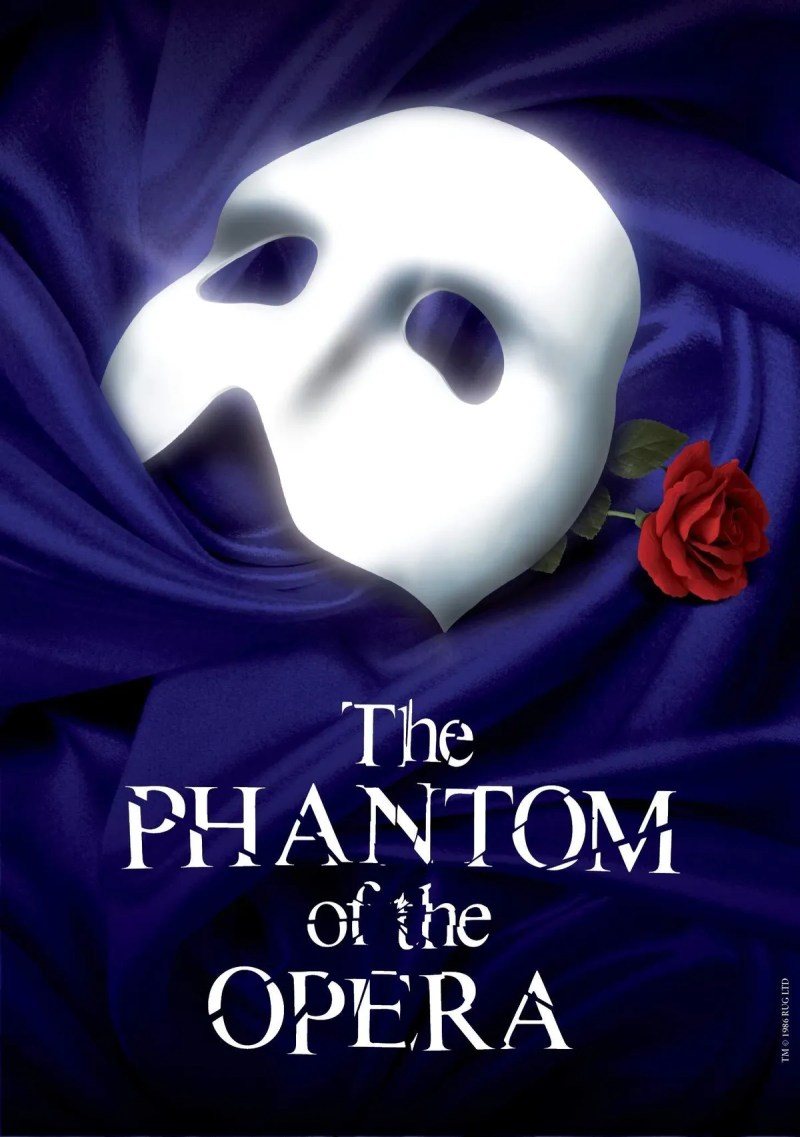
The gas lamps flicker in the Paris Opera House, casting long shadows across the marble floors. Beneath the grandeur, a masked figure lurks—his presence whispered in the halls, his influence seeping into the very fabric of the building. This is the world Gaston Leroux introduced to readers in 1910, a gothic nightmare of obsession, revenge, and musical genius. But when was Phantom of the Opera written? The answer is not as straightforward as one might assume. The novel Le Fantôme de l'Opéra emerged from a curious blend of real events, urban legends, and Leroux’s own theatrical imagination, its publication date marking just the beginning of its enduring legacy.
Leroux, a journalist and playwright, was no stranger to the macabre. His career had already touched on crime and the supernatural—he covered the infamous Dreyfus Affair and dabbled in detective fiction—but nothing prepared him for the story that would define his name. The inspiration struck during a visit to the Paris Opera Garnier in 1909, where he encountered a locked room rumored to hide a secret. Locals spoke of a phantom who haunted the building, a specter tied to its construction. Leroux, ever the skeptic, dismissed the tales—until he stumbled upon a newspaper clipping about a worker’s death during the opera house’s construction. That death, combined with the eerie atmosphere of the Garnier, planted the seed for a tale that would transcend its time.
Yet the question of when was Phantom of the Opera written extends beyond the novel’s publication. The story’s DNA includes fragments of earlier myths, from the 18th-century legend of the "White Lady" of the Paris Opera to the real-life architect Charles Garnier’s obsession with acoustics and hidden passages. Leroux wove these threads into a narrative that felt both timeless and urgently modern. The novel’s serial publication in Le Gaulois in 1910 captivated Paris, but it was the 1925 silent film adaptation that first brought the Phantom to global screens. Even then, the story’s power lay dormant—until Andrew Lloyd Webber’s 1986 musical transformed it into a cultural phenomenon, making when was Phantom of the Opera written a question asked by millions in theaters worldwide.
The Complete Overview of Phantom of the Opera: From Novel to Icon
Gaston Leroux’s Le Fantôme de l'Opéra was published in three volumes between April and November 1910, a period when French literature was dominated by naturalism and early modernism. The novel’s structure—part mystery, part romance, part horror—reflected Leroux’s training as a journalist, where he mastered the art of suspense through meticulous research and dramatic pacing. Unlike the sleek, linear storytelling of today’s thrillers, Leroux’s Phantom unfolds like a puzzle, with clues scattered across the opera house’s labyrinthine corridors. The novel’s success was immediate but short-lived; by the 1930s, it had faded from public memory, overshadowed by Leroux’s later works like The Mystery of the Yellow Room.What makes when was Phantom of the Opera written a pivotal question is the novel’s evolution. Leroux drew from real events: the 1873 construction of the Palais Garnier, the death of a stagehand during rehearsals for Verdi’s Don Carlos, and the rumors of a hidden room beneath the building. But he also borrowed from earlier gothic tropes, including the "underground man" archetype popularized by Edgar Allan Poe. The Phantom himself—a disfigured musical prodigy—was a fusion of the tragic artist and the vengeful villain, a character type that would later influence everything from Batman’s Joker to American Horror Story. The novel’s blend of the supernatural and the mundane made it a bridge between 19th-century gothic fiction and the psychological thrillers of the 20th century.
Historical Background and Evolution
The Paris Opera Garnier, inaugurated in 1875, was a marvel of Beaux-Arts architecture, its opulent interiors designed to dazzle. But beneath its gilded surface lay a darker history. During construction, workers reported hearing phantom footsteps in the empty halls, and rumors persisted of a secret chamber where the architect, Charles Garnier, had hidden his personal effects—or something far more sinister. Leroux, a man who thrived on urban legends, latched onto these stories. His research included interviews with opera staff and even a visit to the morgue, where he examined the body of a drowned woman whose features eerily resembled Christine Daaé, the novel’s heroine.The novel’s publication in 1910 coincided with a cultural shift in France. The Belle Époque was winding down, and the horrors of World War I loomed on the horizon. Leroux’s Phantom, with his themes of isolation and madness, resonated with an audience grappling with the fragility of civilization. The book’s initial reception was mixed—some critics dismissed it as melodrama, while others praised its atmospheric tension. Yet it was the 1925 film adaptation that cemented its place in pop culture. Lon Chaney’s silent portrayal of the Phantom, complete with grotesque makeup and eerie sound effects, became the blueprint for every subsequent adaptation. When was Phantom of the Opera written? The answer is 1910, but its true birth was in the collective imagination of a city on the brink of chaos.
Core Mechanisms: How It Works
At its core, Phantom of the Opera is a study in duality. The novel’s power lies in its ability to oscillate between horror and romance, between the grotesque and the sublime. Leroux achieves this through his use of setting—the opera house becomes a character itself, a living entity that breathes and whispers. The Phantom’s influence is omnipresent, yet he remains unseen until the final act, a narrative technique that keeps readers (and audiences) perpetually off-balance. This structural brilliance is why the story has endured across mediums: whether in Leroux’s novel, the 1925 film, or Webber’s musical, the Phantom’s presence is felt before he is seen.Table of Contents
- The Complete Overview of Phantom of the Opera : From Novel to Icon
- Historical Background and Evolution
- Core Mechanisms: How It Works
- Key Benefits and Crucial Impact
- Major Advantages
- Comparative Analysis
- Future Trends and Innovations
- Conclusion
- Comprehensive FAQs
- Q: When was Phantom of the Opera written, and how long did it take?
- Q: Is the Phantom based on a real person?
- Q: Why did Phantom of the Opera become so popular in the 1980s?
- Q: Are there differences between the novel and the musical?
- Q: How has Phantom of the Opera influenced modern media?
- Q: Can I visit the real Paris Opera Garnier today?
- Q: Are there other books or adaptations I should read/watch?
The novel’s mechanics also hinge on its unreliable narrator. The story is told through the eyes of various characters—Christine, her lover Raoul, and even the Phantom himself—each offering a fragmented perspective. This polyphonic approach forces the reader to piece together the truth, much like the opera’s patrons trying to unravel the mystery of the Phantom’s identity. Leroux’s use of red herrings, such as the false Phantom revealed in the novel’s climax, ensures that the audience is always one step behind. This technique, refined over a century ago, remains a cornerstone of modern suspense storytelling.
Key Benefits and Crucial Impact
Few stories have transcended their era as completely as Phantom of the Opera. When was it written? In 1910, but its themes—obsession, artistic genius, and the cost of fame—remain eerily relevant. The novel’s impact on literature and entertainment cannot be overstated. It popularized the "tortured artist" trope, influencing everything from The Picture of Dorian Gray to Black Swan. Its gothic setting became a template for haunted spaces in horror, from The Shining to Crimson Peak. Even the musical’s 2004 film adaptation, with its blend of spectacle and psychological depth, proved that the Phantom’s allure is timeless.The story’s adaptability is its greatest strength. Each iteration—from Leroux’s novel to Webber’s stage production—reinvents the Phantom while preserving his essence. The 1986 musical, in particular, democratized the tale, making it accessible to a global audience. Its record-breaking run (still ongoing in some form) is a testament to the universal appeal of its themes. The Phantom is not just a villain; he is a symbol of the artist’s struggle, a figure who embodies both creation and destruction. This duality ensures that when was Phantom of the Opera written is a question that leads to deeper inquiries: Why does this story resonate? What does the Phantom represent?
"The Phantom is not a monster. He is a man who has been broken by the world, and in his brokenness, he creates beauty—and terror." —Andrew Lloyd Webber, reflecting on the character’s enduring appeal.
Major Advantages
- Cultural Longevity: Over a century after its publication, Phantom of the Opera remains one of the most adapted stories in history, spanning novels, films, musicals, and even video games.
- Psychological Depth: The Phantom’s character is a masterclass in tragic villainy, blending charisma with monstrosity in a way that few antagonists achieve.
- Architectural Inspiration: The Paris Opera Garnier’s real-life secrets—hidden rooms, underground tunnels—were amplified by Leroux, making the novel a blueprint for gothic settings.
- Musical Innovation: Webber’s score, with its soaring arias and haunting leitmotifs, redefined how opera could be presented to mainstream audiences.
- Thematic Versatility: The story’s themes of love, power, and madness allow it to be reinterpreted in every generation, from silent films to modern retellings.

Comparative Analysis
| Element | 1910 Novel vs. 1986 Musical |
|---|---|
| Phantom’s Motivation | Leroux’s Phantom is a vengeful genius; Webber’s is a tragic lover. The novel’s Phantom is more overtly monstrous, while the musical humanizes him. |
| Setting | The novel’s Paris Opera is a labyrinth of secrets; the musical’s setting is more theatrical, with grander visuals but fewer hidden details. |
| Christine’s Role | In the novel, Christine is a passive figure; in the musical, she is a stronger protagonist who actively challenges the Phantom. |
| Ending | The novel’s Phantom dies in a blaze of glory; the musical’s Phantom survives, leaving his fate ambiguous—a shift that reflects modern audiences’ preference for open endings. |
Future Trends and Innovations
As technology evolves, so too will the Phantom’s story. Virtual reality could reimagine the Paris Opera as an interactive experience, allowing users to "haunt" the halls alongside the Phantom. AI-generated narratives might explore alternate endings, where the Phantom’s fate is determined by algorithmic storytelling. Yet the core of the tale—the battle between art and obsession—will remain unchanged. The Phantom’s appeal lies in his universality; he is the artist who is both revered and reviled, the genius who is also a monster. Future adaptations will likely focus on psychological depth, perhaps even delving into the Phantom’s backstory with prequels or alternate perspectives.The question of when was Phantom of the Opera written will continue to be asked, but the answer will expand. It’s no longer just about 1910—it’s about how each generation reinterprets the Phantom to reflect its own fears and desires. From silent films to immersive theater, the story’s future is as boundless as its past. One thing is certain: the Phantom will never truly fade into the shadows.

Conclusion
Phantom of the Opera is more than a story—it is a cultural touchstone, a mirror held up to society’s obsession with genius and madness. When was it written? The answer is 1910, but its creation was a slow burn, fueled by real events, urban legends, and Leroux’s journalistic instincts. The novel’s initial obscurity is a reminder that even the greatest stories can be forgotten before they are rediscovered. It took a silent film, a musical, and decades of cultural osmosis to turn the Phantom into an icon.Today, the Phantom’s influence is everywhere. From Broadway to blockbuster films, his legacy endures because he embodies the eternal struggle between creation and destruction. The opera house may crumble, but the Phantom’s music—and his curse—will always echo through the halls of art.
Comprehensive FAQs
Q: When was Phantom of the Opera written, and how long did it take?
The novel Le Fantôme de l'Opéra was serialized in Le Gaulois from April to November 1910, meaning it took roughly seven months to complete. However, Leroux’s research—including interviews with opera staff and visits to the Paris Opera Garnier—spanned years before publication.
Q: Is the Phantom based on a real person?
No, the Phantom is a fictional character, though Gaston Leroux drew inspiration from real events. The Paris Opera Garnier’s construction was plagued by rumors of a "phantom," and a stagehand’s death during rehearsals for Don Carlos in 1881 may have influenced the story. Some speculate Leroux was also inspired by the real-life "White Lady" legend of the opera house.
Q: Why did Phantom of the Opera become so popular in the 1980s?
The 1986 musical The Phantom of the Opera revitalized the story by blending grand opera with rock and pop influences. Andrew Lloyd Webber’s score, combined with stunning stage designs, made it accessible to a new generation. The musical’s emotional depth and visual spectacle ensured its place as a cultural phenomenon.
Q: Are there differences between the novel and the musical?
Yes, significant differences exist. The novel’s Phantom is more overtly monstrous, while the musical humanizes him. The ending also varies: in the novel, the Phantom dies in a fire; in the musical, he survives, leaving Christine to choose between him and Raoul. The musical also simplifies some subplots for theatrical effect.
Q: How has Phantom of the Opera influenced modern media?
The Phantom’s legacy is vast. His character has inspired villains in films, TV, and games (e.g., Batman’s Joker, American Horror Story’s Phantom). The story’s gothic setting has influenced horror films like The Shining and Crimson Peak. Even the trope of the "tortured artist" owes much to Leroux’s creation.
Q: Can I visit the real Paris Opera Garnier today?
Yes, the Palais Garnier is open to the public as a museum. Visitors can explore its opulent interiors, including the famous chandelier and the Phantom’s alleged hiding spot beneath the stage. Guided tours often highlight the opera house’s dark history, making it a pilgrimage site for fans.
Q: Are there other books or adaptations I should read/watch?
For deeper dives, try Leroux’s original novel or his sequel, The Daughter of the Phantom (1910). For adaptations, the 1925 silent film (starring Lon Chaney) and the 2004 musical film are essential. The 2023 Phantom of the Opera TV series on AMC offers a modern reinterpretation with a darker tone.
Leave a Comment
Comments are moderated before appearing. The data you submit is processed according to the Privacy Policy of Medicine.