How Many Denominations of Christianity Are There? The Full Breakdown

The question how many denominations of Christianity are there doesn’t yield a single answer—it’s a shifting landscape. While estimates suggest over 45,000 distinct Christian groups exist today, the number fluctuates as schisms emerge, mergers occur, and new movements arise. What began as a unified faith after Jesus’ crucifixion fractured into a mosaic of beliefs, rituals, and hierarchies, each claiming lineage to the same divine roots. The sheer scale of this fragmentation reflects not just theological disputes but centuries of political upheaval, cultural exchange, and human ambition to interpret Scripture anew.
At its core, Christianity’s denominational sprawl is less about division and more about adaptation. From the Great Schism of 1054 that split Eastern Orthodox from Roman Catholicism to the Protestant Reformation of the 16th century, each rupture was a response to perceived corruption, doctrinal rigidity, or unanswered spiritual questions. Today, the question how many denominations of Christianity are there isn’t just academic—it’s a reflection of humanity’s enduring quest to reconcile faith with reason, tradition with innovation. The result? A religious ecosystem where a Pentecostal megachurch in Lagos shares DNA with a 1,200-year-old monastery in Mount Athos, yet both trace their origins to the same apostolic foundations.
Yet beneath the numbers lies a paradox: the more denominations proliferate, the more Christians seek common ground. Ecumenical dialogues, shared worship services, and global missions blur old boundaries. The answer to how many denominations of Christianity are there isn’t just a count—it’s an invitation to explore how faith evolves, survives, and unites across continents and millennia.
###
The Complete Overview of Christianity’s Denominational Landscape
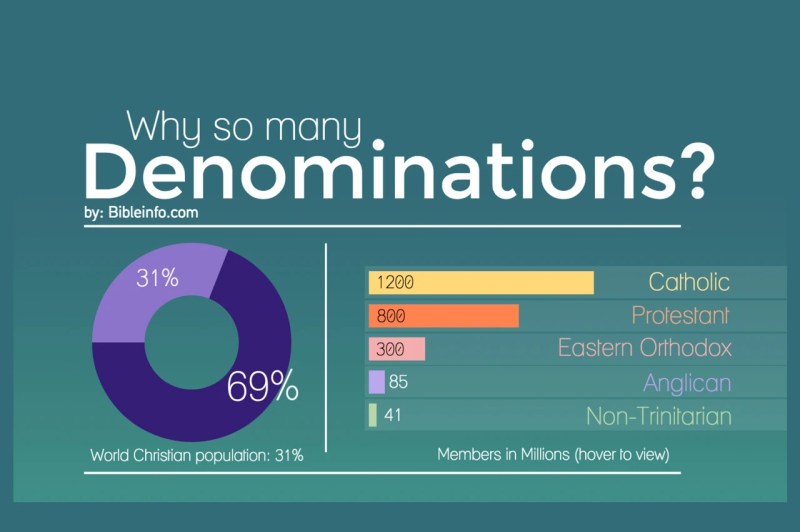
Christianity’s denominational diversity is often compared to a fractal—each branch splits into smaller branches, each with its own identity yet part of the same tree. The question how many denominations of Christianity are there is complicated by the fact that some groups resist classification, while others merge or dissolve entirely. Broadly, scholars categorize Christianity into three major branches: Catholicism, Orthodoxy, and Protestantism. Within these, however, lie hundreds of sub-groups, from the Anglican Communion’s 85 million members to the Jehovah’s Witnesses’ 8.5 million, each with distinct liturgical practices, theological emphases, and governance structures.The sheer volume of denominations—ranging from the Assyrian Church of the East (founded in the 5th century) to the Church of Jesus Christ of Latter-day Saints (19th century)—highlights Christianity’s resilience. Unlike monolithic religions, Christianity’s adaptability has allowed it to thrive in every corner of the globe, from the Ethiopian Orthodox Tewahedo Church in Africa to the Korean Presbyterian Church in Asia. The question how many denominations of Christianity are there isn’t just about counting; it’s about understanding how each group answers fundamental questions: Who is Jesus? How does one attain salvation? What role does Scripture play? The answers vary wildly, yet all claim to be heirs to the same apostolic tradition.
###
Historical Background and Evolution
The story of Christianity’s denominational split begins with the Council of Nicaea (325 AD), where bishops debated Christ’s nature—a dispute that foreshadowed future schisms. By the 5th century, the Great Schism between East and West had already planted the seeds for what would become Eastern Orthodoxy and Roman Catholicism. The East rejected papal supremacy, while the West centralized authority under the Pope. This divide, though ancient, remains unresolved today, with 1.2 billion Catholics and 220 million Orthodox Christians adhering to distinct liturgical traditions, sacraments, and ecclesial structures.Table of Contents
- The Complete Overview of Christianity’s Denominational Landscape
- Historical Background and Evolution
- Core Mechanisms: How It Works
- Key Benefits and Crucial Impact
- Major Advantages
- Comparative Analysis
- Future Trends and Innovations
- Conclusion
- Comprehensive FAQs
- Q: What is the largest Christian denomination?
- Q: Are all denominations considered "real" Christianity?
- Q: How do new denominations form?
- Q: Do denominations ever merge?
- Q: Which denomination is the most conservative?
- Q: Can someone switch denominations freely?
- Q: Are there Christian denominations that reject the Trinity?
- Q: How does denominationalism affect missionary work?
- Q: What’s the smallest Christian denomination?
The Protestant Reformation (1517–1648) accelerated the fragmentation. Martin Luther’s 95 Theses challenged papal authority, leading to the formation of Lutheranism, while John Calvin’s teachings birthed Reformed Christianity. The Anglican Church, meanwhile, emerged from Henry VIII’s break with Rome in 1534, blending Catholic rituals with Protestant theology. These movements, in turn, spawned further divisions: Methodism (18th century), Baptists (17th century), and Pentecostalism (early 20th century). Each new denomination answered a specific need—whether it was Anabaptist pacifism, Pietist emotional worship, or Evangelical revivalism—proving that the question how many denominations of Christianity are there is as much about human need as it is about doctrine.
###
Core Mechanisms: How It Works
Denominational identity is shaped by three pillars: doctrine, worship, and governance. Doctrine determines beliefs about salvation, Scripture, and church authority—Catholics emphasize papal infallibility, while Orthodox Christians uphold the Seven Ecumenical Councils and iconography. Worship styles vary from Latin Mass (Catholic) to charismatic praise services (Pentecostal), reflecting cultural and theological priorities. Governance structures range from episcopal hierarchies (Anglican) to congregational autonomy (Baptist), each influencing how decisions are made.The mechanics of denominational formation often hinge on schism. A disagreement over transubstantiation (Catholic vs. Protestant views) or women’s ordination (Orthodox vs. Lutheran stances) can lead to a split. Some denominations, like the United Church of Christ, result from mergers (e.g., Congregationalists and Evangelicals in 1957). Others, like Mormonism, emerge from new revelations claimed by founders like Joseph Smith. The fluidity of these mechanisms ensures that the answer to how many denominations of Christianity are there is never static—it’s a living, evolving question.
###
Key Benefits and Crucial Impact
Christianity’s denominational diversity isn’t just a historical curiosity—it’s a force shaping global culture, politics, and social movements. The question how many denominations of Christianity are there matters because each group influences everything from human rights advocacy (Evangelicals and LGBTQ+ debates) to global healthcare (Catholic hospitals in Africa). Denominations also drive education, with Protestant colleges like Harvard and Catholic universities like Notre Dame shaping generations of leaders.> "Denominationalism is the price of freedom in religion—it ensures no single interpretation monopolizes the truth." — Philip Jenkins, Religious Historian
The impact extends to missionary work, where denominations like the Southern Baptists and Catholic Church compete—and collaborate—to spread their faith. Even in secular societies, Christian denominations influence laws on abortion, same-sex marriage, and religious liberty. The question how many denominations of Christianity are there thus becomes a lens to examine power, identity, and the enduring relevance of faith in a secular age.
###
Major Advantages
###
Comparative Analysis
| Branch | Key Characteristics ||---------------------|----------------------------------------------------------------------------------------|
| Catholicism | Papal authority, 7 sacraments, Latin Mass (pre-Vatican II), global hierarchy. |
| Orthodoxy | Seven Councils, iconography, autocephalous churches, rejection of papal supremacy. |
| Protestantism | Sola Scriptura, varied worship styles, congregational/presbyterian governance. |
| Restorationist | Claims to restore "primitive Christianity" (e.g., LDS, Jehovah’s Witnesses). |
###
Future Trends and Innovations
The question how many denominations of Christianity are there will continue to evolve as digital evangelism and global migration reshape faith. Online churches (e.g., Saddleback Church’s streaming services) are creating new forms of denominational identity, while African Christianity—already the world’s fastest-growing—may introduce thousands of new groups by 2050. Interfaith marriages and secularization could also lead to hybrid denominations, blurring traditional lines.Innovations like AI-driven Bible study apps and virtual reality worship suggest that the next wave of denominationalism may be tech-mediated. Yet, despite these changes, the core question remains: How do humans reconcile unity with diversity? The answer may lie in ecumenical movements that prioritize shared values over doctrinal purity—a trend that could redefine the very nature of Christian identity.
###

Conclusion
The question how many denominations of Christianity are there has no final answer—only a snapshot of an ever-changing religious landscape. What began as a single movement now encompasses tens of thousands of expressions, each a testament to humanity’s capacity for both division and unity. Yet, beneath the numbers, a deeper truth emerges: Christianity’s strength lies in its adaptability. From the catacombs of Rome to the megachurches of Seoul, its denominations reflect a faith that has survived persecution, schism, and modernity itself.As the world grows more interconnected, the question how many denominations of Christianity are there may become less about counting and more about understanding how faith transcends borders. Whether through global synods, digital worship, or cross-denominational alliances, Christianity’s future will be shaped by its ability to balance tradition with innovation—proving that its diversity is not a flaw, but its greatest asset.
###
Comprehensive FAQs
Q: What is the largest Christian denomination?
The Roman Catholic Church is the largest, with over 1.3 billion members, followed by Protestantism (900 million) and Eastern Orthodoxy (220 million). However, Pentecostal/Charismatic groups are growing fastest, particularly in Africa and Latin America.
Q: Are all denominations considered "real" Christianity?
Most denominations claim to be the "true" Church, but ecumenical groups like the World Council of Churches recognize all as legitimate expressions of faith. Theological differences (e.g., Trinity debates) lead to exclusivist claims, but interfaith dialogue is increasingly common.
Q: How do new denominations form?
New denominations typically arise from schisms (e.g., Southern Baptists splitting from Northern Baptists in 1845), new revelations (e.g., Mormonism), or cultural adaptations (e.g., African Initiated Churches). Some emerge from revival movements (e.g., Pentecostalism in the early 1900s).
Q: Do denominations ever merge?
Yes. Examples include:
Q: Which denomination is the most conservative?
Orthodox Judaism (not Christian) is often cited, but among Christians, Orthodox Christianity and certain Protestant groups (e.g., Amish, Seventh-day Adventists) hold the most conservative stances on Scripture, tradition, and morality. However, "conservatism" varies—some Orthodox churches are liberal on social issues, while some Evangelicals are progressive.
Q: Can someone switch denominations freely?
Yes, but some denominations require ordination or baptism for full membership. For example:
Q: Are there Christian denominations that reject the Trinity?
Yes. Unitarian Universalism, Jehovah’s Witnesses, and Oneness Pentecostals (e.g., United Pentecostal Church) reject the Trinity, believing in one God rather than a Triune deity. These groups are often classified as nontrinitarian or modalist.
Q: How does denominationalism affect missionary work?
Denominations compete and collaborate in missions:
Q: What’s the smallest Christian denomination?
The Christian Community Church (founded by Leonard James Ragland in the 1970s) has fewer than 100 members, while Assyrian Church of the East (with 1 million) is ancient but numerically small. House churches in China and underground movements in North Korea also operate with minimal visibility.
Leave a Comment
Comments are moderated before appearing. The data you submit is processed according to the Privacy Policy of Medicine.