Understanding STP Conditions in Chemistry: The Standard Defined
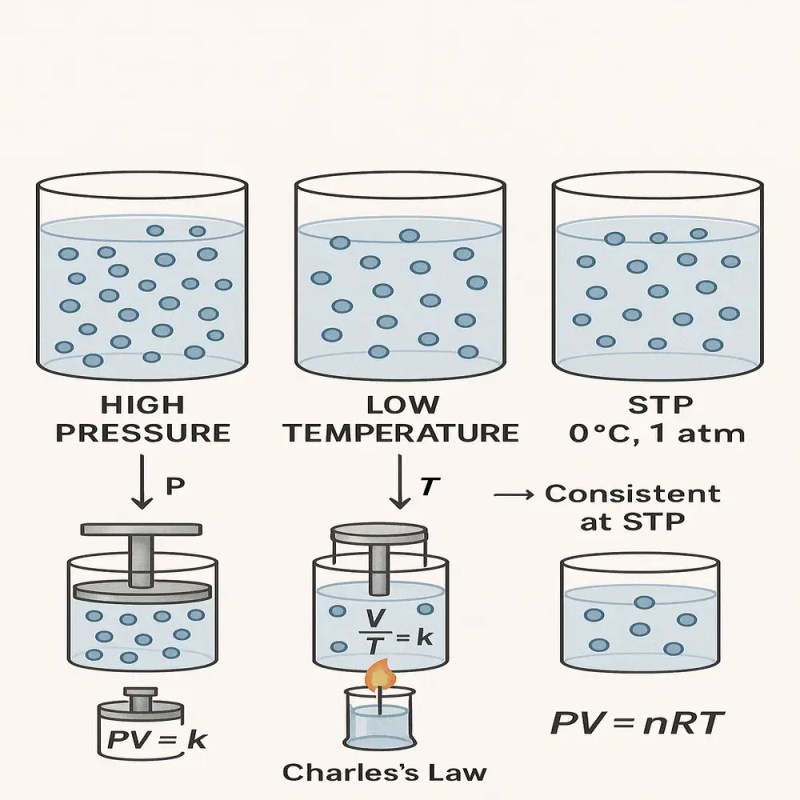
Chemistry operates on precision—where a single degree or millimeter of mercury can alter experimental outcomes. Among its foundational concepts, what are STP conditions in chemistry stands as a cornerstone, defining the baseline for comparing gases, calculating molar volumes, and ensuring reproducibility in experiments. Without STP, the consistency of data across laboratories would dissolve into chaos, rendering comparisons meaningless. The concept isn’t merely academic; it underpins everything from industrial gas storage to atmospheric science.
Yet, despite its ubiquity, STP remains a point of confusion for many. Some conflate it with other standards like NTP (normal temperature and pressure) or assume its values are arbitrary. Others overlook its role in deriving universal constants, such as the molar volume of an ideal gas. The truth is more nuanced: STP is a carefully calibrated reference that evolved to meet the demands of 19th-century chemistry—when scientists realized uniformity was essential for progress.
The implications of STP extend beyond textbooks. In pharmaceutical manufacturing, for instance, deviations from standard conditions can affect drug stability. In environmental science, STP adjustments are critical when analyzing air quality data. Even in everyday applications—like calibrating scuba diving equipment—understanding what are STP conditions in chemistry ensures safety. The standard isn’t just a tool; it’s a silent enforcer of accuracy in fields where margins for error are nonexistent.
The Complete Overview of Standard Temperature and Pressure (STP) in Chemistry
At its core, what are STP conditions in chemistry refers to a universally accepted set of parameters: 0°C (273.15 K) and 1 atm (101.325 kPa). These values serve as a reference point for measuring and comparing the physical properties of gases, particularly their volumes. The choice of 0°C stems from its historical significance—the freezing point of water, a natural benchmark—while 1 atm approximates average atmospheric pressure at sea level, making it practical for terrestrial applications. Together, they create a standardized framework where gas behavior can be predicted using the ideal gas law (PV = nRT), eliminating variability caused by environmental fluctuations.The adoption of STP wasn’t arbitrary; it emerged from the need to harmonize scientific data during the Industrial Revolution. Before its formalization, chemists and physicists used local atmospheric pressures and temperatures, leading to inconsistent results. The International Union of Pure and Applied Chemistry (IUPAC) later solidified STP in 1982, though earlier iterations (like the 1800s’ "standard conditions") varied slightly. Today, STP remains a linchpin in education, research, and industry, ensuring that a mole of any ideal gas occupies 22.4 liters at these conditions—a value derived directly from the ideal gas constant (R).
Historical Background and Evolution
The origins of what are STP conditions in chemistry trace back to the 18th century, when scientists like Joseph Louis Gay-Lussac and Jacques Charles began quantifying gas behavior. Their experiments revealed that gases expand linearly with temperature (Charles’s Law) and that equal volumes of gases at the same conditions contain equal numbers of molecules (Avogadro’s Hypothesis). These discoveries laid the groundwork for standardizing measurements, but inconsistency persisted until the 19th century, when the concept of a "standard atmosphere" gained traction.The turning point came in 1912, when the International Committee for Weights and Measures proposed a unified standard to replace disparate national definitions. By 1954, the 10th General Conference on Weights and Measures (CGPM) defined the standard atmosphere as 101,325 pascals, aligning with modern SI units. However, it wasn’t until IUPAC’s 1982 revision that what are STP conditions in chemistry were explicitly codified as 0°C and 1 atm, replacing earlier variations (e.g., 25°C in some industrial contexts). This shift reflected a broader trend toward metrication and global scientific cooperation, ensuring that researchers worldwide could replicate experiments with precision.
Core Mechanisms: How It Works
The functionality of STP hinges on the ideal gas law, which describes the relationship between pressure (P), volume (V), temperature (T), and the number of moles (n) of a gas:PV = nRT At STP, the equation simplifies dramatically. For one mole of an ideal gas (n = 1), the volume (V) becomes:
V = (0.0821 L·atm·K⁻¹·mol⁻¹ × 273.15 K) / 1 atm = 22.4 L This molar volume is a constant at STP, allowing chemists to convert between mass and volume effortlessly. For example, calculating the volume occupied by 2 grams of hydrogen gas (H₂) involves:
1. Determining moles: n = 2 g / 2.016 g/mol ≈ 0.992 mol 2. Applying STP: V = 0.992 mol × 22.4 L/mol ≈ 22.2 L
Table of Contents
- The Complete Overview of Standard Temperature and Pressure (STP) in Chemistry
- Historical Background and Evolution
- Core Mechanisms: How It Works
- Key Benefits and Crucial Impact
- Major Advantages
- Comparative Analysis
- Future Trends and Innovations
- Conclusion
- Comprehensive FAQs
- Q: Why is 0°C used in STP instead of another temperature?
- Q: How does STP differ from NTP (Normal Temperature and Pressure)?
- Q: Can real gases behave ideally at STP?
- Q: What happens if I use STP incorrectly in a calculation?
- Q: Are there any industries where STP isn’t used?
- Q: How is STP relevant to the molar volume of gases?
- Q: Has IUPAC ever considered changing STP?
The system’s reliability depends on two critical assumptions: gases must behave ideally (no intermolecular forces or volume) and conditions must adhere strictly to 0°C and 1 atm. Real gases, like CO₂ or H₂O vapor, deviate slightly due to non-ideal behavior, but STP remains a close approximation for most practical purposes.
Key Benefits and Crucial Impact
The adoption of what are STP conditions in chemistry revolutionized scientific communication by eliminating ambiguity in gas measurements. Before STP, a chemist in Paris and one in London might report vastly different volumes for the same reaction due to local atmospheric pressures. Today, STP ensures that a "liter of oxygen" means the same thing in Tokyo as it does in Toronto. This uniformity is particularly vital in fields like aerospace engineering, where fuel calculations must account for precise gas densities, or in medicine, where anesthetic gas dosages rely on standardized volumes.Beyond reproducibility, STP provides a scaffold for deriving fundamental constants. The molar volume of 22.4 L, for instance, is used to define the Avogadro constant (Nₐ), a cornerstone of modern chemistry. Industrial processes—such as the Haber-Bosch method for ammonia synthesis—also depend on STP for optimizing reaction conditions. Even environmental regulations, like those governing greenhouse gas emissions, reference STP to standardize emission measurements.
> "Standardization is the invisible hand that guides science from chaos to clarity. Without STP, the language of chemistry would be as fragmented as Babel’s tower." — Dr. Eleanor Voss, IUPAC Historical Committee
Major Advantages
- Global Consistency: Eliminates discrepancies caused by regional atmospheric variations, ensuring experiments are comparable worldwide.
- Educational Clarity: Simplifies teaching gas laws by providing a fixed reference point for calculations (e.g., molar volume).
- Industrial Precision: Critical for processes like gas storage, where volume-to-mass conversions must be exact to avoid hazards or inefficiencies.
- Scientific Reproducibility: Allows researchers to validate or replicate experiments across different laboratories without environmental adjustments.
- Legal and Regulatory Compliance: Used in environmental laws (e.g., reporting CO₂ emissions) and safety standards (e.g., compressed gas cylinders).

Comparative Analysis
While what are STP conditions in chemistry (0°C, 1 atm) are the gold standard, other reference conditions exist for specific applications. Below is a comparison of key standards:| Standard | Conditions | Primary Use | Key Difference |
|---|---|---|---|
| STP (IUPAC) | 0°C (273.15 K), 1 atm (101.325 kPa) | Academic chemistry, molar volume calculations | Historically rooted; uses freezing point of water. |
| NTP (Normal Temperature and Pressure) | 20°C (293.15 K), 1 atm | Industrial applications, environmental science | More practical for room-temperature processes. |
| STD (Standard Conditions for Gases) | 15°C (288.15 K), 100 kPa | European industrial standards (e.g., gas metering) | Preferred in EU regulations for safety and trade. |
| SCSC (Standard Conditions of Dry Air) | 15°C, 101.325 kPa (but with 0% humidity) | Aerospace, aviation fuel calculations | Accounts for moisture-free air, critical for engines. |
Future Trends and Innovations
As chemistry advances, the role of what are STP conditions in chemistry may evolve to accommodate new challenges. One potential shift involves redefining STP to incorporate 25°C (298.15 K), a temperature more relevant to modern industrial and biological systems. This change, already adopted in some contexts (e.g., "standard ambient temperature and pressure," or SATP), could bridge the gap between laboratory standards and real-world applications. Additionally, the rise of quantum chemistry and nanoscale gas behavior may necessitate adjustments to STP, as ideal gas laws break down at atomic scales.Another frontier is the integration of digital twins—virtual replicas of chemical processes—where STP could serve as a baseline for simulating reactions under controlled conditions. Machine learning models trained on STP data might predict non-ideal gas behavior more accurately, reducing reliance on empirical corrections. However, any revision to STP would require global consensus, given its foundational role in education and industry.

Conclusion
The question "what are STP conditions in chemistry" isn’t just about memorizing two numbers—it’s about grasping the infrastructure that holds modern science together. From the earliest gas laws to today’s high-tech laboratories, STP has been the silent architect of consistency, enabling breakthroughs that might otherwise remain out of reach. Its legacy isn’t just historical; it’s a living standard that adapts while preserving the integrity of chemical measurements.Yet, the story of STP is far from static. As disciplines like materials science and environmental engineering push boundaries, the definition may expand to reflect new priorities. One thing remains certain: without STP, the edifice of chemical knowledge would crumble under the weight of inconsistency. It is, and will remain, the bedrock upon which precision is built.
Comprehensive FAQs
Q: Why is 0°C used in STP instead of another temperature?
0°C was chosen because it aligns with the freezing point of water, a universally recognizable reference. Historically, this temperature was easier to reproduce in laboratories before the advent of precise thermometers. Additionally, it simplifies calculations involving phase changes (e.g., ice-water equilibrium).
Q: How does STP differ from NTP (Normal Temperature and Pressure)?
STP uses 0°C and 1 atm, while NTP uses 20°C and 1 atm. The shift to 20°C in NTP reflects modern industrial needs, as room temperature is more practical for many applications. However, STP remains dominant in academic and molar volume contexts due to its historical precedence.
Q: Can real gases behave ideally at STP?
No real gas is perfectly ideal, but at STP, many gases (e.g., H₂, N₂, O₂) approximate ideal behavior closely. Deviations occur due to intermolecular forces (e.g., van der Waals forces) and molecular volume, which become significant at high pressures or low temperatures. For example, CO₂ shows noticeable non-ideal behavior at STP.
Q: What happens if I use STP incorrectly in a calculation?
Errors in STP usage can lead to significant inaccuracies. For instance, misapplying 1 atm instead of the actual local pressure could overestimate gas volumes by up to 5% in high-altitude labs. In industrial settings, such mistakes might result in unsafe conditions (e.g., overpressurized tanks) or failed reactions.
Q: Are there any industries where STP isn’t used?
Industries like aerospace and high-altitude engineering often use SCSC (Standard Conditions of Dry Air) instead, as humidity and pressure variations at high altitudes make STP impractical. Similarly, cryogenic processes (e.g., liquefied natural gas) operate far below STP and rely on custom standards.
Q: How is STP relevant to the molar volume of gases?
At STP, one mole of any ideal gas occupies 22.4 liters. This value is derived from the ideal gas law (PV = nRT) and serves as a conversion factor between moles and volume. For example, to find the volume of 3 moles of helium at STP: V = 3 mol × 22.4 L/mol = 67.2 L.
Q: Has IUPAC ever considered changing STP?
Yes. In 1982, IUPAC proposed replacing STP with SATP (25°C, 1 bar), but resistance from traditionalists and educators delayed adoption. While SATP is gaining traction in some fields, STP remains the default in most academic and regulatory contexts due to its deep-rooted utility.
Leave a Comment
Comments are moderated before appearing. The data you submit is processed according to the Privacy Policy of Medicine.