California’s 2024 Sales Tax Rate: What Businesses and Buyers Must Know
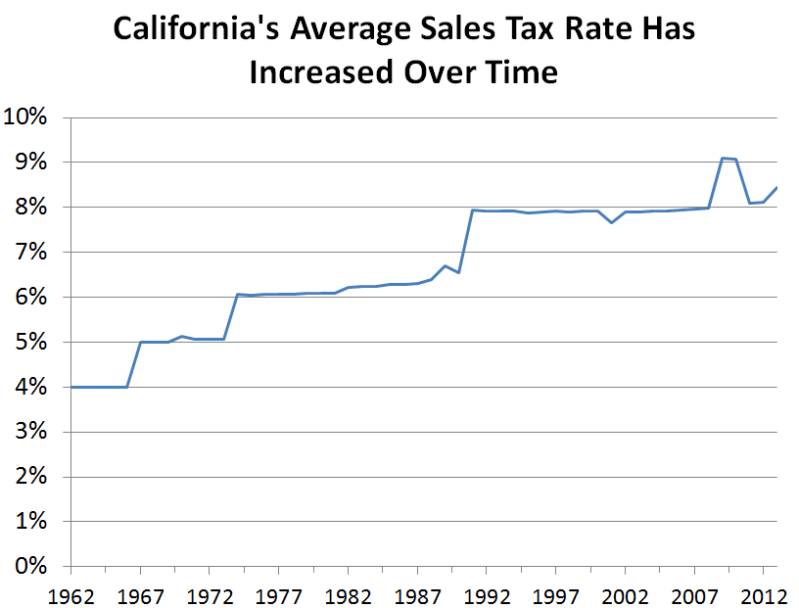
California’s sales tax structure remains one of the most intricate in the U.S., with a CA sales tax rate 2024 that fluctuates dramatically depending on jurisdiction, product type, and economic conditions. For businesses operating in the Golden State—or consumers navigating purchases—understanding these variations is non-negotiable. The baseline state sales tax sits at 7.25%, but local districts can add up to 2.5%, creating a combined rate as high as 9.75% in some areas. This patchwork system, while historically designed to fund local services, now presents challenges for e-commerce, brick-and-mortar retailers, and taxpayers alike.
The CA sales tax rate 2024 isn’t static; it’s influenced by legislative adjustments, ballot measures, and economic recovery efforts post-pandemic. For example, temporary tax hikes in certain counties (like Los Angeles) to offset budget shortfalls have blurred the lines between short-term fixes and permanent policy. Meanwhile, remote sellers and marketplace facilitators face heightened scrutiny under California’s aggressive enforcement of Wayfair compliance, forcing even out-of-state businesses to collect and remit the correct California sales tax rate 2024 for in-state transactions.
What’s less discussed is how these rates interact with other levies—such as the 1% state temporary tax (set to expire in 2025) or local measures like the Transportation Sales Tax in San Francisco. The cumulative effect can distort pricing strategies, consumer behavior, and even real estate transactions. Navigating this maze requires more than a cursory glance at the state’s revenue codes; it demands a granular understanding of how each layer of taxation applies to specific goods, services, and transactions.
###
The Complete Overview of California’s Sales Tax in 2024
California’s sales tax framework is a hybrid of state, county, and city levies, with the CA sales tax rate 2024 serving as the foundation. The state’s 7.25% base rate (comprising 6.25% general sales tax and 1% for state temporary measures) is the starting point, but local governments add their own surcharges. For instance, San Diego’s combined rate reaches 8.75%, while rural areas like Modoc County hover near 7.75%. This variability stems from Proposition 23 (2010), which allowed localities to impose additional taxes without voter approval, provided they fund public services.The complexity deepens when considering special districts—regions like the Los Angeles County Transportation Sales Tax Authority—which tack on extra percentages for infrastructure projects. Even within cities, rates can differ: Los Angeles’ 9.5% (including the 0.25% Mental Health Services Act tax) contrasts sharply with Santa Monica’s 9.75%. For businesses, this means dynamic pricing adjustments, while consumers often bear the brunt of these discrepancies without full awareness. The CA sales tax rate 2024 is thus less a fixed number and more a sliding scale influenced by geography, economic needs, and political decisions.
###
Historical Background and Evolution
California’s sales tax origins trace back to 1933, when the state adopted a general sales tax to combat the Great Depression—a move mirrored by only a handful of other states at the time. The initial rate was 2%, but it ballooned over decades as local governments sought revenue diversification. The 1970s marked a turning point with Proposition 13, which capped property taxes but inadvertently shifted fiscal reliance onto sales taxes. By the 1990s, the CA sales tax rate had climbed to 7.25%, with local additions creating the multi-tiered system seen today.Table of Contents
- The Complete Overview of California’s Sales Tax in 2024
- Historical Background and Evolution
- Core Mechanisms: How It Works
- Key Benefits and Crucial Impact
- Major Advantages
- Comparative Analysis
- Future Trends and Innovations
- Conclusion
- Comprehensive FAQs
- Q: What is the exact CA sales tax rate 2024 for my county?
- Q: Are groceries taxed at the full CA sales tax rate 2024 ?
- Q: How does the CA sales tax rate 2024 apply to online purchases?
- Q: Can I get a refund if I overpaid the CA sales tax rate 2024 ?
- Q: What happens if my business doesn’t comply with the CA sales tax rate 2024 ?
- Q: Will the CA sales tax rate 2024 change before 2025?
- Q: Are there any CA sales tax rate 2024 exemptions for small businesses?
- Q: How does the CA sales tax rate 2024 affect tourists?
- Q: Can I dispute a CA sales tax rate 2024 assessment?
- Q: What’s the difference between sales tax and use tax in California?
The 21st century introduced further volatility. The 2008 financial crisis led to temporary rate hikes, while the COVID-19 pandemic saw emergency measures like the 1% state temporary tax (approved via Proposition 26 in 2020) to fund healthcare and education. These adjustments, though temporary, have lingered, embedding uncertainty into the CA sales tax rate 2024. Meanwhile, the rise of e-commerce forced California to adapt, culminating in the 2019 Wayfair decision—where the state aggressively pursued remote sellers for uncollected taxes. This evolution underscores a broader trend: California’s sales tax is no longer just a revenue tool but a battleground for economic policy and compliance.
###
Core Mechanisms: How It Works
The CA sales tax rate 2024 applies to most tangible personal property and select services, though exemptions carve out exceptions. Retail sales (clothing, electronics, groceries) are taxable, but groceries receive a partial exemption (taxed at 1.75% of the state rate). Services like repairs or subscriptions are generally taxable, while rental housing falls under a separate 10.25% transient occupancy tax. The state’s Department of Tax and Fee Administration (CDTFA) oversees compliance, but local agencies enforce their own rates, leading to fragmented audits.For businesses, the process involves registering with the CDTFA, collecting tax at the highest applicable rate (including local additions), and remitting payments monthly, quarterly, or annually. Marketplace facilitators (e.g., Amazon, eBay) now bear responsibility for collecting CA sales tax 2024 on behalf of third-party sellers, a shift that has simplified compliance for small businesses but increased scrutiny on platforms. Penalties for non-compliance—including back taxes, interest, and legal action—can cripple operations, making accuracy critical. The system’s reliance on nexus thresholds (currently $500,000 in annual sales) further complicates out-of-state sellers’ obligations.
###
Key Benefits and Crucial Impact
California’s sales tax system funds critical public services, from education to infrastructure, but its impact extends beyond fiscal policy. For local governments, the CA sales tax rate 2024 provides a stable revenue stream amid property tax limitations, enabling investments in transit, healthcare, and emergency services. Consumers, however, often perceive higher prices as a trade-off for these amenities, though studies suggest sales taxes are less regressive than income taxes for middle- and high-income earners. The trade-off is stark: while businesses navigate compliance costs, residents benefit from funded schools and roads—though the distribution of these benefits remains uneven.The economic ripple effects are profound. A higher CA sales tax rate can dampen consumer spending, particularly in high-tax areas like the Bay Area, where residents already face some of the nation’s highest living costs. Conversely, lower rates in rural regions may attract tourism and small businesses. The 2024 landscape reflects these tensions, with temporary rate hikes in some counties (e.g., 0.5% in Alameda County) aimed at offsetting budget gaps without raising income taxes. The challenge lies in balancing revenue needs with economic growth, a dilemma California has yet to resolve definitively.
> "Sales taxes are the price we pay for civilization." > — Economist Arthur Laffer (paraphrased) > While hyperbolic, Laffer’s observation captures the dual nature of California’s CA sales tax rate 2024: a necessary evil that funds progress but also strains budgets. The debate over whether these taxes stifle innovation or enable it remains unresolved, yet the system’s resilience suggests it will endure—adapting, but never disappearing.
###
Major Advantages
- Revenue Stability: Unlike income taxes, sales taxes generate consistent funding tied to economic activity, making them less volatile during recessions.
- Local Control: California’s system allows cities and counties to tailor rates to their needs, enabling targeted investments in transit, housing, or education.
- Consumer Transparency: Unlike payroll taxes, sales taxes are visible at purchase, giving consumers immediate feedback on the cost of goods and services.
- Economic Redistribution: Higher taxes in affluent areas (e.g., San Francisco) can fund services in lower-income regions, though critics argue this creates inequity.
- Compliance Flexibility: The CDTFA’s online portal and automated systems reduce administrative burdens for businesses, though enforcement remains rigorous.
Comparative Analysis
| Metric | California (2024) | National Average |
|---|---|---|
| State Sales Tax Rate | 7.25% | 5.16% |
| Average Combined Rate | 8.5%–9.75% | 8.85% |
| Highest Local Rate | 9.75% (Santa Monica) | 10.25% (Chicago) |
| Exemptions | Groceries (1.75%), prescription drugs, clothing under $100 | Varies (e.g., groceries taxed in 45 states) |
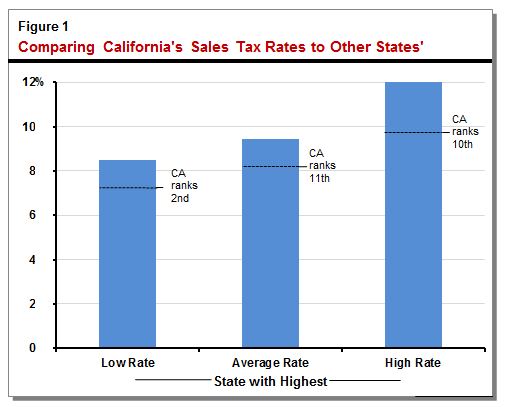
While California’s CA sales tax rate 2024 is above the national average, its structure—with local additions—mirrors systems in states like Washington and Illinois. However, California’s lack of a state income tax exemption for groceries (unlike Texas or Florida) and its aggressive enforcement of remote sellers set it apart. The 2024 data reveals that California’s rates are competitive with high-tax states like New York but lag behind outliers like Chicago (10.25%). The key difference lies in California’s flexibility for localities, which can either boost or suppress growth depending on policy choices.
###
Future Trends and Innovations
The CA sales tax rate 2024 is poised for further evolution, driven by automation, economic shifts, and legislative reforms. The CDTFA’s push for real-time sales tax reporting (via its Online Services portal) will reduce errors but may increase compliance costs for small businesses. Meanwhile, the 2025 expiration of the 1% temporary tax could trigger debates over permanent rate adjustments, especially as California grapples with homelessness funding and wildfire recovery costs. Some economists predict a shift toward broader-based taxes, such as expanding sales tax to digital services or software, though political resistance remains high.Innovation in tax collection technology—like AI-driven audit tools—will reshape enforcement, making it harder for businesses to evade the CA sales tax rate 2024. However, the human cost of higher taxes cannot be ignored: as prices rise, affordability crises in cities like Los Angeles may force policymakers to reconsider the system’s sustainability. One thing is certain: California’s sales tax will continue to adapt, but whether it becomes more equitable, efficient, or burdensome depends on the choices made in the next decade.
###

Conclusion
California’s CA sales tax rate 2024 is a testament to the state’s fiscal ingenuity—and its challenges. While it funds critical services and provides local autonomy, the patchwork of rates creates headaches for businesses and consumers alike. The 2024 landscape reflects a system in flux, where temporary measures risk becoming permanent, and enforcement grows more sophisticated. For stakeholders, the message is clear: vigilance is required. Businesses must stay ahead of compliance shifts, consumers should understand their tax burden, and policymakers must weigh the trade-offs between revenue and economic vitality.The future of California’s sales tax hinges on balancing growth and equity. As the state navigates post-pandemic recovery, climate investments, and demographic changes, the CA sales tax rate 2024 will remain a flashpoint. Whether it evolves into a simpler, fairer system or a more complex web of levies depends on the decisions made today. One certainty remains: California’s sales tax will endure—not as a relic of the past, but as a dynamic force shaping the state’s economic destiny.
###
Comprehensive FAQs
Q: What is the exact CA sales tax rate 2024 for my county?
The base California sales tax rate 2024 is 7.25%, but your total depends on local additions. Use the CDTFA’s Tax Rate Search Tool to find your combined rate by entering your ZIP code. For example, Los Angeles County’s rate is 9.5%, while rural Modoc County is 7.75%.
Q: Are groceries taxed at the full CA sales tax rate 2024?
No. Groceries are taxed at 1.75% of the state rate (not the full 7.25%), meaning your tax is 0.1275% of the purchase price. Local additions apply to the full amount, so your total grocery tax could still reach ~2.25% in high-tax areas.
Q: How does the CA sales tax rate 2024 apply to online purchases?
Since the 2019 Wayfair decision, remote sellers (including out-of-state businesses) must collect California sales tax 2024 if they exceed $500,000 in annual sales. Marketplace facilitators (e.g., Amazon) automatically collect and remit tax for third-party sellers. Consumers see the tax at checkout, but sellers must register with the CDTFA and file returns.
Q: Can I get a refund if I overpaid the CA sales tax rate 2024?
Refunds are rare but possible under specific conditions, such as overpaying due to a clerical error or claiming exemptions (e.g., for agricultural equipment). File Form 3895 with the CDTFA and provide receipts. However, most overpayments are applied to future taxes rather than refunded.
Q: What happens if my business doesn’t comply with the CA sales tax rate 2024?
Non-compliance triggers penalties, interest, and potential legal action. The CDTFA assesses 10% of the unpaid tax (minimum $100) plus 1.5% monthly interest. Severe cases may lead to audits, liens, or criminal charges. Proactive compliance—registering early, using CDTFA’s automated systems, and consulting a tax professional—mitigates risks.
Q: Will the CA sales tax rate 2024 change before 2025?
Possible, but unlikely for major overhauls. The 1% temporary tax expires in 2025, but lawmakers may extend or replace it. Local rates could adjust due to budget votes or new district taxes (e.g., housing bonds). Monitor CDTFA updates and legislative sessions for real-time changes.
Q: Are there any CA sales tax rate 2024 exemptions for small businesses?
Yes, but they’re limited. Retailers with under $1 million in annual sales may qualify for simplified reporting (quarterly filings). Nonprofits and government entities are exempt, as are manufacturers for machinery purchases. However, most small businesses must still collect and remit the full rate unless they meet strict criteria.
Q: How does the CA sales tax rate 2024 affect tourists?
Tourists pay the full combined rate (state + local) at the point of sale, with no exemptions. However, some hotels offer tax-free shopping programs (e.g., in San Diego). The CDTFA does not provide tourist-specific relief, so travelers should budget for higher prices in high-tax areas like Napa or Malibu.
Q: Can I dispute a CA sales tax rate 2024 assessment?
Yes, but you must act quickly. If you disagree with an assessment, file Form 8453 within 90 days and provide evidence (e.g., incorrect rate applied, exempt transactions). The CDTFA may audit your claim, but disputes often resolve through mediation.
Q: What’s the difference between sales tax and use tax in California?
Sales tax applies at purchase, while use tax (also 7.25% + local) applies if you buy items out-of-state without paying sales tax (e.g., online from a non-collecting seller). California treats them as complementary: if you avoid sales tax, you owe use tax upon bringing the item into the state. File Form 3895 to report use tax annually.
Leave a Comment
Comments are moderated before appearing. The data you submit is processed according to the Privacy Policy of Medicine.