The CA Sales Tax Rate Complete: All You Need to Know in 2024
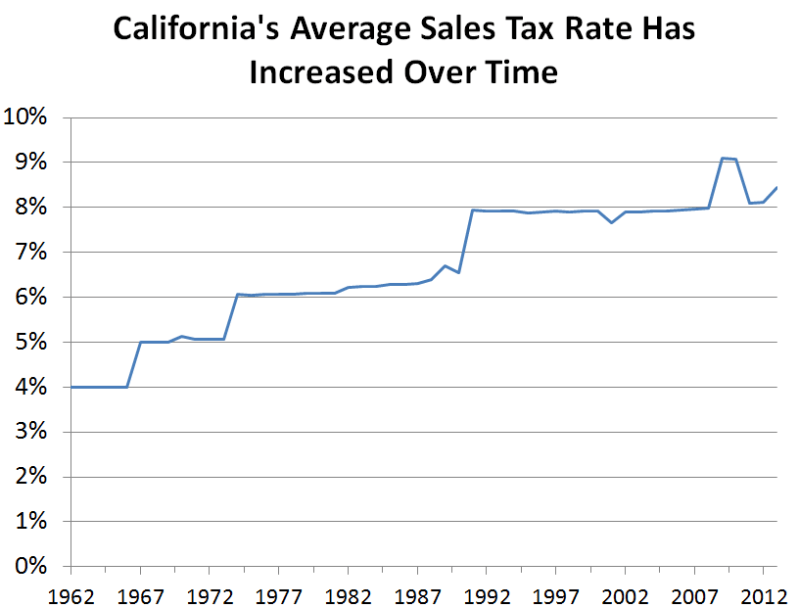
California’s sales tax structure is a labyrinth of state, county, and city levies, each with its own rules and exceptions. Unlike many states with flat rates, the CA sales tax rate complete is a dynamic system where the total tax burden can vary dramatically depending on location—sometimes exceeding 10% when all layers are applied. For businesses and consumers alike, understanding these variations isn’t just about compliance; it’s about financial strategy, pricing accuracy, and avoiding costly missteps.
The Golden State’s tax landscape has evolved alongside its booming economy, with legislative adjustments and local ballot measures frequently reshaping the California sales tax rate complete. From the introduction of the first state sales tax in 1933 to today’s intricate web of district-specific rates, the system reflects both fiscal necessity and political compromise. Yet, despite its complexity, the framework is designed to fund critical services—education, infrastructure, and public safety—while balancing the needs of urban and rural communities.
For e-commerce sellers, brick-and-mortar retailers, and even out-of-state vendors navigating California’s marketplace, the CA sales tax rate complete demands precision. A single miscalculation can trigger audits, back taxes, or penalties, making mastery of the system non-negotiable. This guide dissects the mechanics, historical context, and future trajectory of California’s sales tax—equipping you with the knowledge to navigate it with confidence.
The Complete Overview of California’s Sales Tax System
California’s sales tax regime is a multi-tiered structure where the CA sales tax rate complete is the sum of three distinct layers: the state rate, county surcharges, and local district taxes. The baseline state sales tax stands at 7.25%, but this is rarely what consumers pay. Instead, they encounter a blended rate that can climb to 10.75% or higher in high-tax areas like Los Angeles or San Francisco, where city and special district taxes add their own percentages. The system is further complicated by exemptions—certain goods (e.g., groceries, prescription drugs) and services (e.g., healthcare, childcare) are partially or fully tax-exempt, creating carve-outs that businesses must meticulously track.What distinguishes California’s approach is its reliance on local control. Unlike states with uniform rates, California allows counties and cities to impose additional taxes, often through voter-approved measures. This decentralization means a transaction in Sacramento may incur a different CA sales tax rate complete than one in San Diego, even for the same product. For businesses operating across the state, this variability requires dynamic pricing models or sophisticated tax calculation software to ensure accuracy. The result is a patchwork of rates that, while locally tailored, presents a logistical challenge for compliance.
Historical Background and Evolution
The origins of California’s sales tax trace back to the Great Depression, when the state faced severe budget deficits. In 1933, Governor James Rolph Jr. signed legislation establishing a 1% state sales tax, one of the first in the nation. The revenue generated was modest but critical, funding public works projects during a time of economic hardship. Over the decades, the rate crept upward—reaching 7% by 1971—reflecting both inflation and the growing demand for state services. The CA sales tax rate complete as we know it today, however, took shape in the 1980s and 1990s, as local governments gained the authority to levy their own taxes.The turning point came in 1986 with Proposition 63, which granted cities and counties the power to add up to 2% to the state rate, provided they secured voter approval. This shift decentralized tax authority, allowing communities to fund local priorities like schools, transit, and emergency services. By the 2000s, the California sales tax rate complete had become a mosaic of rates, with some cities (e.g., Los Angeles) imposing up to 4.5% in additional taxes. The system’s flexibility has been both a strength—enabling targeted funding—and a weakness, as businesses struggle to keep pace with the ever-changing landscape.
Core Mechanisms: How It Works
At its core, California’s sales tax is an ad valorem tax—meaning it’s applied to the selling price of taxable goods and services. The CA sales tax rate complete is calculated by summing the state rate (7.25%), the county rate (typically 0.25%–1.25%), and the city/district rate (0%–1.25%). For example, a purchase in San Francisco might include:Table of Contents
- The Complete Overview of California’s Sales Tax System
- Historical Background and Evolution
- Core Mechanisms: How It Works
- Key Benefits and Crucial Impact
- Major Advantages
- Comparative Analysis
- Future Trends and Innovations
- Conclusion
- Comprehensive FAQs
- Q: What is the current state sales tax rate in California?
- Q: Are groceries subject to California sales tax?
- Q: How does California enforce use tax on out-of-state purchases?
- Q: Can cities in California increase their sales tax rate without voter approval?
- Q: What happens if a business underreports sales tax in California?
- Q: Are there any upcoming changes to California’s sales tax laws?
The system also incorporates use tax, which applies to purchases made outside California but used within the state—a critical consideration for online retailers and consumers. Additionally, certain transactions are subject to special taxes, such as the 0.25% Mental Health Services Tax in Los Angeles County or the 1% Tourism Marketing District Tax in tourist-heavy areas. Compliance hinges on accurate classification of products and services, as well as timely remittance to the California Department of Tax and Fee Administration (CDTFA).
Key Benefits and Crucial Impact
California’s sales tax system, despite its complexity, plays a pivotal role in funding essential public services. The revenue generated from the CA sales tax rate complete supports K-12 education, healthcare programs, and infrastructure projects that underpin the state’s economy. For local governments, the ability to adjust rates through democratic processes ensures that tax burdens align with community needs—whether that means investing in affordable housing or expanding public transit. The system also fosters economic resilience by providing a stable revenue stream during economic downturns, unlike income taxes, which fluctuate with employment rates.Yet, the California sales tax rate complete is not without controversy. Critics argue that the regressive nature of sales taxes disproportionately affects low-income households, who spend a larger share of their income on taxable goods. Additionally, the administrative burden on businesses—particularly small retailers and e-commerce sellers—can be substantial, requiring significant resources to stay compliant. Balancing these trade-offs is an ongoing challenge, as policymakers seek to modernize the system while preserving its ability to generate critical funds.
"California’s sales tax system is a testament to the tension between local autonomy and statewide efficiency. While it empowers communities to fund their priorities, the complexity it creates is a double-edged sword—beneficial for governance but costly for compliance." — Tax Policy Analyst, California Legislative Analyst’s Office
Major Advantages
- Local Flexibility: Cities and counties can tailor tax rates to address specific needs, such as education funding or infrastructure projects, without relying solely on state allocations.
- Revenue Stability: Unlike income taxes, sales taxes provide a consistent revenue stream, making them less volatile during economic fluctuations.
- Funding Critical Services: A significant portion of the CA sales tax rate complete revenue is earmarked for public education, healthcare, and emergency services, ensuring core functions remain funded.
- Economic Adaptability: The system allows for adjustments in response to crises (e.g., temporary rate increases during budget shortfalls) or new priorities (e.g., climate initiatives).
- Consumer Transparency (When Applied Correctly): While the system is complex, clear labeling of tax rates at checkout helps consumers understand the total cost of purchases.

Comparative Analysis
| Factor | California | National Average ||--------------------------|----------------------------------------|-------------------------------------------|
| State Sales Tax Rate | 7.25% (highest in the U.S.) | 5.16% |
| Local Additions | Up to 3.25% (varies by city/county) | Typically 1.0%–2.5% |
| Total Combined Rate | 7.25%–10.75%+ | ~7.5%–9.5% (varies widely) |
| Exemptions | Broad (groceries, prescription drugs) | Narrower (varies by state) |
| Use Tax Enforcement | Aggressive (especially for out-of-state sellers) | Mixed (some states lax) |
California’s CA sales tax rate complete stands out for its high baseline rate and extensive local variations, making it one of the most complex systems in the nation. While states like Texas (6.25% state rate) or Florida (6% state rate) have simpler structures, California’s approach allows for greater local control—though at the cost of administrative complexity. The aggressive enforcement of use tax also sets California apart, particularly for remote sellers who must comply with the state’s economic nexus thresholds.
Future Trends and Innovations
The CA sales tax rate complete is poised for further evolution as technology and legislative priorities reshape tax collection. One key trend is the automation of tax calculation, with platforms like Avalara and Vertex enabling businesses to dynamically adjust rates based on transaction location. Additionally, the rise of marketplace facilitator laws (e.g., AB 147, which requires online platforms to collect sales tax on behalf of sellers) is simplifying compliance for small businesses while expanding the state’s tax base.Looking ahead, California may also explore broadening the tax base to include more services (e.g., digital products, streaming) or introducing tiered rates based on income brackets to mitigate regressivity. Climate-related taxes—such as fees on carbon-intensive products—could also become part of the CA sales tax rate complete, reflecting the state’s ambitious environmental goals. As remote work and digital commerce continue to grow, the CDTFA will likely refine its enforcement tools to ensure all transactions, regardless of where they originate, contribute fairly to the tax system.

Conclusion
Navigating the CA sales tax rate complete requires more than a cursory understanding—it demands a granular grasp of how state, county, and local taxes interact. For businesses, this means investing in robust tax software or partnering with specialists to avoid missteps that could lead to audits or penalties. For consumers, it underscores the importance of verifying receipts and understanding the breakdown of taxes on purchases, especially in high-rate areas. While the system’s complexity is undeniable, its ability to fund critical services while accommodating local needs ensures its persistence as a cornerstone of California’s fiscal policy.As the state continues to innovate—whether through digital tax collection, climate-focused levies, or further decentralization—the California sales tax rate complete will remain a dynamic and influential part of the economic landscape. Staying informed is not just a compliance requirement; it’s a strategic advantage for anyone operating within the Golden State’s borders.
Comprehensive FAQs
Q: What is the current state sales tax rate in California?
A: The baseline state sales tax rate is 7.25%, but the total CA sales tax rate complete includes additional county and city taxes, often pushing the combined rate to 8%–10.75%+. Always check the CDTFA’s Tax Rate Search Tool for the most accurate rate in a specific location.
Q: Are groceries subject to California sales tax?
A: No, most groceries are exempt from sales tax under California law. However, prepared foods (e.g., deli sandwiches, hot meals) and non-essential items (e.g., candy, soda) may be taxable. The distinction is critical for retailers to avoid misclassification.
Q: How does California enforce use tax on out-of-state purchases?
A: California aggressively enforces use tax on purchases made outside the state but used within it. Since 2019, out-of-state sellers with $100,000+ in annual sales or 200+ transactions must register and collect use tax. Consumers are also required to report and pay use tax annually via their state income tax return.
Q: Can cities in California increase their sales tax rate without voter approval?
A: No. Under Proposition 63, cities and counties can only impose additional sales taxes (up to 2%) if approved by voters. Temporary increases (e.g., for budget crises) may require separate ballot measures or legislative action.
Q: What happens if a business underreports sales tax in California?
A: Underreporting sales tax can trigger audits, penalties (up to 20% of the unpaid tax), and interest charges. The CDTFA may also impose fraud penalties (up to 75% of the tax due) if intentional misconduct is suspected. Businesses should maintain meticulous records and use certified tax software to mitigate risks.
Q: Are there any upcoming changes to California’s sales tax laws?
A: Yes. Key developments include:
Leave a Comment
Comments are moderated before appearing. The data you submit is processed according to the Privacy Policy of Medicine.