Why Was Malcolm X Assassinated? The Hidden Truth Behind a Historic Murder

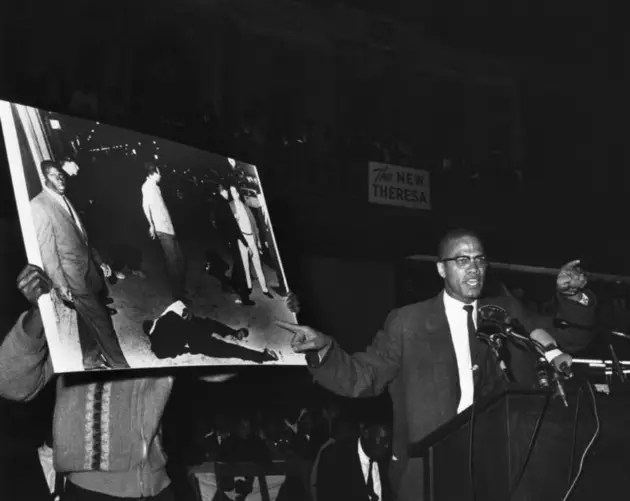
Malcolm X’s death on February 21, 1965, at the Audubon Ballroom in Harlem was not just the end of a life but a seismic shockwave through America’s racial and political landscape. The official narrative—three Nation of Islam members acting alone—has long been questioned, with whispers of deeper conspiracies involving government agencies, rival factions, and the very institutions he had spent years challenging. His assassination wasn’t just about silencing a man; it was about dismantling an ideology that threatened the status quo. Malcolm X had evolved from a fiery separatist into a global human rights advocate, bridging divides between Black nationalism and international solidarity. His death marked the moment when the U.S. establishment faced a choice: suppress the radical truth he represented or risk the consequences of his influence spreading unchecked.
The circumstances surrounding his murder are riddled with inconsistencies. Eyewitnesses described multiple gunmen, yet only three were ever charged. The FBI, under J. Edgar Hoover’s leadership, had Malcolm X under surveillance for years, labeling him a "dangerous" figure whose rhetoric could incite violence. Yet, despite their obsession with him, no agents were present at the scene. The trial of the accused killers—Muhammad Abdul Aziz, Talmadge Hayer (aka Thomas Hagan), and Thomas 15X Johnson—revealed a web of conflicting testimonies, with one shooter even claiming he was ordered to "straighten Malcolm out." The question lingers: Was this a lone-wolf act, or was it orchestrated by forces that saw Malcolm X as an existential threat?
The assassination didn’t occur in a vacuum. Malcolm X’s shift away from the Nation of Islam (NOI) in 1964 had already isolated him from Elijah Muhammad’s inner circle, but it also made him more dangerous to those who feared his unfiltered critique of American racism. His pilgrimage to Mecca, where he embraced a pan-Islamic, anti-racist worldview, further alienated him from both the NOI and the FBI’s counterintelligence programs. By 1965, he was organizing the Organization of Afro-American Unity (OAAU), a secular movement that sought to unite Black people globally against colonialism and white supremacy. His death wasn’t just the end of a man—it was the silencing of a movement before it could fully coalesce.
The Complete Overview of Why Was Malcolm X Assassinated
The assassination of Malcolm X was the culmination of years of strategic targeting by multiple entities: the Nation of Islam, federal law enforcement, and even elements within the Black Power movement itself. His rhetoric—unapologetic, confrontational, and rooted in self-defense—made him a target long before the fatal shots were fired. The NOI’s leadership, particularly Elijah Muhammad, had grown uncomfortable with Malcolm’s independent thinking, especially after his public break in 1964. Meanwhile, the FBI’s COINTELPRO program, designed to neutralize Black nationalist leaders, had Malcolm X flagged as a priority. His assassination wasn’t just about stopping a man; it was about preventing the ideological shift he embodied from gaining traction.The official investigation, led by New York City Police Detective James McCauley, painted a picture of a premeditated hit carried out by disgruntled NOI members. However, the trial exposed glaring holes: no motive was ever clearly established for the shooters, and key evidence—such as the supposed "hit list" of Malcolm’s scheduled appearances—was never produced. The fact that two of the accused killers later recanted their confessions under pressure only deepened suspicions. Malcolm’s own warnings about his safety, delivered just days before his death, were dismissed by many, including his security detail, who claimed they had no reason to believe he was in danger. The truth, however, is far more complex: his assassination was the result of a perfect storm of ideological betrayal, institutional paranoia, and the violent suppression of dissent.
Historical Background and Evolution
Malcolm X’s journey from Malcolm Little—a troubled youth in Boston’s ghettos—to Malcolm X, the global symbol of Black empowerment, was marked by radical transformation. His conversion to the Nation of Islam in 1952 provided structure and purpose, but it was his time as Minister of Information that turned him into a media sensation. By the early 1960s, he was the NOI’s most visible figure, delivering speeches that blended religious doctrine with unflinching critiques of white supremacy. However, his growing influence also made him a liability. Elijah Muhammad’s personal life—including allegations of extramarital affairs—was a closely guarded secret, and Malcolm’s outspokenness threatened to expose the NOI’s hypocrisies.The breaking point came in March 1964, when Malcolm publicly announced his departure from the NOI, citing the organization’s failure to address its leader’s moral failings. His subsequent pilgrimage to Mecca further radicalized his worldview, leading him to reject the NOI’s racial separatism in favor of a broader, internationalist struggle. This evolution terrified both the FBI and the NOI. Hoover’s COINTELPRO files reveal that Malcolm was seen as a "Black Muslim leader" who could inspire "race hatred," while Elijah Muhammad’s inner circle viewed his defection as a betrayal. The assassination, then, wasn’t just about Malcolm X—it was about controlling the narrative of Black resistance itself.
Core Mechanisms: How It Works
The assassination of Malcolm X was executed with military precision, yet its planning remains shrouded in mystery. The three primary suspects—Muhammad Abdul Aziz, Talmadge Hayer, and Thomas 15X Johnson—were all former NOI members with ties to Malcolm’s security team. Hayer, the alleged triggerman, later claimed he was ordered to kill Malcolm by a shadowy figure named "X-10," though no such person was ever identified. The FBI’s files suggest that the NOI’s leadership may have played a role, but no direct evidence has ever surfaced. What is clear is that the killers had inside knowledge: they knew Malcolm’s exact movements, his security routines, and even the layout of the Audubon Ballroom.Table of Contents
- The Complete Overview of Why Was Malcolm X Assassinated
- Historical Background and Evolution
- Core Mechanisms: How It Works
- Key Benefits and Crucial Impact
- Major Advantages
- Comparative Analysis
- Future Trends and Innovations
- Conclusion
- Comprehensive FAQs
- Q: Who were the three men convicted of assassinating Malcolm X?
- Q: Was the FBI involved in Malcolm X’s assassination?
- Q: Why did Malcolm X leave the Nation of Islam before his death?
- Q: Were there more than three gunmen involved in the assassination?
- Q: How did Malcolm X’s assassination impact the civil rights movement?
- Q: What evidence suggests the NOI may have been involved in the assassination?
- Q: Why was Malcolm X’s trial so controversial?
- Q: How did Malcolm X’s death affect his family and legacy?
- Q: Are there any unsolved aspects of the case today?
The execution itself was a well-coordinated operation. Multiple gunmen fired from different angles, ensuring that Malcolm would be hit regardless of where he moved. The fact that no one in the crowd intervened—despite the chaos—suggests that the shooters may have been expected, or even protected, by unseen forces. The ballroom’s management, including the owner, were later questioned but never charged. The FBI’s reluctance to pursue deeper investigations into possible NOI or government involvement speaks volumes about the era’s climate of repression. The assassination wasn’t just a crime; it was a calculated strike against a man who had become too dangerous to ignore.
Key Benefits and Crucial Impact
Malcolm X’s assassination had ripple effects that reshaped the civil rights movement, Black nationalism, and even global politics. His death forced a reckoning with the limits of nonviolent protest, as younger activists like Stokely Carmichael and Huey Newton looked to Malcolm’s legacy for inspiration. The Nation of Islam, though weakened, survived as a radical force, while Malcolm’s widow, Betty Shabazz, ensured his teachings lived on through the Malcolm X and Dr. Betty Shabazz Memorial and Educational Center. On a broader scale, his murder exposed the lengths to which the U.S. government and white supremacist factions would go to suppress dissent.The assassination also accelerated the FBI’s counterintelligence efforts. COINTELPRO, already targeting Martin Luther King Jr. and other leaders, expanded its reach, using infiltration, disinformation, and even assassination plots to dismantle Black Power organizations. Malcolm’s death became a cautionary tale: speak out too loudly, and you risk becoming a target. Yet, paradoxically, his murder also cemented his martyrdom. Where once he was a controversial figure, he became a symbol of resistance, his words—"The media’s the most powerful entity on earth"—echoing through generations of activists.
"Malcolm X was a threat because he was a man who had seen the truth and refused to compromise it. His assassination was not just about killing a man—it was about killing the idea that Black people could demand justice without begging for it." — Dr. Manning Marable, historian and Malcolm X biographer
Major Advantages
- Exposure of Institutional Hypocrisy: The assassination laid bare the FBI’s surveillance state and the NOI’s internal contradictions, forcing both organizations to confront their own complicity in Malcolm’s death.
- Legacy of Radical Thought: Malcolm’s writings and speeches, once suppressed, became foundational texts for the Black Power movement, influencing figures from Angela Davis to Barack Obama.
- Global Solidarity: His death galvanized international support for Black liberation, with leaders like Kwame Nkrumah of Ghana and Fidel Castro of Cuba honoring his memory as a pan-African icon.
- Legal Precedents: The trial’s flaws—including coerced confessions and witness intimidation—set important legal standards for future civil rights cases, though justice for Malcolm remained elusive.
- Cultural Resurgence: From Spike Lee’s Malcolm X to modern hip-hop references, his life and death continue to inspire art, music, and activism, ensuring his message endures.
Comparative Analysis
| Official Narrative | Alternative Theories |
|---|---|
| Three NOI members acted alone after Malcolm left the organization. | NOI leadership, with Elijah Muhammad’s approval, orchestrated the hit to silence a defector. |
| FBI had no direct involvement but monitored Malcolm as a "national security threat." | COINTELPRO agents may have provided intelligence or even encouraged the assassination to weaken Black nationalism. |
| No evidence of advance planning beyond the shooters’ personal grievances. | Multiple gunmen, pre-stage reconnaissance, and suppressed crowd reactions suggest professional execution. |
| Malcolm’s death was an isolated event with no broader implications. | His assassination was part of a pattern of state-sponsored violence against Black leaders (e.g., Medgar Evers, Fred Hampton). |
Future Trends and Innovations
The study of Malcolm X’s assassination continues to evolve, with new archival discoveries and digital forensic techniques offering fresh perspectives. Recent declassifications of FBI files have revealed previously unknown surveillance tactics, while oral histories from Malcolm’s associates provide firsthand accounts of his final days. The rise of algorithmic research—using AI to cross-reference historical documents—may yet uncover hidden connections between the NOI, the FBI, and other shadowy actors.What remains certain is that Malcolm X’s legacy is far from static. As movements like Black Lives Matter grapple with state violence, his teachings on self-determination and internationalism resurface with new urgency. The question of why was Malcolm X assassinated is no longer just academic; it’s a living debate about the cost of dissent and the power of ideas that refuse to die.

Conclusion
Malcolm X’s assassination was not an aberration—it was a symptom of a system that could not tolerate his uncompromising truth. His death exposed the fragility of democratic ideals when confronted with radical demands for justice. Yet, in his murder, Malcolm achieved something even his detractors could not: immortality. The man who once said, "If you’re not ready to die for what you believe in, you’re not fit to live," became a martyr whose influence only grew stronger with each passing year.The unresolved questions surrounding his assassination serve as a reminder that history is often written by the victors—and that the full truth of Malcolm X’s death may never be known. But that doesn’t diminish his impact. If anything, the mysteries surrounding his murder ensure that his story remains a call to action, a challenge to future generations to ask not just what happened, but why it still matters.
Comprehensive FAQs
Q: Who were the three men convicted of assassinating Malcolm X?
A: The three men convicted were Muhammad Abdul Aziz (aka Khalil Islam), Talmadge Hayer (aka Thomas Hagan), and Thomas 15X Johnson. All three were former Nation of Islam members with ties to Malcolm’s security detail. Hayer was the alleged triggerman, while Aziz and Johnson were charged as accomplices. All three later recanted their confessions under pressure, claiming they were coerced.
Q: Was the FBI involved in Malcolm X’s assassination?
A: There is no definitive proof that the FBI directly ordered Malcolm X’s assassination, but declassified documents reveal that the bureau had him under intense surveillance through COINTELPRO. FBI files label him a "Black Muslim leader" who could inspire "race hatred," and Hoover’s obsession with him suggests a desire to neutralize his influence. Some conspiracy theories propose that the FBI may have provided intelligence or even encouraged the hit, though no smoking gun has emerged.
Q: Why did Malcolm X leave the Nation of Islam before his death?
A: Malcolm X left the Nation of Islam in March 1964 after publicly criticizing Elijah Muhammad’s moral failings, particularly allegations of extramarital affairs. His pilgrimage to Mecca further shifted his worldview, leading him to reject the NOI’s racial separatism in favor of a broader, internationalist struggle. His departure alienated him from the NOI’s leadership, but it also made him more dangerous to those who feared his evolving ideology.
Q: Were there more than three gunmen involved in the assassination?
A: Eyewitness accounts, including those from Malcolm’s bodyguards, suggest that multiple gunmen fired during the attack. Some reports indicate as many as five shooters, though only three were ever charged. The fact that the killers used different angles and that no one in the crowd intervened despite the chaos fuels theories that the operation was more sophisticated than a lone-wolf hit.
Q: How did Malcolm X’s assassination impact the civil rights movement?
A: Malcolm X’s death had a profound and lasting impact on the civil rights movement. It exposed the violent suppression of dissent, particularly against Black nationalist leaders. His assassination accelerated the shift toward Black Power militancy, influencing figures like Stokely Carmichael and the Black Panther Party. It also forced a reckoning with the limits of nonviolent protest, as younger activists looked to Malcolm’s legacy for inspiration in the face of state repression.
Q: What evidence suggests the NOI may have been involved in the assassination?
A: Several factors point to possible NOI involvement: the killers were all former NOI members with inside knowledge of Malcolm’s routines; the NOI’s leadership had a history of silencing dissent (including earlier attempts on Malcolm’s life); and the fact that the shooters were never punished for their crimes, despite the NOI’s public condemnation of the act. Additionally, the FBI’s files hint at NOI-FBI collaboration in monitoring Malcolm, though no direct evidence of a conspiracy has been publicly confirmed.
Q: Why was Malcolm X’s trial so controversial?
A: The trial of Malcolm X’s assassins was plagued by irregularities, including coerced confessions, witness intimidation, and the suppression of exculpatory evidence. Two of the defendants later recanted their testimonies, claiming they were beaten and threatened into confessing. The prosecution’s reliance on a single eyewitness—who later admitted to lying—further undermined the case. The trial’s flaws raised serious questions about the justice system’s willingness to hold powerful institutions accountable.
Q: How did Malcolm X’s death affect his family and legacy?
A: Malcolm X’s widow, Betty Shabazz, became a guardian of his legacy, founding the Malcolm X and Dr. Betty Shabazz Memorial and Educational Center to preserve his teachings. Their daughters, including Ilyasah Shabazz, have continued his work through education and activism. His death also turned him into a martyr, with his words and life becoming central to Black Power movements worldwide. The assassination ensured that his message—of self-determination and global solidarity—would outlive him.
Q: Are there any unsolved aspects of the case today?
A: Yes, several aspects remain unresolved. The identity of the mysterious "X-10" figure, allegedly the mastermind behind the plot, has never been confirmed. The whereabouts of the fourth alleged shooter (if one existed) are unknown. Additionally, questions about possible NOI or government involvement persist due to missing evidence and unanswered FBI files. The case remains a subject of ongoing historical and investigative interest.
Leave a Comment
Comments are moderated before appearing. The data you submit is processed according to the Privacy Policy of Medicine.