How Narrowcasting Definition AP Gov Reshapes Media, Politics & Society
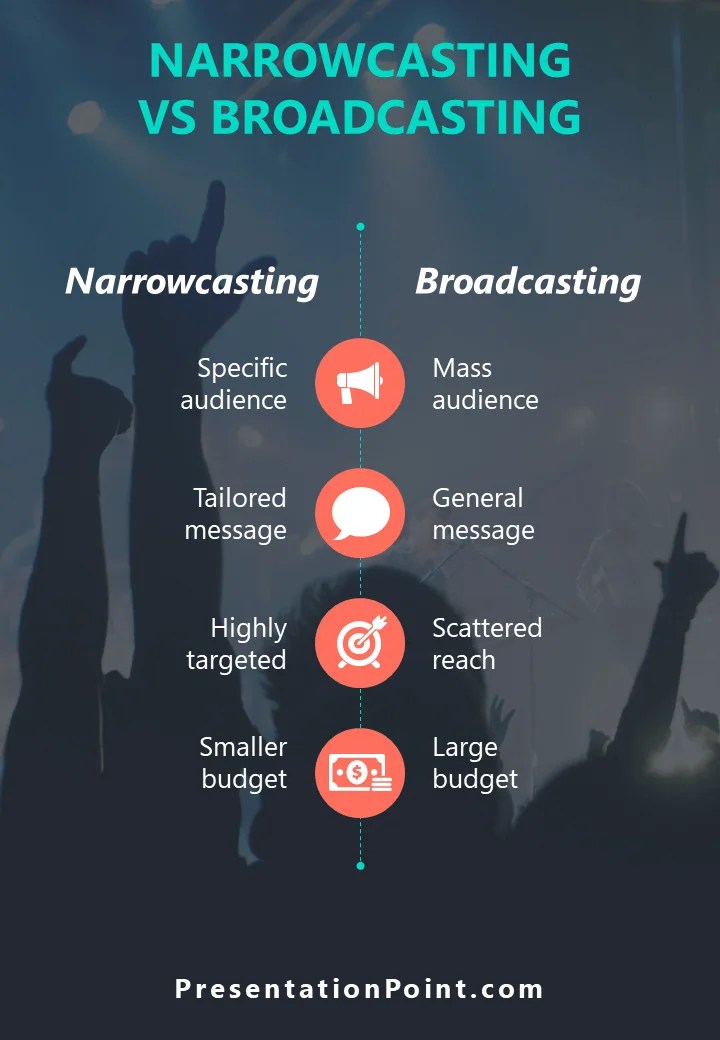
The term "narrowcasting definition AP Gov" doesn’t just describe a media strategy—it exposes the fractures in how information flows today. While traditional broadcasting once united audiences under a single narrative, narrowcasting carves out micro-communities, delivering content tailored to niche demographics. This shift isn’t just technical; it’s a seismic realignment of power between media, politicians, and the public. The AP Government curriculum treats it as a cornerstone of modern political communication, where algorithms and ideological segmentation rewrite the rules of persuasion.
What makes narrowcasting particularly critical in AP Gov is its dual role: a tool for political mobilization and a threat to democratic discourse. Campaigns now deploy hyper-targeted ads to swing voters in battleground districts while fringe ideologies thrive in echo chambers untouched by mainstream scrutiny. The narrowcasting definition AP Gov framework forces students to confront uncomfortable questions: Is this precision the future of democracy, or a recipe for polarization? The answer lies in understanding its mechanics—not just as a media tactic, but as a lens for analyzing power in the digital age.
The stakes are higher than ever. In 2020, Facebook’s microtargeting tools influenced voter turnout by 4% in key states, according to MIT research. Meanwhile, platforms like Newsmax and The Young Turks dominate by curating content for specific ideological tribes. This isn’t just about algorithms; it’s about how narrowcasting definition AP Gov redefines citizenship. When your news feed is a feedback loop of confirmation bias, participation in public life becomes optional. The challenge for students—and policymakers—is distinguishing between engagement and manipulation.
The Complete Overview of Narrowcasting in AP Government
Narrowcasting, as framed in narrowcasting definition AP Gov contexts, represents the antithesis of broadcast media’s one-size-fits-all approach. Where network TV once delivered monolithic narratives (e.g., Walter Cronkite’s evening news), today’s media landscape is a patchwork of podcasts, subreddits, and algorithmically curated feeds. This fragmentation isn’t accidental; it’s a response to the decline of mass-market media and the rise of data-driven personalization. For AP Gov students, narrowcasting isn’t just a media phenomenon—it’s a case study in how technology accelerates political polarization, reshapes campaign strategies, and even alters civic behavior.The term itself emerged in the 1990s as cable TV and the early internet allowed niche audiences to access content tailored to their interests. But its political implications became clear during the 2004 U.S. election, when George W. Bush’s campaign used microtargeting to deliver tailored messages to swing voters while Howard Dean’s primary challenge was drowned out by blogosphere backlash. Fast-forward to 2024, and narrowcasting definition AP Gov now encompasses everything from TikTok’s algorithmic feeds to Fox News’ primetime segments designed for conservative viewers. The shift from broad appeal to hyper-specific engagement has forced AP Gov educators to treat media literacy as a civic duty.
Historical Background and Evolution
The roots of narrowcasting trace back to the 1980s, when cable TV shattered the duopoly of the Big Three networks (NBC, CBS, ABC). Channels like MTV and CNN catered to youth culture and 24-hour news, respectively, proving that audiences wouldn’t tolerate generic programming. This era laid the groundwork for narrowcasting definition AP Gov as a political tool when talk radio—led by Rush Limbaugh—used narrowcasting to mobilize conservative voters. The strategy proved so effective that it became a blueprint for modern campaigning, where data firms like Cambridge Analytica (later exposed for harvesting Facebook data) claimed to predict voter behavior with 90% accuracy.The digital revolution amplified these tactics exponentially. The rise of social media in the 2010s turned narrowcasting into a two-way street: not only could politicians target voters, but voters could self-select into ideological bubbles. Reddit’s political subreddits (e.g., r/politics vs. r/The_Donald) became battlegrounds for narrowcasted discourse, while meme culture on Twitter and Instagram allowed movements like #MeToo and Black Lives Matter to bypass traditional gatekeepers. AP Gov classrooms now dissect how these platforms function as narrowcasting definition AP Gov tools—where engagement metrics replace journalistic ethics, and outrage becomes the primary currency.
Core Mechanisms: How It Works
At its core, narrowcasting operates on three pillars: audience segmentation, content customization, and feedback loops. First, platforms and campaigns divide audiences into granular categories—age, location, political leanings, even browsing history—using data from cookies, surveys, and third-party vendors. This isn’t just demographics; it’s psychographics, where tools like Facebook’s "Lookalike Audiences" identify voters who resemble supporters of a candidate. Second, content is tailored to each segment: a climate activist in Portland might see Greenpeace ads, while a rural Ohioan sees a Fox Business segment on energy independence.Table of Contents
- The Complete Overview of Narrowcasting in AP Government
- Historical Background and Evolution
- Core Mechanisms: How It Works
- Key Benefits and Crucial Impact
- Major Advantages
- Comparative Analysis
- Future Trends and Innovations
- Conclusion
- Comprehensive FAQs
- Q: How does narrowcasting differ from traditional broadcasting in AP Gov contexts?
- Q: Can narrowcasting be used for positive political change?
- Q: What role do social media algorithms play in narrowcasting?
- Q: How do campaigns measure the success of narrowcasting?
- Q: What are the ethical concerns surrounding narrowcasting in politics?
- Q: How can students apply narrowcasting concepts to real-world AP Gov projects?
The third mechanism is the feedback loop, where engagement data refines targeting in real time. If a political ad flops with swing voters in Michigan, the algorithm adjusts the messaging for the next wave. This closed-loop system is why narrowcasting definition AP Gov is so effective—and so dangerous. It creates the illusion of personalization while reinforcing ideological silos. For example, a study by the Pew Research Center found that 62% of Americans now get their news from social media, where algorithms prioritize content that triggers emotional responses over factual accuracy.
Key Benefits and Crucial Impact
Narrowcasting’s efficiency is undeniable. Campaigns spend less on wasted impressions, and niche communities find representation they once lacked. But these benefits come with a cost: the erosion of shared reality. When narrowcasting definition AP Gov becomes the dominant mode of communication, political discourse fractures into parallel universes. Consider the 2016 election, where Clinton’s campaign used data to target undecided voters while Trump’s team relied on broad, emotional appeals to base voters—both strategies successful in their own narrowcasted ecosystems.The impact on democracy is a subject of fierce debate. Some argue narrowcasting increases political participation by engaging marginalized groups (e.g., LGBTQ+ communities via platforms like OnlyFans or Patreon). Others warn it deepens polarization, as seen when Fox News and MSNBC viewers consume entirely different factual landscapes. The narrowcasting definition AP Gov framework forces students to weigh these trade-offs: Is this the future of civic engagement, or a recipe for tribalism?
"Narrowcasting doesn’t just reflect political divisions—it amplifies them. The more we tailor messages, the less we share a common language for solving problems." — Ethan Zuckerman, Director of the MIT Center for Civic Media
Major Advantages
- Cost-Effective Campaigning: Microtargeting reduces ad waste by delivering messages only to likely supporters, cutting campaign costs by up to 40% (Harvard Kennedy School study).
- Representation for Marginalized Groups: Platforms like YouTube and Patreon allow niche communities (e.g., disability rights activists, nonbinary creators) to bypass mainstream media gatekeepers.
- Real-Time Adaptability: Algorithms adjust messaging based on engagement, unlike traditional media’s static schedules. For example, Biden’s 2020 campaign shifted ads from "Build Back Better" to "Defend Democracy" after the Capitol riot.
- Grassroots Mobilization: Movements like #BlackLivesMatter and #MeToo leveraged narrowcasting to organize without relying on traditional media coverage.
- Data-Driven Persuasion: Tools like Google’s "Persuasion Architecture" analyze voter psychology to craft messages that resonate emotionally, increasing conversion rates.

Comparative Analysis
| Broadcast Media | Narrowcasting |
|---|---|
| One-way communication (e.g., nightly news) | Two-way, interactive (e.g., Twitter polls, YouTube comments) |
| Mass audience, generic messaging | Micro-audiences, hyper-personalized content |
| Limited feedback loops (call-in shows, letters to editor) | Real-time engagement data (likes, shares, dwell time) |
| High production costs, broad reach | Low marginal cost, niche reach (e.g., a Substack newsletter vs. a TV ad) |
Future Trends and Innovations
The next decade of narrowcasting definition AP Gov will be defined by AI and the metaverse. Generative AI tools like Midjourney and DALL·E are already creating hyper-personalized political content—imagine a campaign ad featuring a candidate’s likeness but tailored to local issues. Meanwhile, platforms like Meta’s Horizon Worlds could turn narrowcasting into immersive experiences, where voters attend virtual town halls segmented by ideology. The challenge for AP Gov educators will be teaching students to navigate this landscape without losing sight of shared civic values.Regulation is another frontier. The EU’s Digital Services Act and proposed U.S. algorithms accountability laws aim to curb narrowcasting’s worst excesses, but enforcement remains a hurdle. As narrowcasting definition AP Gov evolves, the focus will shift from "how it works" to "who controls it"—and whether democracy can survive in a world where truth is a commodity traded in private markets.

Conclusion
Narrowcasting isn’t just a media trend; it’s a mirror reflecting the contradictions of modern democracy. The narrowcasting definition AP Gov framework reveals how technology accelerates both connection and division, offering tools for mobilization and manipulation in equal measure. For students, the takeaway isn’t to fear narrowcasting but to understand its mechanics—to recognize when a news feed is a feedback loop and when a political ad is a psychological experiment.The future of civic engagement hinges on this literacy. As narrowcasting becomes more sophisticated, the ability to step outside one’s algorithmic bubble will define whether democracy thrives or fractures. AP Gov’s role is to equip the next generation with the critical tools to navigate this landscape—not as passive consumers, but as active participants in shaping its rules.
Comprehensive FAQs
Q: How does narrowcasting differ from traditional broadcasting in AP Gov contexts?
A: Traditional broadcasting targets broad audiences with uniform messages (e.g., network news), while narrowcasting uses data to deliver hyper-specific content. In AP Gov, this distinction is critical because it explains why campaigns now focus on micro-persuasion (e.g., Facebook ads to undecided voters in Iowa) rather than broad appeals (e.g., presidential debates). The shift reflects a move from mass democracy to segmented participation.
Q: Can narrowcasting be used for positive political change?
A: Yes. Movements like #BlackLivesMatter and LGBTQ+ advocacy have leveraged narrowcasting to amplify marginalized voices. However, its effectiveness depends on whether it fosters dialogue or deepens polarization. AP Gov case studies often contrast its use in progressive organizing (e.g., Patreon-funded podcasts) with its role in spreading misinformation (e.g., QAnon forums).
Q: What role do social media algorithms play in narrowcasting?
A: Algorithms are the engine of narrowcasting, prioritizing content that maximizes engagement—often at the expense of diversity. For example, Twitter’s algorithm may push a user toward increasingly extreme content if it boosts interaction. In AP Gov terms, this creates "filter bubbles" where voters consume only reinforcing narratives, undermining deliberative democracy.
Q: How do campaigns measure the success of narrowcasting?
A: Success is tracked via metrics like conversion rates (voter turnout), engagement (shares, comments), and persuasion scores (pre- to post-ad surveys). Tools like Google’s "Attribution Modeling" analyze whether a narrowcasted ad led to a vote. AP Gov students often debate whether these metrics prioritize efficiency over civic health.
Q: What are the ethical concerns surrounding narrowcasting in politics?
A: Key concerns include manipulation (e.g., dark patterns in political ads), misinformation (e.g., algorithmic amplification of false claims), and disinformation (e.g., foreign interference via targeted ads). The narrowcasting definition AP Gov framework highlights how these tactics exploit psychological vulnerabilities, such as confirmation bias and tribalism, to undermine informed consent.
Q: How can students apply narrowcasting concepts to real-world AP Gov projects?
A: Projects could include:
- Analyzing how a local campaign used Facebook ads vs. traditional mailers.
- Comparing news consumption habits between broadcast (CNN) and narrowcast (Breitbart) sources.
- Designing a mock algorithm to test bias in political messaging.
Leave a Comment
Comments are moderated before appearing. The data you submit is processed according to the Privacy Policy of Medicine.