What Does All-Wheel Drive Mean? The Definitive Breakdown of AWD Technology

When you hear "all-wheel drive" whispered among car enthusiasts or see it bolded in a vehicle’s specifications, it’s not just marketing jargon—it’s a sophisticated engineering solution designed to redefine how power meets the road. What does all-wheel drive mean, exactly? At its core, it’s a system that sends torque to all four wheels simultaneously, but the devil lies in the details: the timing, the distribution, and the adaptive intelligence behind it. Unlike the brute-force approach of four-wheel drive (4WD), AWD is engineered for seamless, real-time engagement, making it the preferred choice for everything from daily commutes to spirited backroads.
The misconception that AWD is merely "FWD with extra wheels" persists, but the reality is far more nuanced. Modern AWD systems leverage differentials, torque vectoring, and even AI-driven algorithms to optimize grip without sacrificing efficiency. Whether you’re navigating a slick city intersection or tackling a snow-packed mountain pass, understanding what all-wheel drive means in practical terms—how it balances power delivery, stability, and fuel economy—is critical. The technology has evolved from its military origins into a mainstream feature, yet its underlying principles remain rooted in the same physics that govern traction.
For drivers, the question isn’t just what does all-wheel drive mean in theory, but how it translates to their specific needs. A performance sedan might use AWD to shave seconds off lap times, while an SUV relies on it to conquer off-road terrain with confidence. The key lies in recognizing that AWD isn’t a one-size-fits-all solution—it’s a spectrum of systems, each tailored to a different driving philosophy.
The Complete Overview of All-Wheel Drive
All-wheel drive represents a paradigm shift in automotive engineering, where the goal isn’t just to move a vehicle forward but to do so with precision, adaptability, and efficiency. When you ask what does all-wheel drive mean, you’re essentially inquiring about a system that dynamically allocates power to all four wheels, often in real time, to maximize traction without sacrificing handling. This isn’t the same as four-wheel drive (4WD), which is typically engaged manually for off-road conditions. AWD is a permanent or semi-permanent feature, designed to enhance everyday drivability while still delivering off-road capability when needed.The magic of AWD lies in its ability to mitigate wheel spin—a phenomenon where a single wheel loses grip, causing the vehicle to fishtail or stall. By distributing torque across all four wheels, AWD systems ensure that power is always directed to the wheels with the most traction. This is particularly valuable in slippery conditions, but it also improves acceleration, cornering stability, and even fuel efficiency in certain scenarios. Understanding what all-wheel drive means in this context requires grasping the interplay between mechanical components and electronic controls, as modern AWD isn’t just about brute force but about intelligent power management.
Historical Background and Evolution
The concept of all-wheel drive traces back to the early 20th century, when military and industrial vehicles needed reliable traction in harsh conditions. However, it wasn’t until the 1980s that automakers began integrating AWD into consumer vehicles, starting with luxury brands like Audi and Mercedes-Benz. These early systems were rudimentary by today’s standards—often little more than a fixed torque split between the front and rear axles—but they laid the foundation for what would become a cornerstone of modern driving dynamics.The real breakthrough came with the advent of electronic controls and advanced differentials. In the 1990s and 2000s, manufacturers like Subaru, Toyota, and Ford refined AWD into a more sophisticated system, capable of dynamically adjusting torque distribution based on road conditions. Subaru’s Symmetrical AWD, for instance, became synonymous with rally-inspired performance, while Toyota’s Super AWD introduced a center differential to manage torque between the front and rear axles. These innovations answered the question what does all-wheel drive mean in a way that resonated with both performance enthusiasts and practical drivers alike.
Core Mechanisms: How It Works
At its simplest, an AWD system takes power from the engine and distributes it to all four wheels, but the mechanics vary depending on the vehicle’s architecture. In a front-engine, front-wheel-drive-based AWD system (common in cars like the Honda CR-V or Toyota RAV4), power flows from the engine to the front wheels via a transfer case, which then sends a portion of that power to the rear axle. The torque split—often 50/50 in symmetric systems—can be fixed or variable, with some modern systems using clutches to adjust on the fly.Table of Contents
- The Complete Overview of All-Wheel Drive
- Historical Background and Evolution
- Core Mechanisms: How It Works
- Key Benefits and Crucial Impact
- Major Advantages
- Comparative Analysis
- Future Trends and Innovations
- Conclusion
- Comprehensive FAQs
- Q: Is all-wheel drive the same as four-wheel drive?
- Q: Does all-wheel drive improve fuel efficiency?
- Q: Can I install all-wheel drive on a front-wheel-drive car?
- Q: How does all-wheel drive affect handling?
- Q: Is all-wheel drive worth it for daily driving in dry conditions?
- Q: How do I know if a car’s all-wheel drive system is high-performance?
The more advanced systems, such as those in performance vehicles like the BMW X5 or Porsche Macan, incorporate torque vectoring and limited-slip differentials. These components allow the system to not only distribute power but also direct it to specific wheels for optimal handling. For example, during a cornering maneuver, the system might send more torque to the outer rear wheel to prevent understeer. This level of sophistication is what separates modern AWD from its predecessors, answering what does all-wheel drive mean in terms of both capability and refinement.
Key Benefits and Crucial Impact
The advantages of AWD are as diverse as the driving conditions it enhances. For urban commuters, AWD provides confidence in rain-slicked streets, reducing the risk of skidding during sudden braking or acceleration. For off-road adventurers, it unlocks the ability to tackle mud, snow, or gravel without getting stuck. Even in dry conditions, AWD can improve launch control and cornering grip, making it a favorite among performance-oriented drivers. The question what does all-wheel drive mean for these groups isn’t just about capability—it’s about peace of mind.Beyond the practical benefits, AWD has also driven innovation in automotive technology. The demand for better traction led to advancements in differentials, electronic stability control, and even hybrid powertrains. Today, AWD is no longer a luxury feature but a standard offering in many segments, reflecting its proven value. Yet, as with any technology, there are trade-offs—primarily in complexity and cost—which brings us to the next critical consideration: how AWD stacks up against its alternatives.
"All-wheel drive isn’t just about sending power to all four wheels—it’s about sending the right amount of power to the right wheels at the right time."
— Dr. Michael Smith, Automotive Engineering Professor, MIT
Major Advantages
- Enhanced Traction in All Conditions: AWD systems excel in slippery environments (rain, snow, ice) by distributing torque dynamically, reducing wheel spin and improving stability.
- Improved Acceleration and Launch Control: By engaging all four wheels, AWD systems can deliver more consistent power, especially in high-performance vehicles.
- Superior Cornering Stability: Advanced AWD setups with torque vectoring enhance handling by optimizing power delivery during aggressive maneuvers.
- Versatility Across Driving Scenarios: Unlike FWD or RWD, AWD adapts to both on-road and light off-road conditions without requiring manual engagement.
- Reduced Risk of Fishtailing or Oversteer: Electronic controls in modern AWD systems actively mitigate loss of traction, improving safety in dynamic driving situations.
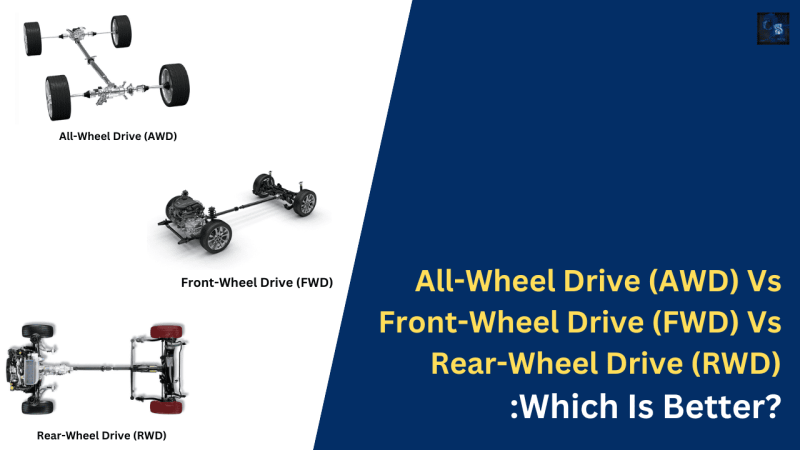
Comparative Analysis
Understanding what all-wheel drive means in isolation is only part of the story—it’s equally important to compare it to other drivetrain configurations. Below is a side-by-side breakdown of AWD, FWD, and RWD to highlight their strengths and weaknesses.| Feature | AWD (All-Wheel Drive) | FWD (Front-Wheel Drive) |
|---|---|---|
| Primary Use Case | All-weather traction, performance, versatility | Urban driving, fuel efficiency, simplicity |
| Traction in Slippery Conditions | Excellent (dynamic torque distribution) | Moderate (rear-wheel lift can reduce grip) |
| Handling and Cornering | Superior (torque vectoring in advanced systems) | Neutral (understeer-prone in RWD vehicles) |
| Complexity and Cost | Higher (multiple differentials, transfer cases) | Lower (simpler drivetrain) |
Future Trends and Innovations
The future of AWD is being shaped by two major forces: electrification and artificial intelligence. As hybrid and electric vehicles (EVs) become more prevalent, AWD systems are evolving to accommodate in-wheel motors and regenerative braking. Companies like Tesla and Lucid are pioneering single-speed AWD setups that eliminate traditional differentials, relying instead on independent torque control for each wheel. This shift answers what does all-wheel drive mean in an era where software and electronics play as big a role as mechanical components.Meanwhile, AI-driven AWD systems are emerging, capable of predicting road conditions and adjusting power delivery before a loss of traction occurs. Imagine a system that not only reacts to slip but anticipates it based on weather data, GPS terrain mapping, and even driver behavior. These innovations suggest that AWD will continue to blur the lines between performance, safety, and efficiency, making it an even more integral part of the driving experience.

Conclusion
The question what does all-wheel drive mean isn’t just about defining a drivetrain configuration—it’s about understanding a philosophy of driving that prioritizes adaptability, control, and confidence. From its military roots to its current status as a mainstream feature, AWD has proven its worth in nearly every driving scenario imaginable. Yet, as technology advances, the definition of AWD will only expand, incorporating smarter electronics, lighter materials, and more efficient power delivery.For consumers, the key takeaway is that AWD isn’t a one-size-fits-all solution. Whether you’re a city dweller who values safety in wet weather or an off-road enthusiast who demands capability, there’s an AWD system tailored to your needs. The future of all-wheel drive will likely bring even greater integration with autonomous driving systems, further cementing its role as a cornerstone of modern mobility.
Comprehensive FAQs
Q: Is all-wheel drive the same as four-wheel drive?
A: No. While both send power to all four wheels, AWD is typically permanent or semi-permanent and designed for everyday driving, whereas 4WD is often manually engaged for off-road conditions. AWD systems also use electronic controls for dynamic torque distribution, whereas 4WD systems may rely on fixed torque splits.
Q: Does all-wheel drive improve fuel efficiency?
A: Not always. AWD systems add weight and complexity, which can reduce fuel economy compared to FWD in some cases. However, modern AWD setups with efficient torque distribution (e.g., Toyota’s Super AWD) can minimize this impact, especially in hybrid or electric vehicles where regenerative braking offsets some losses.
Q: Can I install all-wheel drive on a front-wheel-drive car?
A: Yes, but it requires significant modifications, including adding a rear differential, driveshaft, and often a transfer case. Aftermarket AWD conversions are common for performance builds, but they can be costly and may void warranties. Factory AWD vehicles are generally more reliable and better optimized.
Q: How does all-wheel drive affect handling?
A: Advanced AWD systems with torque vectoring can actually improve handling by directing power to specific wheels during cornering. However, basic AWD setups (e.g., fixed torque splits) may not offer the same precision as RWD or high-performance AWD configurations. The impact depends on the system’s sophistication.
Q: Is all-wheel drive worth it for daily driving in dry conditions?
A: It depends on your driving style. In dry conditions, AWD may not offer significant advantages over FWD or RWD in terms of fuel economy or responsiveness. However, if you frequently encounter variable road surfaces (e.g., gravel, wet pavement) or prioritize launch control, AWD can be beneficial. For most daily drivers in ideal conditions, FWD or RWD may suffice.
Q: How do I know if a car’s all-wheel drive system is high-performance?
A: Look for features like torque vectoring, limited-slip differentials, and dynamic torque distribution (e.g., Honda’s SH-AWD, BMW’s xDrive with Dynamic Torque Vectoring). Performance AWD systems often include multiple clutches, electronic stability control integration, and adaptive traction management. Check the manufacturer’s specifications for terms like "torque-on-demand" or "active AWD."
Leave a Comment
Comments are moderated before appearing. The data you submit is processed according to the Privacy Policy of Medicine.