How *abdl cyoa interactive narrative transforming* is Redefining Digital Intimacy
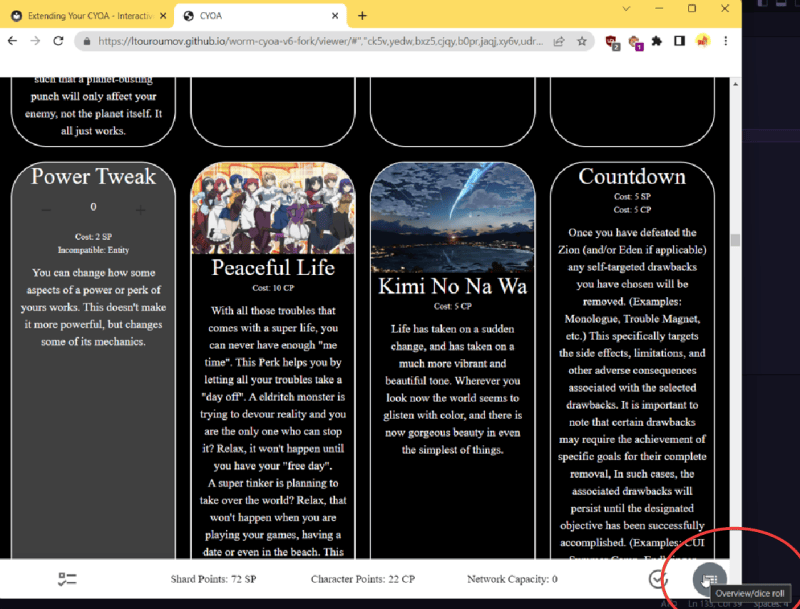
The genre of abdl cyoa interactive narrative transforming has quietly evolved from niche experimentation into a dominant force in digital storytelling—one that blurs the lines between fantasy and reality, scripted narrative and user agency. What began as text-based roleplaying in forums has metamorphosed into hyper-personalized, algorithmically enhanced experiences where participants don’t just consume content; they co-create it in real time. The technology behind these systems—adaptive branching paths, dynamic character AI, and psychologically tailored responses—has turned passive viewing into an active, almost therapeutic engagement. This shift isn’t just about sex or fantasy; it’s about how modern audiences crave narratives that adapt to them, not the other way around.
Yet the transformation goes deeper. ABDL CYOA interactive narrative transforming platforms now incorporate biometric feedback, voice modulation, and even physiological data to adjust storytelling in ways that traditional media couldn’t. The result? A medium where the line between player and participant dissolves entirely. Developers are leveraging machine learning to predict emotional triggers, while ethical debates rage over consent, autonomy, and the psychological impact of such hyper-personalized experiences. This isn’t just entertainment—it’s a social experiment in digital intimacy, where every choice feels yours, even when the narrative is written by an algorithm.
The implications stretch beyond adult media. Industries from mental health therapy to corporate training are eyeing these techniques for their ability to simulate real-world decision-making. But the core question remains: When a narrative transforms based on your subconscious reactions, are you still the author—or just another variable in an ever-shifting story?
The Complete Overview of abdl cyoa interactive narrative transforming
At its core, abdl cyoa interactive narrative transforming represents a fusion of three revolutionary concepts: adaptive branching narratives, ABDL (Age/Baby/Daddy/Little) dynamics, and interactive storytelling technologies. Unlike static media, these systems use real-time input—text, voice, or even physiological data—to alter plot structures, character behaviors, and emotional arcs. The user isn’t a spectator; they’re a collaborator, their preferences and responses shaping the experience in ways that feel uncannily personal. This isn’t just choose-your-own-adventure (CYOA) with a modern twist—it’s a psychologically immersive sandbox where the story adapts to the participant’s emotional state, often in ways that mimic human interaction.The term interactive narrative transforming itself hints at the medium’s evolutionary potential. Traditional CYOA relied on pre-written paths; today’s versions use procedural generation, natural language processing (NLP), and affective computing to create narratives that feel alive. For ABDL communities, this means scenarios where dominance/submission dynamics, age play, or power exchanges evolve based on the user’s verbal cues, tone, or even heart rate. The transformation isn’t just technical—it’s cultural, reflecting broader shifts in how people seek connection in a digital age. Where once fans wrote fanfiction in forums, now they live inside stories that rewrite themselves around their desires.
Historical Background and Evolution
The roots of abdl cyoa interactive narrative transforming trace back to early 1990s interactive fiction platforms like Infocom and ChoiceScript, where users typed commands to navigate text-based worlds. But the ABDL-specific iteration emerged in the 2010s, fueled by the rise of Twine, Ren’Py, and Discord-based roleplay communities. Early ABDL narratives were static—players chose paths from a menu, but the story remained rigid. The breakthrough came when developers integrated AI-driven dialogue trees and user profiling, allowing narratives to remember preferences across sessions. Platforms like StoryEngine and Twine’s JavaScript extensions enabled real-time branching, while Discord bots (e.g., Dynalist, AI Dungeon) added layer upon layer of interactivity.The turning point arrived with biometric integration. Companies like Sensory and Affectiva began embedding voice stress analysis and facial recognition into ABDL narratives, letting stories react to a user’s pupil dilation, breathing patterns, or micro-expressions. Suddenly, a narrative could detect hesitation in a user’s voice and adjust the scenario—softening a dominant character’s tone or escalating tension based on subconscious cues. This wasn’t just immersion; it was symbiotic storytelling, where the medium and the participant co-evolved. The result? A medium that doesn’t just entertain but understands—at least in a very narrow, algorithmic sense.
Core Mechanisms: How It Works
The magic of abdl cyoa interactive narrative transforming lies in its multi-layered feedback loops. At the base level, natural language processing (NLP) parses user input—whether text, voice, or even typed commands—to determine intent, tone, and emotional valence. Advanced systems use transformer models (like those behind GPT-4) to generate contextually appropriate responses, ensuring conversations feel organic rather than scripted. But the real innovation comes when these systems remember: User profiles track preferences, past choices, and even psychological triggers, allowing narratives to evolve over time. A user who consistently responds to dominance with submission cues might find their story lean into power exchange dynamics, while someone hesitant could trigger a narrative that reassures or redirects.Table of Contents
- The Complete Overview of abdl cyoa interactive narrative transforming
- Historical Background and Evolution
- Core Mechanisms: How It Works
- Key Benefits and Crucial Impact
- Major Advantages
- Comparative Analysis
- Future Trends and Innovations
- Conclusion
- Comprehensive FAQs
- Q: What makes abdl cyoa interactive narrative transforming different from traditional interactive fiction?
- Q: Are there ethical concerns with biometric integration in these narratives?
- Q: Can I create my own abdl cyoa transforming narrative without coding experience?
- Q: How does abdl cyoa transforming differ from VR dating sims or adult VR games?
- Q: Are there therapeutic applications for abdl cyoa transforming narratives?
- Q: What’s the most advanced abdl cyoa transforming platform available today?
- Q: Can abdl cyoa transforming narratives be used for non-adult purposes?
The second layer involves procedural narrative generation. Instead of fixed paths, these systems use Markov chains or Monte Carlo trees to dynamically assemble scenarios from modular story fragments. Need a scene where the Daddy figure scolds the Little for disobedience? The algorithm pulls from a database of punishment tropes, reassurance lines, and escalation triggers, then stitches them together based on the user’s profile. Add biometric data, and the system can adjust in real time—a raised heart rate might intensify a scene, while a slow breath could trigger a calming subplot. The end result is a narrative that doesn’t just respond to the user but anticipates their needs before they do.
Key Benefits and Crucial Impact
The rise of abdl cyoa interactive narrative transforming isn’t just a technical feat—it’s a paradigm shift in how we experience digital content. For participants, the benefits are immediate: personalization eliminates the frustration of static media, while agency (the power to shape the story) creates a sense of ownership rare in passive consumption. Psychologically, these narratives can act as emotional regulators, allowing users to explore dynamics—dominance, submission, age play—in a controlled, consensual space. For creators, the medium democratizes storytelling; no longer bound by linear scripts, they can experiment with non-linear character arcs and user-driven plot twists. Even the ABDL community itself has evolved, with platforms like Twine and Ren’Py enabling indie developers to craft hyper-specific experiences without corporate oversight.Yet the impact extends beyond personal gratification. Researchers in psychology and human-computer interaction are studying how these systems can model attachment behaviors, power dynamics, and even trauma processing in safe, simulated environments. In therapy, adaptive narratives could help patients explore authoritarian relationships or caregiver dynamics without real-world consequences. Meanwhile, corporate training programs are experimenting with ABDL-style simulations to teach leadership, negotiation, and conflict resolution—using the same psychological hooks that make the medium so compelling in adult contexts.
> "The most revolutionary aspect of abdl cyoa interactive narrative transforming isn’t the technology—it’s the illusion of reciprocity. Users don’t just interact with a story; they interact with a simulation of a relationship. And that changes everything about how we engage with digital media." — Dr. Elena Vasquez, Digital Intimacy Researcher, MIT Media Lab
Major Advantages
- Hyper-Personalization: Narratives adapt to user preferences, past behaviors, and even physiological reactions, creating experiences that feel uniquely theirs. Unlike static media, every playthrough is distinct.
- Psychological Safety: The controlled, consensual nature of these systems allows users to explore sensitive dynamics (e.g., power exchange, age play) without real-world risks, making them valuable for therapeutic applications.
- Creator Empowerment: Indie developers can build modular, reusable story assets (e.g., dialogue trees, character templates) without needing massive budgets, fostering a grassroots ABDL storytelling renaissance.
- Real-Time Feedback Loops: Biometric and NLP integration means stories can detect and respond to emotional states, adjusting tone, pacing, or conflict resolution dynamically.
- Community-Driven Evolution: Unlike traditional media, these narratives thrive on user-generated content and collaborative worldbuilding, creating ecosystems where fans and creators co-develop experiences.

Comparative Analysis
| Traditional CYOA (e.g., Choose Your Own Adventure books) | abdl cyoa interactive narrative transforming |
|---|---|
|
|
Best for: Casual readers who enjoy simple branching stories. |
Best for: Users seeking deep personalization, psychological engagement, and dynamic roleplay. |
Limitations: Repetitive, lacks emotional depth. |
Limitations: Ethical concerns over consent, data privacy, and psychological impact. |
Future Trends and Innovations
The next frontier for abdl cyoa interactive narrative transforming lies in neural integration and haptic feedback. Emerging technologies like brain-computer interfaces (BCIs) could allow narratives to detect subconscious desires, while full-body haptic suits (e.g., Teslasuit) would make virtual touch a reality. Imagine a scenario where a user’s pupil dilation triggers a character to lean in closer, or where muscle tension intensifies a restraint scene—without a single line of dialogue. Meanwhile, blockchain-based storytelling could enable true digital ownership of narrative assets, letting users trade or modify story fragments like NFTs.Ethically, the biggest challenge will be consent and autonomy. As narratives become more predictive, questions arise: How much control should users have over their own data? Can an algorithm truly understand consent, or just simulate it? The field of ethical AI in adult media is still nascent, but platforms like StoryEngine are already implementing opt-in biometric tracking and explicit user overrides. The future may also see hybrid human-AI co-authors, where developers guide the narrative’s emotional tone while algorithms handle the logistical heavy lifting. One thing is certain: abdl cyoa interactive narrative transforming isn’t just changing how we tell stories—it’s redefining what a story can be.

Conclusion
abdl cyoa interactive narrative transforming represents more than a technological upgrade—it’s a cultural reset in how we engage with digital media. By merging psychological depth, user agency, and adaptive technology, it’s created a space where fantasy and reality intertwine in ways previously unimaginable. For ABDL communities, it’s a tool for self-expression and exploration; for developers, it’s a playground for narrative innovation; and for researchers, it’s a living lab for studying human behavior. Yet as the medium evolves, so too must the conversations around it—particularly regarding consent, data ethics, and the blurred line between simulation and reality.The transformation isn’t over. It’s only just begun.
Comprehensive FAQs
Q: What makes abdl cyoa interactive narrative transforming different from traditional interactive fiction?
A: Traditional interactive fiction (e.g., Zork, Twine games) relies on static branching paths and player input via text commands. ABDL CYOA transforming narratives, however, use AI-driven dialogue, user profiling, and biometric feedback to create dynamic, evolving stories that adapt in real time. Where older systems offered choices from a menu, modern versions learn from your responses, adjusting tone, pacing, and even conflict resolution based on your emotional state.
Q: Are there ethical concerns with biometric integration in these narratives?
A: Yes. The use of voice stress analysis, facial recognition, or heart rate monitoring raises questions about consent, data privacy, and psychological manipulation. Some platforms require explicit opt-in for biometric tracking, while others allow users to disable certain sensors mid-session. Ethical debates also surround algorithmic bias—could a narrative unintentionally reinforce harmful stereotypes if trained on biased datasets? Researchers are still grappling with these issues, but transparency and user control are becoming industry standards.
Q: Can I create my own abdl cyoa transforming narrative without coding experience?
A: Absolutely. Tools like Twine, Ren’Py, and AI Dungeon offer no-code/low-code options for building interactive stories. For more advanced features (e.g., biometric integration, NLP-driven dialogue), platforms like StoryEngine and Discord bots (e.g., Dynalist) provide modular plugins. Many ABDL creators start with Twine’s JavaScript extensions to add variables and conditional logic, then graduate to Python-based tools like ChoiceScript for deeper customization.
Q: How does abdl cyoa transforming differ from VR dating sims or adult VR games?
A: While VR dating sims (e.g., Lust for VRChat) focus on visual and physical immersion, ABDL CYOA transforming prioritizes narrative depth and psychological engagement. VR sims often follow pre-scripted scenarios with limited branching, whereas transforming narratives adapt based on user input, tone, and even subconscious cues. Additionally, VR requires hardware access, while CYOA systems can be experienced via text, voice, or mobile apps, making them more accessible. That said, some hybrid systems now combine VR avatars with adaptive storytelling for a fully immersive experience.
Q: Are there therapeutic applications for abdl cyoa transforming narratives?
A: Emerging research suggests potential. Psychologists are exploring how adaptive narratives can help users process power dynamics, explore attachment styles, or simulate safe caregiving scenarios. For example, a narrative could model authoritarian relationships in a controlled setting, allowing users to practice negotiation or boundary-setting without real-world consequences. Some mental health apps (e.g., Woebot for therapy) already use chatbot-driven storytelling, and ABDL-style systems could expand this into highly personalized therapeutic tools. However, professional oversight remains critical to avoid unintended psychological effects.
Q: What’s the most advanced abdl cyoa transforming platform available today?
A: As of 2024, StoryEngine and AI Dungeon (with ABDL-specific mods) lead in adaptive storytelling, while Twine + JavaScript extensions offers the most creator-friendly customization. For biometric integration, platforms like Sensory’s affective computing tools are being adopted by indie developers. Discord-based bots (e.g., Dynalist, Character.AI) also enable real-time roleplay with AI characters that adapt to user input. For a fully immersive experience, VRChat + custom scripts (e.g., Lust mods) combine visual and narrative adaptation, though these require more technical setup.
Q: Can abdl cyoa transforming narratives be used for non-adult purposes?
A: Absolutely. The same adaptive storytelling and psychological engagement techniques are being tested in:
- Corporate training (e.g., negotiation simulations).
- Mental health therapy (e.g., exposure therapy for phobias).
- Language learning (e.g., Duolingo-style but with emotionally adaptive dialogues).
- Historical education (e.g., choose-your-own-path through historical events).
Leave a Comment
Comments are moderated before appearing. The data you submit is processed according to the Privacy Policy of Medicine.